


Saudi Position Shapes U.S. Calculations on Iran Talks
Translated from English, summarized and contextualized by DistantNews.
At a glance
Analysis
Named sources
Context piece
- Saudi Arabia's influence on U.S. decision-making regarding Iran is highlighted, particularly in postponing a military strike.
- Analysts note Saudi Arabia's dual approach of supporting diplomacy while confronting Iran-backed threats.
- The Kingdom prioritizes Gulf security, regional stability, and economic projects, advocating for an agreement that addresses root causes of the crisis.
Saudi Arabia's strategic positioning played a crucial role in President Donald Trump's decision to postpone a planned military strike against Iran, according to political analysts. The Kingdom's influence underscores its significant role in regional diplomacy and security calculations at this critical juncture.
Analysts like Faisal Al Shammeri emphasize that Saudi Arabia's stance is not a defense of Iran but a pragmatic assessment of Middle East conflicts. The nation pursues a dual-track strategy, backing diplomatic efforts for an agreement while simultaneously countering threats from Iran-backed militias and Houthi rebels. Prince Khalid bin Salman's visit to Washington further conveyed the Kingdom's direct assessments to U.S. policymakers.
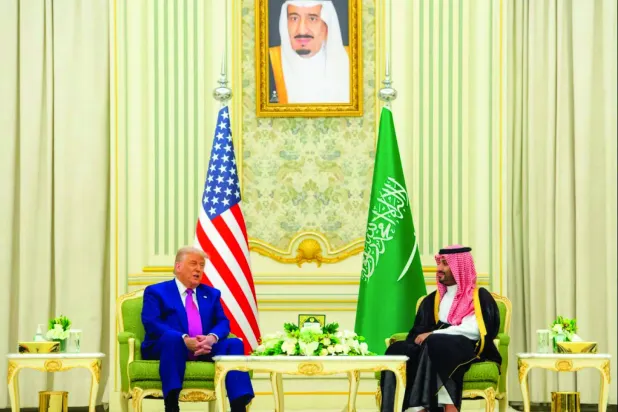
President Donald Trump's remarks underscored the influence of the Saudi position on US decision-making after the president indicated that his contacts with Gulf leaders, led by Crown Prince and Prime Minister Mohammed bin Salman, had helped create additional space for diplomacy while emphasizing the need to prioritize dialogue and de-escalation.
The primary driver for Saudi Arabia's approach is safeguarding Gulf security, as the region would bear the brunt of any Iranian retaliation. Preserving the stability of trade and energy flows through the Strait of Hormuz, along with protecting economic transformation projects, are paramount. Al Shammeri argues for an implementable agreement that tackles the crisis's root causes, rather than a temporary truce, to prevent escalation into a full-scale war.
Nidal Al Saba adds that Saudi Arabia's considerable weight extends its influence beyond the United States to other global powers like China and Russia. As a leading energy power, its position on maritime navigation and energy security carries significant sway. Therefore, the U.S. decision to suspend an attack, influenced by Saudi Arabia's encouragement of dialogue and de-escalation, is seen as a logical outcome of the Kingdom's regional leadership.
Saudi Arabia is the leading power in the energy sector, and its position on the Strait of Hormuz, energy security, and maritime navigation carries significant weight and influence. Therefore, the United States' decision to suspend an attack on Iran is not surprising as long as Saudi Arabia is playing a role in encouraging that course.
DistantNews Editorial
Originally published by Asharq Al-Awsat in English. Translated, summarized, and contextualized by our editorial team with added local perspective. Read our editorial standards.
More Stories


From Our Blog

What Gets Lost (and Found) When News Is Translated

The Critical Role of Diaspora Media in Global News

What Travellers Should Know About Countries with Restricted Press

A Digital Nomad's Guide to Following Local News

How the Same Story Looks Different in Different Countries
