

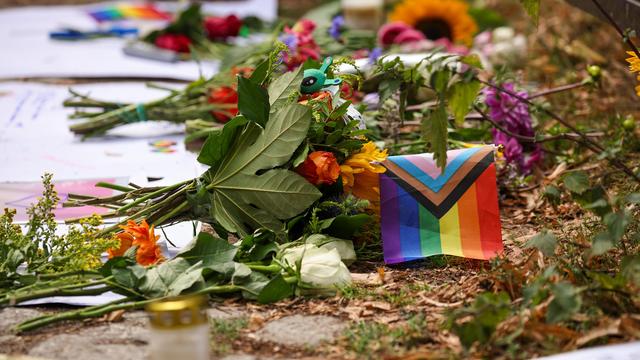

Saxony-Anhalt Bishop warns Christians against voting for AfD, citing extremism concerns
Translated from German, summarized and contextualized by DistantNews.
At a glance
News
Named sources
Context piece
- The Catholic Bishop of Magdeburg, Gerhard Feige, urged voters in Saxony-Anhalt to carefully consider party platforms before the state election.
- Feige warned that the AfD's platform contradicts Christian values and could harm the state economically and socially.
- Charlotte Knobloch, head of the Jewish community in Munich, drew parallels between the AfD's rise and the early days of the Nazi party.
Magdeburg's Catholic Bishop Gerhard Feige has appealed to voters in the German state of Saxony-Anhalt to thoroughly examine party programs ahead of the state election in two weeks. "One should not vote blindly based on gut feeling," the clergyman stated in an interview with Mediengruppe Bayern. He emphasized that the church does not issue explicit voting recommendations, noting that Christians can vote conservatively, liberally, socially, or ecologically.
However, Feige drew a firm line at extremism. "I draw the line where extremism is concerned. There is a boundary there," he said. The bishop expressed concern over the potential success of the Alternative for Germany (AfD) party in the state election, warning that its platform conflicts with Christian values. He highlighted potential negative impacts on theaters, schools, kindergartens, counseling services, and the treatment of socially vulnerable individuals.
One should not vote blindly based on gut feeling.
Feige also cautioned about the economic consequences, suggesting that people and businesses might leave Saxony-Anhalt if the AfD were to lead the state. "The effects would be devastating," he predicted.
I draw the line where extremism is concerned. There is a boundary there.
These concerns are echoed by Charlotte Knobloch, chairwoman of the Jewish Community of Munich and Upper Bavaria. She stated that the AfD's successes remind her of dark times, drawing parallels between the party's rise and the early days of the Nazi party. "Of course, the Nazis of that time looked different, wore uniforms, were organized differently. They made clear from the beginning what they intended, what their policy would be. Everyone could know that," the 93-year-old told the magazine Stern.
Knobloch observed that the Nazi Party (NSDAP) also started small and tested the limits of what was possible. "Exactly that is happening with the AfD: Their politicians are testing what is acceptable. And we see: They are growing with increasing radicalization," she said. "I see no difference in many areas compared to the NSDAP before it came to power. I have experienced many terrible parties – NPD, Republicans, DVU. They came and disappeared again. None was as dangerous as the AfD is."
The effects would be devastating.
The AfD is classified as reliably right-wing extremist in Saxony-Anhalt. Current polls show the party leading significantly with over 40 percent, far ahead of the CDU, which currently governs with the SPD and FDP. A new state parliament election will be held in Saxony-Anhalt on September 6. The AfD is also leading in polls for the election in Mecklenburg-V বাকী
Of course, the Nazis of that time looked different, wore uniforms, were organized differently. They made clear from the beginning what they intended, what their policy would be. Everyone could know that.
DistantNews Editorial
Originally published by Der Spiegel in German. Translated, summarized, and contextualized by our editorial team with added local perspective. Read our editorial standards.
More Stories

From Our Blog

What Gets Lost (and Found) When News Is Translated

How the Same Story Looks Different in Different Countries

The Critical Role of Diaspora Media in Global News

What Travellers Should Know About Countries with Restricted Press

A Digital Nomad's Guide to Following Local News
