


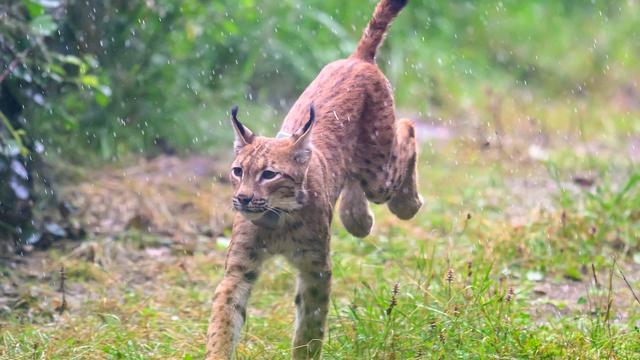
Saxony celebrates lynx conservation success with new cubs and wild releases
Translated from German, summarized and contextualized by DistantNews.
At a glance
News
Sources not specified
Context piece
- Saxony, Germany, has successfully reintroduced lynx into the wild, with a previously released female lynx giving birth to two cubs.
- Two more lynx, a female named Lotta and a male named Luca, were also released into western Saxony after being prepared for life in the wild.
- The program aims to conserve the species, with the released animals equipped with transmitters for monitoring.
Saxony, Germany, is celebrating a significant success in its Eurasian lynx conservation program with the recent birth of two lynx cubs. Alva, a female lynx released into the wild in the spring of 2024, has given birth to her second litter, confirmed through images captured by wild cameras in July. The footage shows the young cubs playfully exploring their surroundings, a heartening sign for the species' recovery in the region.
Adding to the conservation efforts, two more lynx, a female named Lotta and a male named Luca, were released into the forests of western Saxony on Monday. Both animals were fitted with transmitters, allowing wildlife officials to track their movements for approximately one year. These lynx spent several months at the Wildkatzendorf Hützscheroda center, where they underwent preparation for their return to the wild.
Lotta is a descendant of a breeding pair at the Tierpark Chemnitz's Oberrabenstein wildlife enclosure, which has successfully produced four litters this year, contributing significantly to species preservation. Luca, also a descendant of captive-bred lynx, originates from Belgium. The successful reintroduction and breeding of these animals underscore the ongoing commitment to re-establishing a healthy lynx population in Saxony.
With the help of wild cameras, we were able to document two young animals in July.
DistantNews Editorial
Originally published by Die Zeit in German. Translated, summarized, and contextualized by our editorial team with added local perspective. Read our editorial standards.
More Stories


From Our Blog

What Gets Lost (and Found) When News Is Translated

How the Same Story Looks Different in Different Countries

The Critical Role of Diaspora Media in Global News

What Travellers Should Know About Countries with Restricted Press

A Digital Nomad's Guide to Following Local News
