


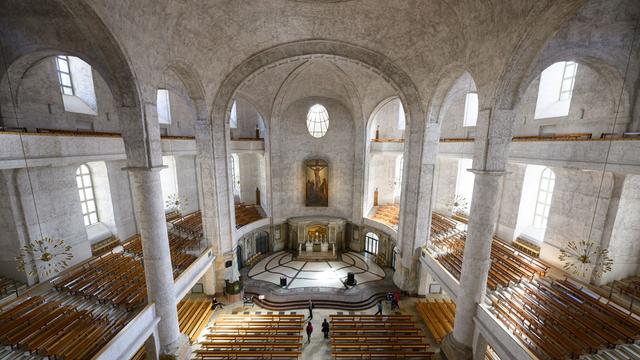
Saxony's churches offer cool refuge from heatwave
Translated from German, summarized and contextualized by DistantNews.
At a glance
News
From a news agency
Context piece
- Churches in Saxony are offering cool refuge during the ongoing heatwave.
- Thick walls and high ceilings keep the buildings at a pleasant temperature, providing a place for rest and reflection.
- Numerous churches across Dresden, Leipzig, Chemnitz, and other towns are open daily, with specific opening hours available.
As a sweltering heatwave grips Saxony, churches across the state are opening their doors to offer a cool respite for visitors. The thick walls and high ceilings of these historic buildings naturally keep them at a pleasant temperature, providing a much-needed escape from the rising heat.
Through their thick walls and high rooms, they remain pleasantly cool even in times of great heat.
Parishes have been encouraged to keep their churches open during the day and to publicize these cooling havens. The initiative, supported by the Social Ministry, aims to provide not only a place of faith but also open spaces for the community. Visitors can find quiet contemplation, listen to organ music, or enjoy evening concerts.
Churches are to point out publicly.
Major cities like Dresden and Leipzig feature prominent churches such as the Kreuzkirche, Hofkirche, Thomaskirche, and Michaeliskirche, which are open daily. In Chemnitz, the Jakobikirche, Schloßkirche, and St. Petrikirche also offer regular visiting hours. The cooling offer extends beyond the major urban centers, with churches like St. Annenkirche and Bergkirche St. Marien in Annaberg-Buchholz also welcoming visitors.
People can find peace and contemplation in the churches, listen to organ music at noon, or experience a concert in the evening.
While many churches provide daily access, it is advisable to check specific opening hours before visiting, as these can vary. The Evangelical State Church has compiled a map to help visitors find these cool sanctuaries.
Especially with great heat stress, the churches understand themselves not only as places of faith but as open spaces in the city.
DistantNews Editorial
Originally published by Die Zeit in German. Translated, summarized, and contextualized by our editorial team with added local perspective. Read our editorial standards.
More Stories
From Our Blog

What Gets Lost (and Found) When News Is Translated

How the Same Story Looks Different in Different Countries

The Critical Role of Diaspora Media in Global News

What Travellers Should Know About Countries with Restricted Press

A Digital Nomad's Guide to Following Local News
