


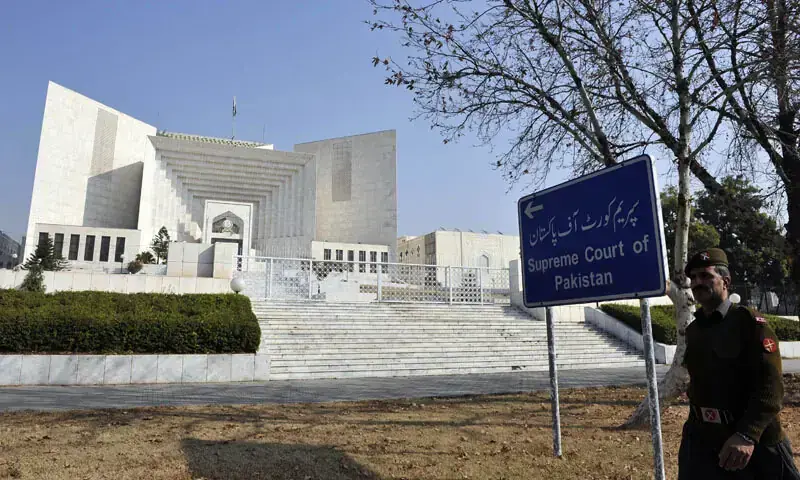
SC rules technical procedures should not impede justice
Summarized and contextualized by DistantNews.
At a glance
News
Sources not specified
Context piece
- The Supreme Court ruled that procedural law should facilitate justice, not hinder it, in a criminal appeal case.
- The court ordered a trial court to re-examine a witness's video testimony against her written statement for discrepancies.
- The ruling aims to ensure accurate recording of testimony and expedite the trial process, emphasizing the ultimate purpose of law is to address human suffering.
The Supreme Court of Pakistan has asserted that procedural laws must serve the ultimate goal of delivering justice and addressing human suffering, rather than creating obstacles. This principle was highlighted in a ruling that overturned lower court decisions in a criminal appeal concerning the murder trial of Advocate Sanam Umrani.
Sanam Umrani, a women's rights advocate, was murdered on May 31, 2018, in Jacobabad, Sindh. Her sister, Nayab Umrani, brought a criminal appeal to the Supreme Court after her applications to correct inaccuracies in her recorded testimony were dismissed by both the trial court and the Sindh High Court.
A two-member bench of the Supreme Court directed the trial court to meticulously review the video recording of Nayab Umrani's statement and compare it with her written testimony. This review is to be conducted in the presence of the accused, legal counsel, and the prosecutor. If any discrepancies, omissions, or inaccuracies are identified, the trial court must record its remarks and incorporate the correct version of the statement into a memorandum, making it an official part of the record.
The Supreme Court mandated that this process be completed within fifteen working days of receiving the order. Following this, the trial court is to decide the case on its merits within 30 days, after providing an opportunity for re-arguments. The petitioner, Nayab Umrani, is a prosecution witness in the murder case, which was registered under various sections of the Pakistan Penal Code. The court's intervention aims to ensure the integrity of the evidence and expedite the judicial process, reinforcing the idea that legal procedures should ultimately support, not obstruct, the pursuit of justice.
the ultimate purpose of procedural law was to give voice to human suffering and not to silence it.
DistantNews Editorial
Originally published by Dawn. Summarized and contextualized by our editorial team with added local perspective. Read our editorial standards.
More Stories



From Our Blog

What Gets Lost (and Found) When News Is Translated

The Critical Role of Diaspora Media in Global News

What Travellers Should Know About Countries with Restricted Press

A Digital Nomad's Guide to Following Local News

How the Same Story Looks Different in Different Countries
