


Scan, Tap, Done: Digital Payments Transform Disaster Relief in Nepal
Translated from English and summarized by DistantNews. Read the original for the full story.
At a glance
In-depth
Documents & data
Outcome reported
- Musician Bobby Lama donated to Nepal’s Prime Minister’s Disaster Relief Fund through a QR code after previously carrying cash during rescue efforts.
- More than Rs10 billion had reached the fund by the 11th day after the Bhotekoshi floods, with contributions from individuals, students, companies and donors abroad.
- Digital payment networks processed hundreds of thousands of transactions after Nepal removed limits on donations and enabled domestic and international electronic transfers.
When the 2015 earthquake struck Nepal, guitarist Bobby Lama personally carried cash to affected communities while helping with rescue and relief efforts. The difficulty of taking money to a bank meant he never considered donating to a government relief fund.
After devastating floods hit Nepal, Lama took a different route. He scanned a QR code and transferred money to the Prime Minister’s Disaster Relief Fund through mobile banking. He first donated Rs5,000, then added Rs150,000 after consulting his bandmates through Siddhartha Bank. “We have a European tour coming up. After we return, we plan to contribute more through the QR system,” Lama said. “Scanning a QR code has made donating to the relief fund much easier and more transparent.”
We have a European tour coming up. After we return, we plan to contribute more through the QR system.
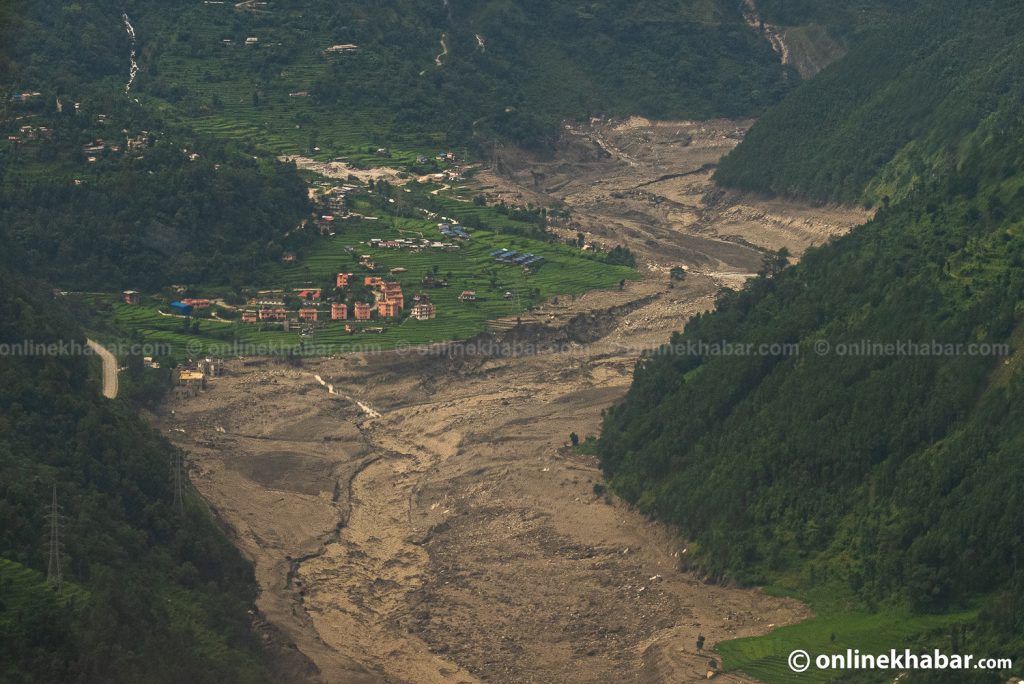
His experience reflects a broader shift in Nepal, where digital philanthropy has become faster and easier to access. By the 11th day after the Bhotekoshi floods, the relief fund had collected more than Rs10 billion. The donors included schoolchildren at Shodasha Secondary School in Mangalasen, Achham, and Nvidia, one of the world’s most valuable technology companies.
Scanning a QR code has made donating to the relief fund much easier and more transparent.
The campaign marked the first time in Nepal that individuals could make direct person-to-government transfers on such a scale, sending money electronically into a government account. During the 2015 earthquake, people in Nepal and abroad had no similarly convenient channel for direct donations.
Nepal’s digital payment infrastructure expanded rapidly after the Covid-19 pandemic. Finance Minister Swarnim Wagle said technology had made collecting relief money considerably easier. “For donors living abroad, we arranged for direct payments using dollar-denominated cards such as Visa and Mastercard,” Wagle said. “They no longer have to visit a bank or go through cumbersome international bank transfers.”
For donors living abroad, we arranged for direct payments using dollar-denominated cards such as Visa and Mastercard.
Data from the Finance Ministry, Fonepay and Nepal Clearing House showed that electronic payments had become the preferred channel for disaster donations. Nepal Rastra Bank removed transaction limits for relief-fund contributions, allowing small donations through QR payments and digital wallets. Fonepay processed 889,145 transactions, including 815,219 domestic QR payments that generated Rs2.095 billion. Nepal Clearing House recorded 246,614 transactions, with 112,932 domestic QR payments raising Rs390.5 million. International connections also allowed Nepalis abroad and foreign donors to contribute without traditional bank transfers.
They no longer have to visit a bank or go through cumbersome international bank transfers.
About this summary
Originally published by Kathmandu Post in English. Translated, summarized, and contextualized automatically by DistantNews, with a note on how the source frames the story. Not individually reviewed before publishing. How this works.
More Stories


From Our Blog

News in Translation: What Gets Lost, and How We Keep the Framing

Diaspora Media: How Communities Follow News From Home

Traveling Where the Press Is Not Free: How to Read the News There

The Digital Nomad's Guide to Local News

The Same Story, Different Countries: How Coverage Changes at the Border
