


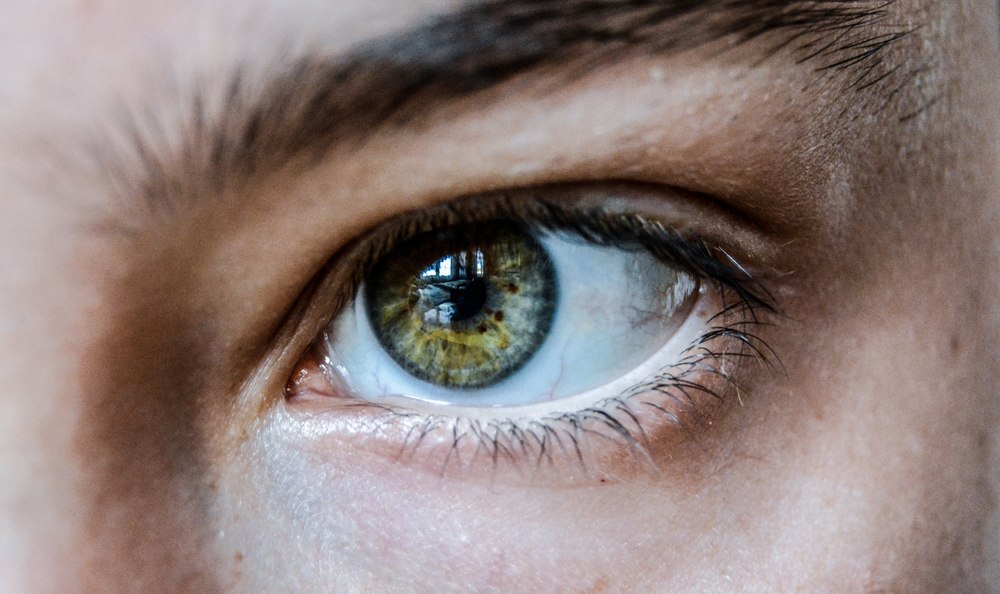
Scientists Create 'Olo,' a Color Invisible to the Human Eye
Translated from Romanian, summarized and contextualized by DistantNews.
At a glance
News
Sources not specified
Context piece
- Researchers at UC Berkeley have created a novel visual experience called 'olo,' which allows humans to perceive a color not naturally visible.
- This color is generated by selectively stimulating specific cone cells in the human retina using a laser system.
- 'Olo' is described as an intensely saturated blue-green, and its perception depends on precise stimulation of M-cones, distinguishing it from mere intense green light.
Scientists at the University of California, Berkeley, have achieved a remarkable feat: inducing a visual experience in humans that the eye cannot naturally perceive. This unique color, dubbed 'olo,' was initially perceived by only five individuals, with the number later growing to seven.
'Olo' is not a new color discovered in nature and neither is it a shade that can be reproduced with the help of a screen or paint.
'Olo' is not a color found in nature, nor can it be replicated with screens or paints. Instead, researchers created this experience using a laser system designed to selectively stimulate specific cone cells within the human retina. Color vision relies on three main types of cone cells, L, M, and S, which respond to different light wavelengths and send signals to the brain. However, these cells' sensitivities overlap. For instance, M-cones, which respond to medium wavelengths, are never stimulated exclusively in nature; other cones are always activated simultaneously.
This limitation sparked the curiosity of researcher Ren Ng at UC Berkeley. He wondered what the brain might perceive if scientists could activate only the M-cones. Collaborating with vision researcher Austin Roorda, whose lab developed technology to identify individual retinal cells and direct microscopic light impulses, Ng pursued this question. Together, they built the Oz system, capable of continuously tracking eye position and directing a laser beam to selected cells.
Researchers created the experience through a laser system capable of selectively stimulating certain cells in the human retina.
During the experiment, the Oz system activated thousands of M-cones while attempting to leave other cone types inactive. The resulting visual experience was described by participants as an intensely saturated blue-green, akin to the color of a peacock. One researcher noted that even the most intense natural green they could find appeared pale in comparison. A crucial detail emerged when a slight error in the laser's aim caused participants to stop seeing 'olo' and perceive normal green instead. This indicated that the sensation was not simply due to very bright green light but depended on the precise stimulation of M-cones.
The problem is that the sensitivity of these cells overlaps. In the case of M-cones, those that respond particularly to medium wavelengths, there is no light in nature capable of stimulating them exclusively, without also activating the L or S cones.
This precise stimulation is also why 'olo' cannot be captured by a camera. Standard cameras, like the human eye, rely on a range of wavelengths to capture color. 'Olo,' however, is a product of a specific, artificial stimulation pattern that cameras are not equipped to record. The researchers' breakthrough opens new avenues for understanding human visual perception and the brain's interpretation of light.
This led researcher Ren Ng, from the University of California, Berkeley, to ask himself what the brain might see if scientists could manage to activate only the M-cones.
DistantNews Editorial
Originally published by Adevărul in Romanian. Translated, summarized, and contextualized by our editorial team with added local perspective. Read our editorial standards.
More Stories



From Our Blog

What Gets Lost (and Found) When News Is Translated

The Critical Role of Diaspora Media in Global News

What Travellers Should Know About Countries with Restricted Press

A Digital Nomad's Guide to Following Local News

How the Same Story Looks Different in Different Countries
