


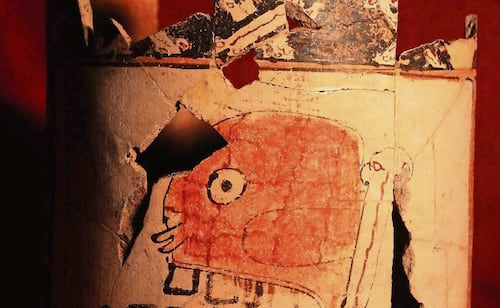
Scientists Develop Method to Detect Fake Ancient Ceramics
Translated from Spanish and summarized by DistantNews. Read the original for the full story.
At a glance
News
Named sources
Context piece
- Researchers at the Scripps Institution of Oceanography have developed a method to assess whether ancient clay and ceramic objects are authentic.
- The technique examines changes in the Earth’s magnetic imprint in ceramic particles after controlled reheating.
- The researchers say the method could help museums, archaeologists and authorities combat looting, illicit antiquities trading and forgery.
Scientists have developed a way to test ancient ceramics for signs of forgery by studying the magnetic record trapped in clay during firing.
The method, developed by researchers at the Scripps Institution of Oceanography at the University of California, San Diego, uses two forms of magnetism preserved in ceramic particles. Larger particles retain a stable imprint of the Earth’s magnetic field after the object cools. Smaller particles carry a weaker signal that continues to fluctuate over centuries, a phenomenon known as viscous magnetism.
The researchers found that reheating a ceramic object can remove the viscous signal. The newer the object, the lower the temperature required. To test the method, they heated ceramics ranging from objects thousands of years old to items bought in Jerusalem souvenir shops and known fakes. The temperatures began at 50°C and increased gradually.
Samples more than 1,000 years old lost their viscous magnetism only above 112°C, while modern samples lost the signal at lower temperatures. The findings appeared in the journal PNAS.
Lead researcher Yoav Vaknin said the technique could assist museum conservators, archaeologists, historians and authorities fighting the illicit antiquities trade, archaeological-site looting and forgery. The researchers also propose using it as evidence in court cases involving alleged fakes and plan to apply it to questionable objects in museums worldwide.
Conservators, archaeologists and historians, and authorities fighting the illicit trade in antiquities, the looting of archaeological sites and forgery.
About this summary
Originally published by El Universal in Spanish. Translated, summarized, and contextualized automatically by DistantNews, with a note on how the source frames the story. Not individually reviewed before publishing. How this works.
More Stories



From Our Blog

What Press Freedom Means for the News You Read

What Gets Lost (and Found) When News Is Translated

The Critical Role of Diaspora Media in Global News

What Travellers Should Know About Countries with Restricted Press

A Digital Nomad's Guide to Following Local News
