


Scientists Discover Previously Unknown Form of Corrosion That Even Raindrops May Cause
Translated from Estonian and summarized by DistantNews. Read the original for the full story.
At a glance
News
Sources not specified
Context piece
- German researchers observed electrically charged water droplets creating microscopic holes in protective metal coatings during laboratory experiments.
- The findings suggest that rain, sea waves or waterfalls could contribute to corrosion, although the real-world importance of the effect remains unclear.
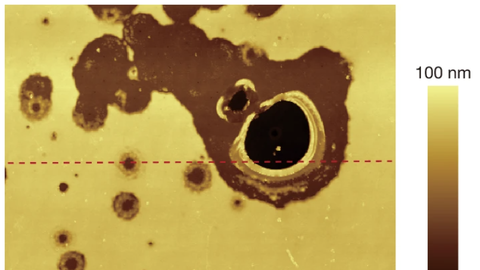
Raindrops may do more than wet metal surfaces. German scientists say electrically charged water droplets can burn microscopic holes through protective coatings in laboratory experiments, exposing the metal beneath.
The discovery offers a possible explanation for why car bodies, historic monuments and ship hulls can begin to rust despite careful treatment with anti-corrosion layers. The droplets can gather an electrical charge as they move across a surface, in a process compared with static electricity.
Researchers observed the effect under laboratory conditions. They have not yet established how much real-world rust damage the phenomenon causes, but the finding suggests that existing explanations of corrosion may not tell the whole story.
The same electrical attack could potentially occur in rain, sea waves and waterfalls. The possibility remains a question raised by the research rather than a confirmed measure of its impact in those environments.
About this summary
Originally published by Postimees in Estonian. Translated, summarized, and contextualized automatically by DistantNews, with a note on how the source frames the story. Not individually reviewed before publishing. How this works.
More Stories
/nginx/o/2026/08/31/17887596t1h0e73.webp)
/nginx/o/2026/08/31/17887168t1he173.jpg)
/nginx/o/2026/08/31/17886295t1hed52.jpg)
From Our Blog

What Gets Lost (and Found) When News Is Translated

The Critical Role of Diaspora Media in Global News

What Travellers Should Know About Countries with Restricted Press

A Digital Nomad's Guide to Following Local News

How the Same Story Looks Different in Different Countries
