


Scientists find sugar in the Milky Way, potentially explaining life's origins on Earth
Translated from English, summarized and contextualized by DistantNews.
At a glance
News
Named sources
Context piece
- Scientists have detected naturally occurring sugar, specifically erythrulose, in the Milky Way's interstellar medium.
- This discovery offers new insights into the origins of life on Earth and how life-sustaining compounds formed in the cosmos.
- The sugar likely formed in ice through chemical reactions within the interstellar medium, potentially seeding early Earth via asteroids and comets.
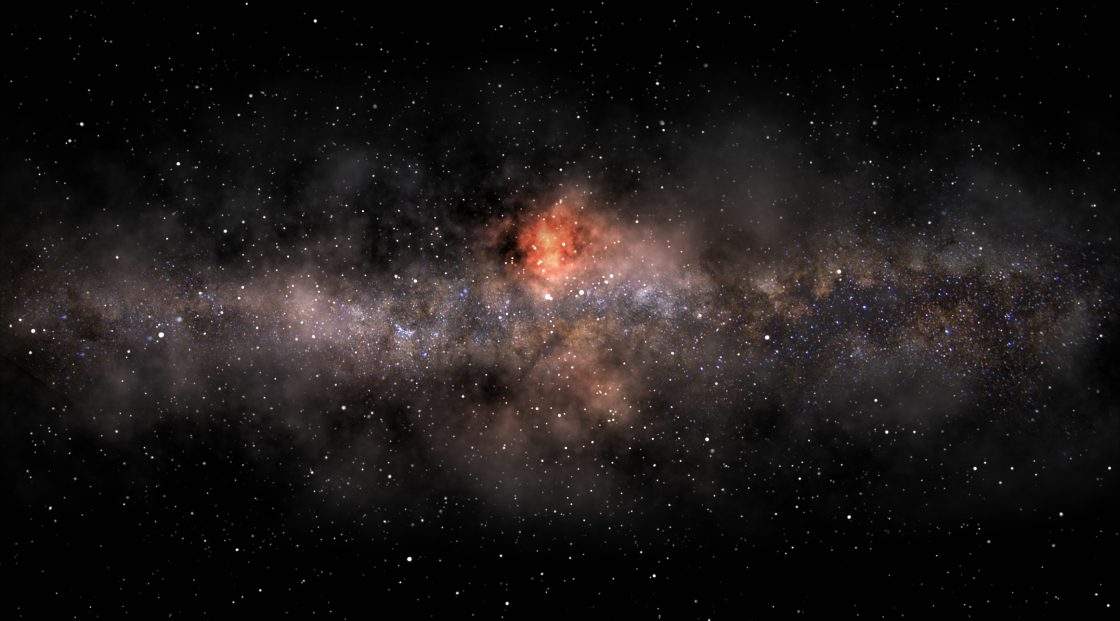
A groundbreaking discovery has been made in the heart of the Milky Way: scientists have identified naturally occurring sugar molecules drifting in the vast expanse between star systems. This finding provides a crucial clue to understanding the origins of life on Earth and how essential compounds came to be present in all living things.
The interstellar medium “is an impressive chemical factory,” the authors of the study wrote, noting that hundreds of compounds have already been found there, including origin-of-life molecules believed to be the building blocks of RNA, a nucleic acid present in all living things.
The presence of sugar on Earth has long been a mystery to researchers. While life's dependence on it is clear, recreating the chemical conditions necessary for its emergence has proven difficult. Scientists theorized that sugar might have arrived on Earth via asteroids and comets during the solar system's early formation, as various sugars have been found on meteorites. However, the ultimate source of these sugars remained unknown until now.
A team of astrochemists, led by Izaskun Jiménez-Serra at Spain's Center for Astrobiology, has potentially solved this puzzle. They detected erythrulose, a sugar found in raspberries and used in self-tanning products, within the interstellar medium (ISM) of our galaxy. This region, approximately 26,700 light-years from Earth, is a dense concentration of gases and stars near the Milky Way's center.
It was this very beautiful match,” Jiménez-Serra told the New York Times, “my heart started beating very, very fast.”
Laboratory experiments suggest that this sugar could have formed through chemical reactions within ice in the deep ISM. Using powerful telescopes, Jiménez-Serra's team analyzed the frequencies emitted by molecules in the ISM, matching them with laboratory compounds to identify erythrulose. This discovery confirms the ISM as a significant 'chemical factory' capable of producing complex molecules essential for life.
They went to extraordinary lengths to account for all possible interlopers,” he said.
DistantNews Editorial
Originally published by Global News in English. Translated, summarized, and contextualized by our editorial team with added local perspective. Read our editorial standards.
More Stories



From Our Blog

What Gets Lost (and Found) When News Is Translated

The Critical Role of Diaspora Media in Global News

What Travellers Should Know About Countries with Restricted Press

A Digital Nomad's Guide to Following Local News

How the Same Story Looks Different in Different Countries
