


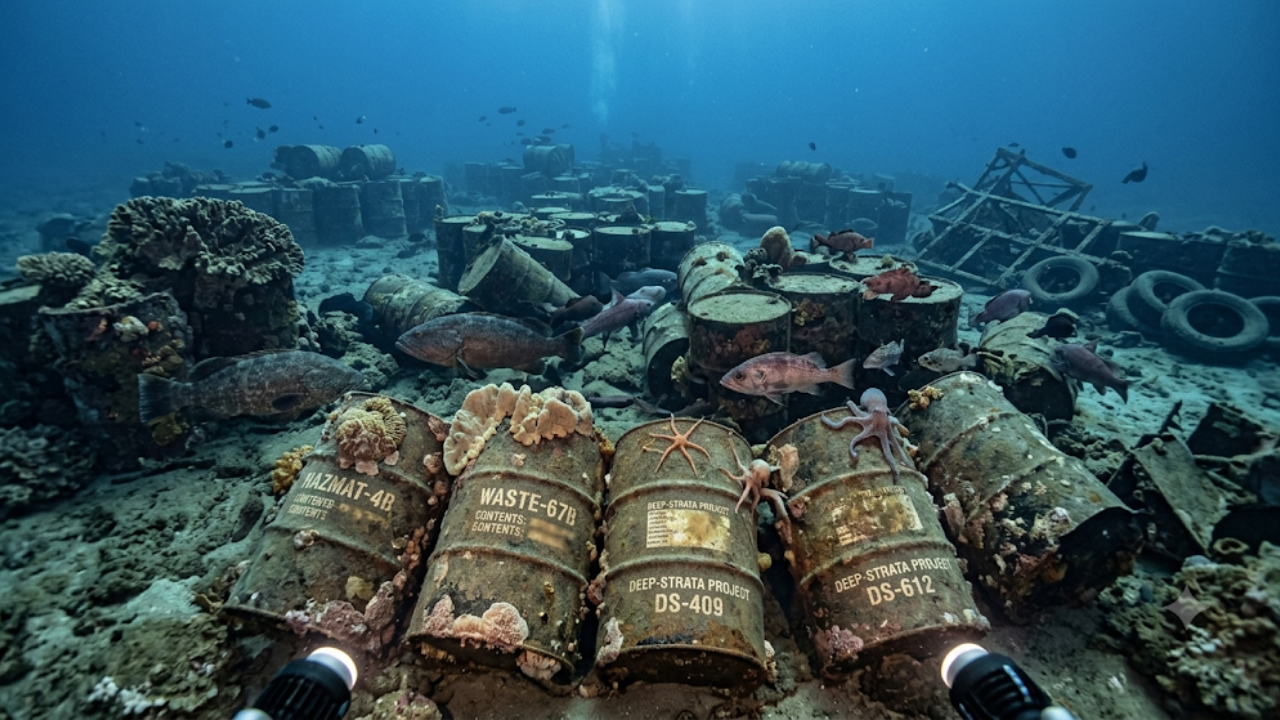
Scientists hunt for 200,000 nuclear waste barrels dumped in Atlantic Ocean
Translated from English, summarized and contextualized by DistantNews.
At a glance
News
Named sources
Ongoing story
- Scientists are launching an investigation into over 200,000 barrels of radioactive waste dumped in the Atlantic Ocean.
- The barrels were disposed of in the deep Atlantic from the mid-20th century until 1993, when international agreements banned the practice.
- The mission aims to locate the barrels, assess their condition after decades underwater, and determine their impact on the deep-sea ecosystem.
An international team of scientists is embarking on a mission to investigate a vast underwater dumping ground in the Atlantic Ocean, where over 200,000 barrels of radioactive waste lie forgotten. These barrels were systematically lowered into the ocean depths, often mixed with concrete or bitumen, from 1946 until 1993. At the time, deep-sea disposal was considered a viable solution to manage the growing volumes of radioactive waste generated by the nuclear industry, research labs, and hospitals.
The chosen sites were abyssal plains more than 4,000 meters below sea level in the North-East Atlantic. The immense water depth and geographical isolation were believed to provide a natural barrier, shielding human populations from the hazardous materials. Disposal operations, carried out on the high seas in international waters where no regulations applied, continued for decades. In 1967 and 1969 alone, over 46,000 drums were dumped.
Scientists at the time possessed limited understanding of deep-ocean ecosystems, often viewing the seabed as a barren environment. Concerns about long-term ecological consequences received far less attention than they do today. However, growing environmental awareness in the 1970s and 1980s led to increased scrutiny of these practices, culminating in international agreements that formally prohibited radioactive waste disposal at sea by 1993.
Now, decades later, scientists are returning to these sites using advanced autonomous underwater vehicles. This comprehensive investigation seeks not only to precisely locate the barrels, many of which were never accurately mapped, but also to understand how they have degraded over time and whether they are impacting one of Earth's least explored ecosystems. The mission hopes to finally answer lingering questions about the fate of this legacy nuclear waste.
DistantNews Editorial
Originally published by Times of India in English. Translated, summarized, and contextualized by our editorial team with added local perspective. Read our editorial standards.
More Stories


From Our Blog

What Press Freedom Means for the News You Read

What Gets Lost (and Found) When News Is Translated

The Critical Role of Diaspora Media in Global News

What Travellers Should Know About Countries with Restricted Press

A Digital Nomad's Guide to Following Local News
