

Scientists link Nepal disaster to rising global temperatures
Translated from Sinhala and summarized by DistantNews. Read the original for the full story.
At a glance
News
Named sources
Ongoing story
- A glacier collapse and sudden flood along the Bhote Koshi River killed more than 1,000 people in Nepal and Tibet, with thousands still missing.
- Rescue operations continue, while bad weather hampers efforts and damage includes homes, buildings, hydropower plants and 69 schools.
- Nepal and China agreed to exchange hydrological information, satellite images and early warnings about temporary water barriers in upper river basins.
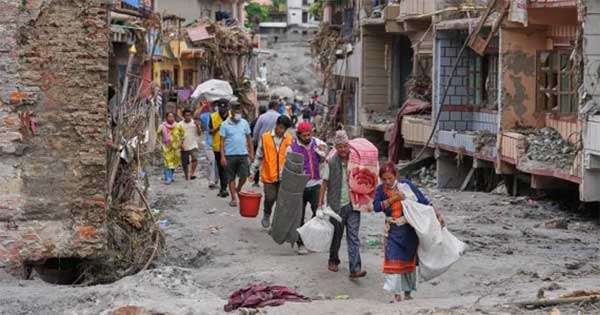
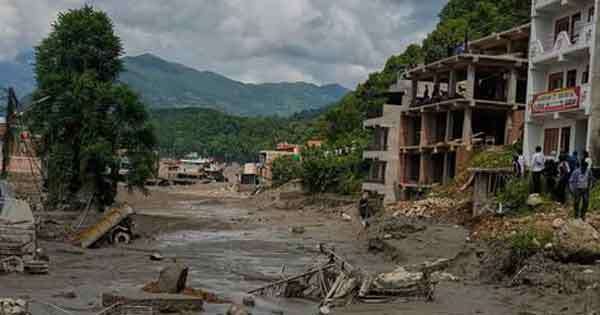
More than 1,000 people have died after a huge mass of water, soil and mud surged down the Bhote Koshi River through Nepal and Tibet. Thousands remain missing, and authorities in both countries fear the death toll will rise.
The flood struck on the morning of Aug. 26. The Bhote Koshi flows through Tibet before entering Nepal, where it eventually joins India's Ganges system. Media reports said bodies of Nepali victims had been found in Indian rivers.
Rescue teams remain active in both countries. Nepal's army is involved in the search, while China has deployed its military for rescue operations in Tibet. Poor weather is making the work more difficult. Several hydropower plants in Nepal were hit, and about 900 workers assigned to them were reported missing.
Nepal contributes less than 0.01% of global greenhouse-gas emissions, yet our country is having to face the most severe impacts of climate change.
The flooding also destroyed 69 schools in a Nepali valley, according to a UNICEF statement. More than 19,000 students have been unable to continue their education. The event initially registered as a magnitude 4.4 tremor, but American geologists later said it was not a conventional earthquake. They identified it as a shock caused by the collapse of a glacial lake in the Himalayas.
American scientists warned that human-driven warming is accelerating glacier melt and increasing the risk of further glacier collapses, landslides and floods. Nepal's Foreign Minister Shishir Khanal and China's Foreign Minister Wang Yi held a special phone discussion and agreed to share hydrological data. Khanal said Nepal contributes less than 0.01% of global greenhouse-gas emissions but faces severe climate impacts, and called for international action to protect Nepal, China and nearly two billion people dependent on the Himalayan ecosystem.
The international community must immediately work together to help Nepal, China and the nearly two billion people who depend on the Himalayan ecosystem escape this risk.
About this summary
Originally published by Lankadeepa in Sinhala. Translated, summarized, and contextualized automatically by DistantNews, with a note on how the source frames the story. Not individually reviewed before publishing. How this works.
More Stories


From Our Blog

What Gets Lost (and Found) When News Is Translated

The Critical Role of Diaspora Media in Global News

What Travellers Should Know About Countries with Restricted Press

A Digital Nomad's Guide to Following Local News

How the Same Story Looks Different in Different Countries
