


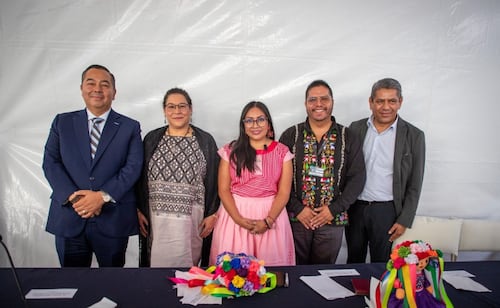
SCJN launches "Dialogues for Open Justice" in Querétaro; Minister Lenia Batres calls to protect judicial independence
Translated from Spanish, summarized and contextualized by DistantNews.
At a glance
News
Named sources
New plan
- Mexico's Supreme Court of Justice (SCJN) launched "Dialogues for Open Justice" in Querétaro to improve access to justice.
- Minister Lenia Batres emphasized that public dialogue strengthens judicial independence and trust.
- The initiative aims to connect institutions with citizens and address issues like access for indigenous peoples and AI's impact.
The Supreme Court of Justice of the Nation (SCJN) has initiated a new program called "Dialogues for Open Justice" in Querétaro, aiming to foster a more accessible and responsive justice system. This initiative seeks to exchange perspectives and make justice more attuned to people's realities.
During the inaugural event, Minister Lenia Batres Guadarrama highlighted the importance of dialogue between institutions and citizens. She stated that such exchanges enhance transparency, accountability, and public trust in the judicial process. Batres emphasized that institutional openness and public scrutiny are crucial for safeguarding judicial independence and lending greater legitimacy to court decisions.
We are not going to submit sentences to a vote, of course not. But notice how important citizen participation can be for protecting judicial independence when we are observed.
"We are not going to submit sentences to a vote, of course not. But notice how important citizen participation can be for protecting judicial independence when we are observed," Batres remarked. She added, "Because the more transparent we are with these types of exercises, the harder it is for illegitimate powers to try to coerce, through corruption, any of our sentences."
Because the more transparent we are with these types of exercises, the harder it is for illegitimate powers to try to coerce, through corruption, any of our sentences.
The program is part of a national strategy to bring justice closer to communities, promote civic engagement, and build stronger trust between institutions and society. Karina López Regalado, the SCJN's Director General of Social Attention and Participation, noted that justice is fortified when people's input is incorporated. These dialogues are designed to identify the needs and experiences of those who interact daily with the justice system, fostering understanding among authorities, legal professionals, and civil society, and generating proposals for a more open and inclusive justice system.
Workshops during the event covered critical topics such as access to justice for indigenous peoples, the Civil and Family Procedural Reform, judging with a gender perspective, alternative dispute resolution mechanisms, and the challenges posed by artificial intelligence in the administration of justice. The contributions from these sessions will be compiled by the SCJN's Directorate General of Attention and Participation.
justice is strengthened when people's participation is incorporated.
DistantNews Editorial
Originally published by El Universal in Spanish. Translated, summarized, and contextualized by our editorial team with added local perspective. Read our editorial standards.
More Stories



From Our Blog

What Press Freedom Means for the News You Read

What Gets Lost (and Found) When News Is Translated

The Critical Role of Diaspora Media in Global News

What Travellers Should Know About Countries with Restricted Press

A Digital Nomad's Guide to Following Local News
