


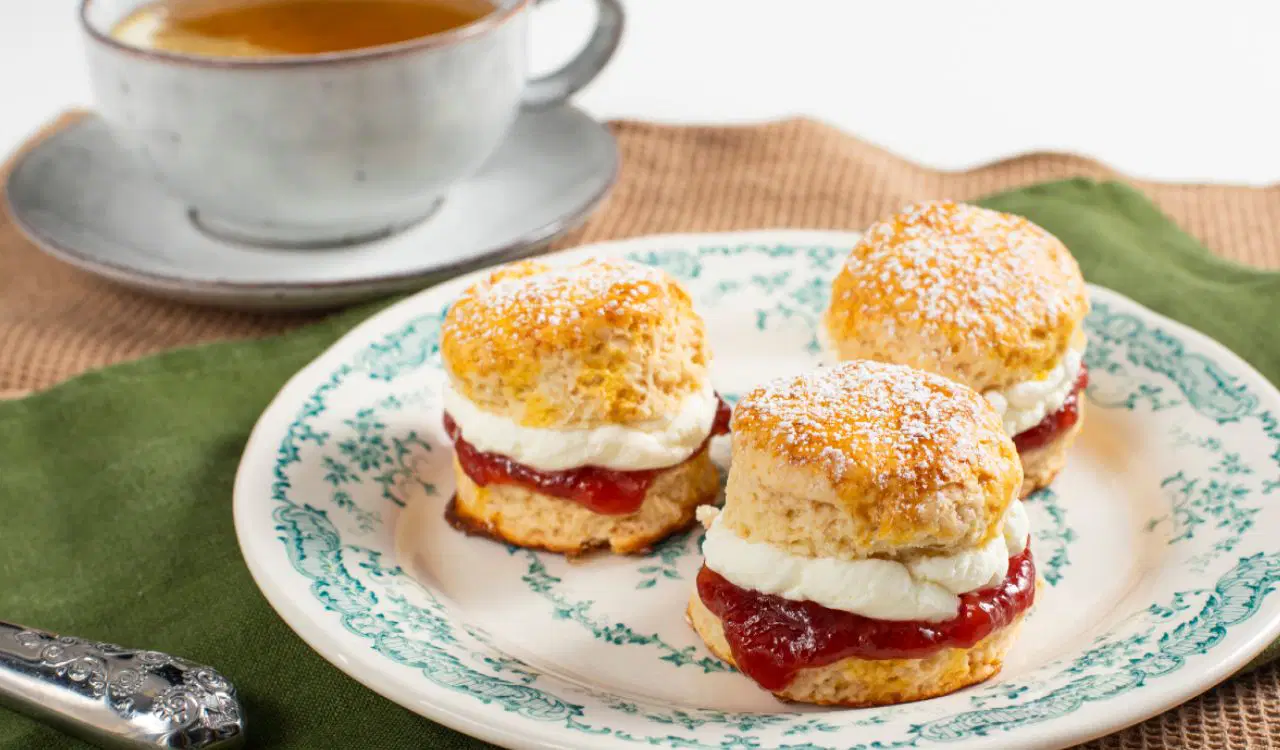
Scone: A Traditional British Pastry for Afternoon Tea
Translated from Turkish, summarized and contextualized by DistantNews.
At a glance
In-depth
Sources not specified
Context piece
- Scones are a traditional British pastry, essential to the 'Afternoon Tea' ritual, known for their layered, fluffy interior and crisp exterior.
- The key to a perfect scone lies in minimal kneading of the dough, allowing the butter to create pockets during baking for a layered texture.
- The recipe involves combining flour, baking powder, sugar, and salt, then cutting in cold butter, followed by a liquid mixture of milk and egg, mixed just until combined.
Scone, a quintessential British pastry, stands as an indispensable element of the traditional 'Afternoon Tea' ritual. Its appeal lies in a delicate balance: a cloud-like, soft interior encased by a delicately crisp exterior. This baked good is celebrated in culinary literature as a cornerstone of the United Kingdom's centuries-old tea time traditions.
Structurally, scones bridge the gap between a puffy pastry and a cookie, yet they possess a distinctively lighter, more floury, and buttery texture. The most crucial characteristic that sets scones apart from other baked goods is the absolute avoidance of prolonged kneading. Unlike bread dough, scone dough requires minimal handling.
The preparation method emphasizes the importance of cold ingredients. Butter is cut into small, cold cubes and then rubbed into the flour mixture using fingertips until it resembles coarse crumbs or wet sand. This technique is vital; using the palms of the hands is discouraged as the warmth can melt the butter prematurely. The goal is for the butter to create pockets within the dough, which expand when heated in the oven, resulting in the scone's signature layered rise.
Following the butter incorporation, a cold liquid mixture, typically comprising milk and an egg, is added. The ingredients are combined with a spatula or fork just until they cohere into a dough. Overmixing is strictly forbidden, as it activates gluten development, leading to a tough, rubbery texture instead of the desired light and fluffy outcome. The dough is then lightly flattened and folded a couple of times before being cut into rounds. This folding process further enhances the layering effect during baking. The scones are then brushed with an egg wash and baked at 200°C (392°F) until golden brown, typically for 12-15 minutes.
DistantNews Editorial
Originally published by Cumhuriyet in Turkish. Translated, summarized, and contextualized by our editorial team with added local perspective. Read our editorial standards.
More Stories



From Our Blog

What Gets Lost (and Found) When News Is Translated

The Critical Role of Diaspora Media in Global News

What Travellers Should Know About Countries with Restricted Press

A Digital Nomad's Guide to Following Local News

How the Same Story Looks Different in Different Countries
