


Secret War in the Desert: How China is Forging an Unprecedented Nuclear Armada
Translated from French, summarized and contextualized by DistantNews.
At a glance
News
Named sources
Context piece
- China is rapidly and secretly modernizing its nuclear arsenal, constructing dozens of new launch sites.
- The expansion aims to reach 1,000 nuclear warheads by 2030, significantly bolstering its strategic deterrence capabilities.
- This build-up is seen as a response to Western missile defense systems and a move towards nuclear parity with the US and Russia.
Beneath the vast, arid expanses of its territory, China is accelerating the modernization of its nuclear arsenal in utmost secrecy. Beijing's objective is to reach the symbolic threshold of 1,000 warheads by 2030, thereby consolidating its strategic deterrence. This silent arms race is reshaping the global balance of power.
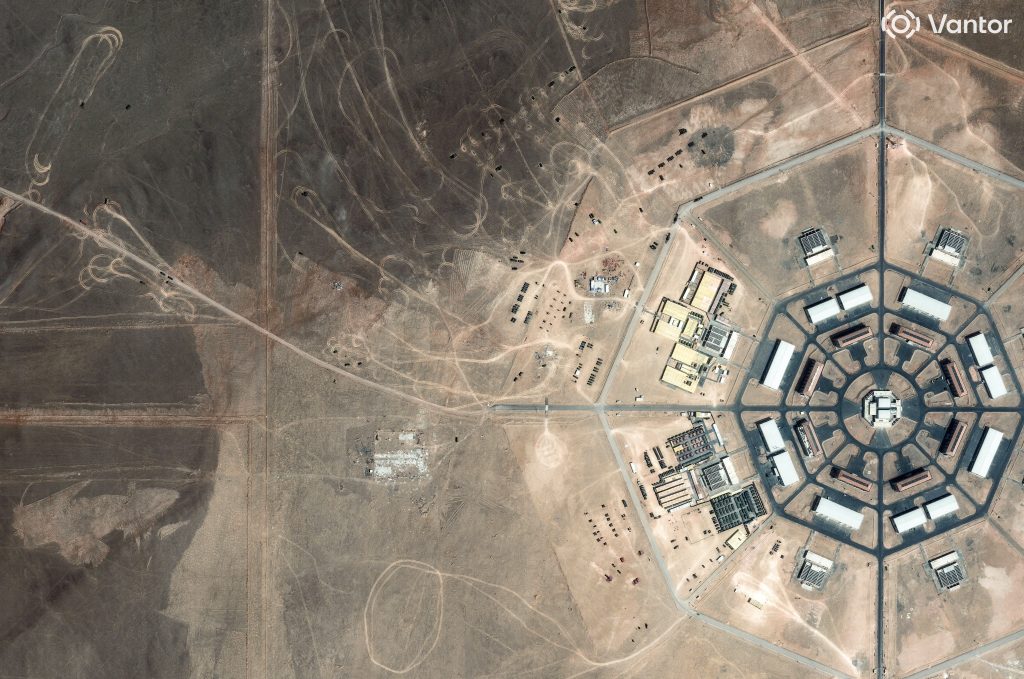
Satellite imagery analysis reveals China has initiated a large-scale military construction program near its main nuclear missile silo fields. The goal is to secure its strike capabilities against a preemptive strike and ensure a devastating response in case of conflict. International analysts have identified the construction of over 80 new concrete platforms, likely intended for mobile intercontinental ballistic missile (ICBM) launchers and their protective anti-aircraft defense systems.
Two immense octagonal structures, built over the past six years in the Xinjiang autonomous region, have particularly intrigued intelligence communities. Located 140 and 230 kilometers from the Hami nuclear site, these highly secured complexes include personnel quarters, extensive communication networks, and electronic warfare facilities. Neither the Pentagon nor China's Ministry of Defense has commented on the exact function of these protected edifices.
The People's Republic of China is the only competitor capable of combining its economic, diplomatic, military, and technological power to mount a sustained challenge to the international system.
This construction frenzy is part of a broader dynamic. The Pentagon's report on Beijing's military power warns that China is the only competitor capable of combining economic, diplomatic, military, and technological might to challenge the international system. Until recently, China's nuclear doctrine centered on minimal deterrence. However, U.S. military officials now believe China is developing its arsenal at an unprecedented pace.
The U.S. Department of Defense projects that China will deploy 1,000 nuclear warheads by 2030, aiming for nuclear parity with the United States and Russia by 2035. Jeffrey Lewis, a non-proliferation expert, suggests this is a reaction to the modernization of Western forces and the deployment of missile defense systems.
They are reacting to the fact that we are modernizing our forces and deploying missile defenses.
DistantNews Editorial
Originally published by El Watan in French. Translated, summarized, and contextualized by our editorial team with added local perspective. Read our editorial standards.
More Stories

From Our Blog

What Gets Lost (and Found) When News Is Translated

The Critical Role of Diaspora Media in Global News

What Travellers Should Know About Countries with Restricted Press

A Digital Nomad's Guide to Following Local News

How the Same Story Looks Different in Different Countries
