


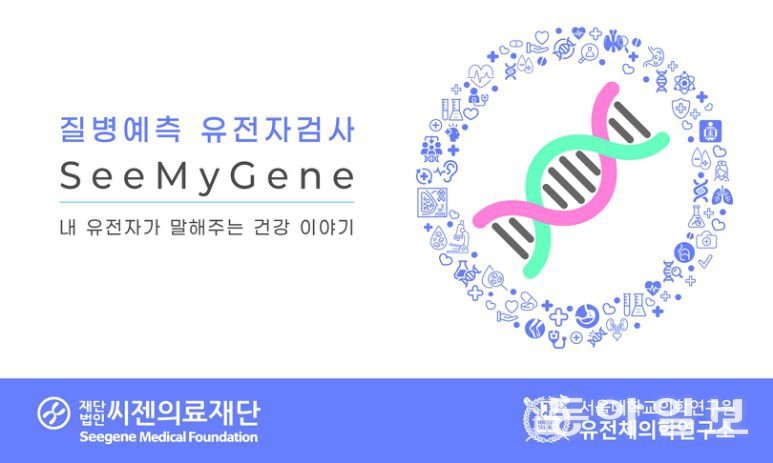
Seegene, Seoul National University develop disease-predicting genetic test
Translated from Korean, summarized and contextualized by DistantNews.
At a glance
News
Named sources
New plan
- Seegene Medical Foundation and Seoul National University's Genetic Medicine Research Institute jointly developed 'SeeMyGene,' a disease prediction genetic test.
- The service uses next-generation sequencing to analyze genetic information, assessing risks for cancer, cardiovascular diseases, and metabolic disorders.
- It aims to provide personalized health management by identifying genetic predispositions, with accuracy enhanced by Korean and East Asian genetic data.
Seegene Medical Foundation has partnered with Seoul National University's Genetic Medicine Research Institute to launch 'SeeMyGene,' a new genetic testing service designed to predict disease risks. This collaboration leverages advanced next-generation sequencing (NGS) technology to analyze an individual's genetic information, offering insights into their predisposition to various conditions.
The SeeMyGene service focuses on identifying 'genetic disease susceptibility,' which refers to innate genetic traits that increase the likelihood of developing specific illnesses. Unlike standard health check-ups that assess current health status, SeeMyGene analyzes potential future health vulnerabilities. This allows individuals to proactively manage their health and implement preventive measures based on their unique genetic profile.
The goal is to build a prevention-centered health management system by more precisely identifying individual genetic disease susceptibility that is difficult to grasp through existing health check-ups alone.
A key feature of SeeMyGene is its enhanced accuracy, achieved through the analysis of genetic data specific to Korean and East Asian populations. The joint development with Seoul National University's institute ensures the service is tailored to these demographics. Beyond simply presenting risk factors, the service provides personalized health management guides.
The test covers major disease categories, including various cancers like thyroid, lung, stomach, and colorectal cancer. For women, breast cancer risk is assessed, while men's prostate cancer risk is included. Additionally, it evaluates genetic risks for conditions such as cerebral aneurysms, stroke, myocardial infarction, metabolic syndrome, hypertension, diabetes, and dyslipidemia. The results are presented with risk levels and grades, guiding users on lifestyle adjustments and regular check-up schedules.
We plan to continuously enhance genome-based testing services suitable for Koreans based on research data and clinical evidence.
DistantNews Editorial
Originally published by Dong-A Ilbo in Korean. Translated, summarized, and contextualized by our editorial team with added local perspective. Read our editorial standards.
More Stories



From Our Blog

What Gets Lost (and Found) When News Is Translated

The Critical Role of Diaspora Media in Global News

What Travellers Should Know About Countries with Restricted Press

A Digital Nomad's Guide to Following Local News

How the Same Story Looks Different in Different Countries
