

Senators raise alarm over rising debt amid lack of roadmap for economic stability
Summarized and contextualized by DistantNews.
At a glance
News
Named sources
New plan
- Pakistani senators expressed grave concern over the nation's escalating debt.
- They highlighted that debt servicing consumes nearly half of the federal budget.
- Senators criticized the lack of a clear economic stability roadmap, particularly after the FY27 budget announcement.
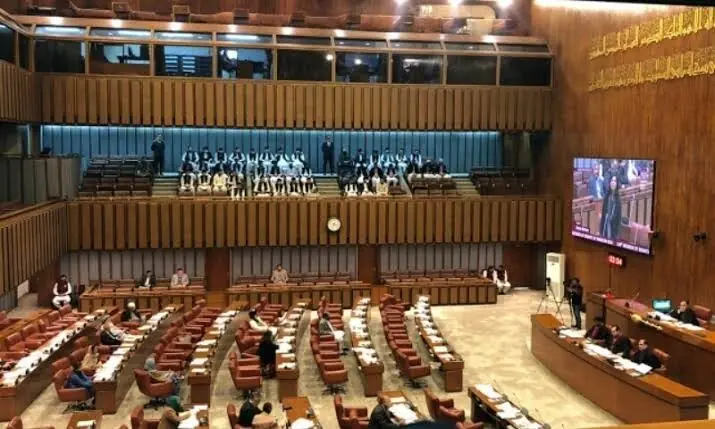
Members of Pakistan's Senate have voiced serious alarm regarding the country's mounting debt, criticizing the absence of a coherent strategy for economic stability. The concerns were raised during budget discussions, following the government's presentation of the budget for the fiscal year 2026-27, which includes a significant allocation of Rs8,054 billion for interest payments.
Senator Sherry Rehman, the PPP's vice president and parliamentary leader in the Senate, pointed out that approximately 42.8 percent of the federal budget is dedicated to servicing the national debt. This includes both interest and principal repayments, leaving severely constrained resources for development, social protection, and public investment.
Rehman emphasized that when nearly half of the federal budget is consumed by debt obligations, the government's capacity to fund essential public services and development projects is critically limited. She also noted that state-owned enterprises continue to impose a substantial burden on public finances, exacerbating the fiscal challenges.
The senators' remarks underscore a deep-seated anxiety about Pakistan's economic trajectory. The lack of a clear roadmap for achieving stability, coupled with the immense pressure of debt servicing, raises questions about the sustainability of the country's financial health and its ability to foster growth.
When nearly half of the federal budget is consumed by debt obligations, the space available for development, social protection and public investment becomes severely constrained.
DistantNews Editorial
Originally published by Dawn. Summarized and contextualized by our editorial team with added local perspective. Read our editorial standards.
More Stories

From Our Blog

What Gets Lost (and Found) When News Is Translated

The Critical Role of Diaspora Media in Global News

What Travellers Should Know About Countries with Restricted Press

A Digital Nomad's Guide to Following Local News

How the Same Story Looks Different in Different Countries
