


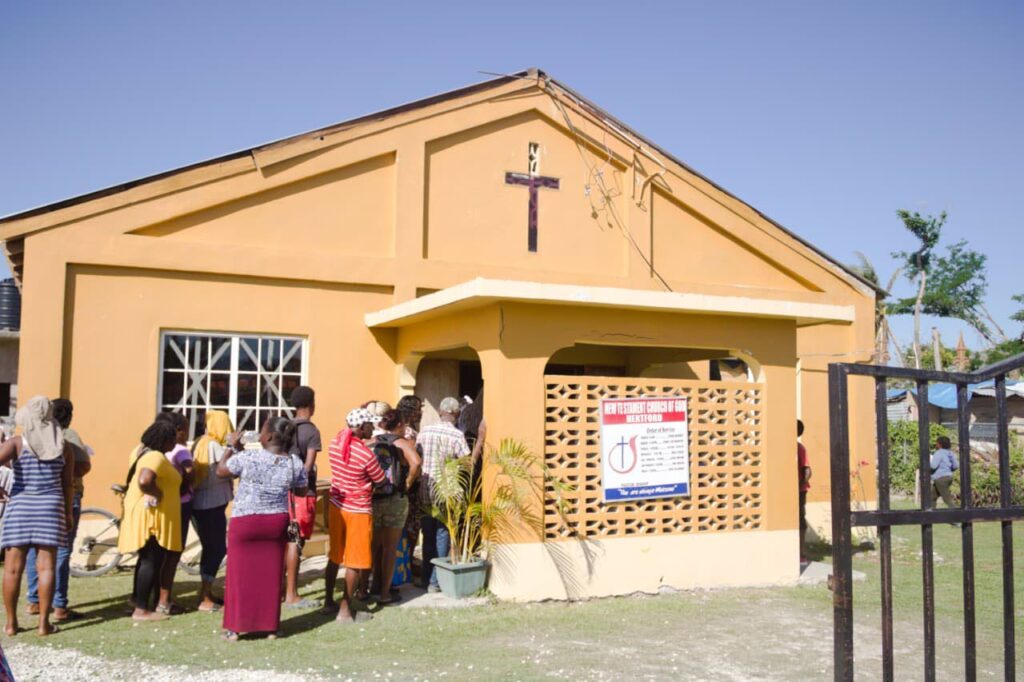
Senior clergyman urges funding and greater church role in disaster response
Summarized and contextualized by DistantNews.
At a glance
News
Named sources
Context piece
- Pastor Dr. Donville Bell calls for government funding and greater church involvement in disaster response across Jamaica.
- Bell highlighted churches' role as critical first responders, often overlooked in resource allocation despite supporting families before government agencies intervene.
- He urged an end to inequitable practices that favor other development partners, emphasizing that churches need financial support to sustain their community outreach and disaster relief efforts.
Dr. Donville Bell, Chairman of the Word Power Ministry Board and a senior clergyman, is urging the Jamaican government to provide state funding for faith-based social outreach. He also calls for greater inclusion of churches in disaster response efforts throughout the island nation. Bell made these remarks during the 18th Word Power Conference on Saturday, where he addressed attendees and partners about the vital role churches play during national crises.
The church is one of the first points of contact for struggling families and displaced persons long before they reach a government agency
Speaking as the Atlantic hurricane season began on June 1, Bell stressed that churches consistently prove to be critical first responders in emergencies. However, he noted they are often overlooked when resources are allocated. "The church is one of the first points of contact for struggling families and displaced persons long before they reach a government agency," Bell stated. He added, "In moments of crisis, people turn to familiar faces and trusted hands. For many communities, that trusted institution is the church."
Bell referenced the devastation caused by Hurricane Melissa, highlighting the pivotal role churches played in supporting affected residents when many communities were left reeling. According to the senior clergyman, churches in impacted areas served as emergency shelters, distributed care packages, provided meals, and offered emotional and spiritual counseling to families coping with trauma and loss. "When residents were displaced by Hurricane Melissa, the church did not hesitate. We partnered informally with state agencies and community groups, but too often churches are expected to carry out these acts of compassion without the financial support or resources necessary to sustain such efforts," he underscored.
In moments of crisis, people turn to familiar faces and trusted hands. For many communities, that trusted institution is the church.
Bell emphasized that faith-based organizations are competent social partners in addressing issues like poverty, violence prevention, youth misconduct, family dysfunction, and disaster relief. Despite the significant reliance on churches during crises, he observed that they are frequently excluded from formal funding mechanisms and national preparedness frameworks. "The government regularly calls upon churches to support social initiatives and community programs. Yet many churches are expected to carry out this work with limited or, in some cases, no resources at all. While we are honored to serve our communities, even the most conservative among us recognizes that it takes cash to care."
When residents were displaced by Hurricane Melissa, the church did not hesitate. We partnered informally with state agencies and community groups, but too often churches are expected to carry out these acts of compassion without the financial support or resources necessary to sustain such efforts
He further explained that this work becomes more challenging due to rising utility costs and the ongoing assistance provided to families and members facing cost-of-living pressures. "We must disrupt the inequitable practices that allocate the lion’s share of social assistance to other local development partners and instead, ensure that churches are..." Bell stated, advocating for a more equitable distribution of resources.
The government regularly calls upon churches to support social initiatives and community programs. Yet many churches are expected to carry out this work with limited or, in some cases, no resources at all. While we are honored to serve our communities, even the most conservative among us recognizes that it takes cash to care.
DistantNews Editorial
Originally published by Jamaica Observer. Summarized and contextualized by our editorial team with added local perspective. Read our editorial standards.
More Stories



From Our Blog

What Gets Lost (and Found) When News Is Translated

The Critical Role of Diaspora Media in Global News

What Travellers Should Know About Countries with Restricted Press

A Digital Nomad's Guide to Following Local News

How the Same Story Looks Different in Different Countries
