


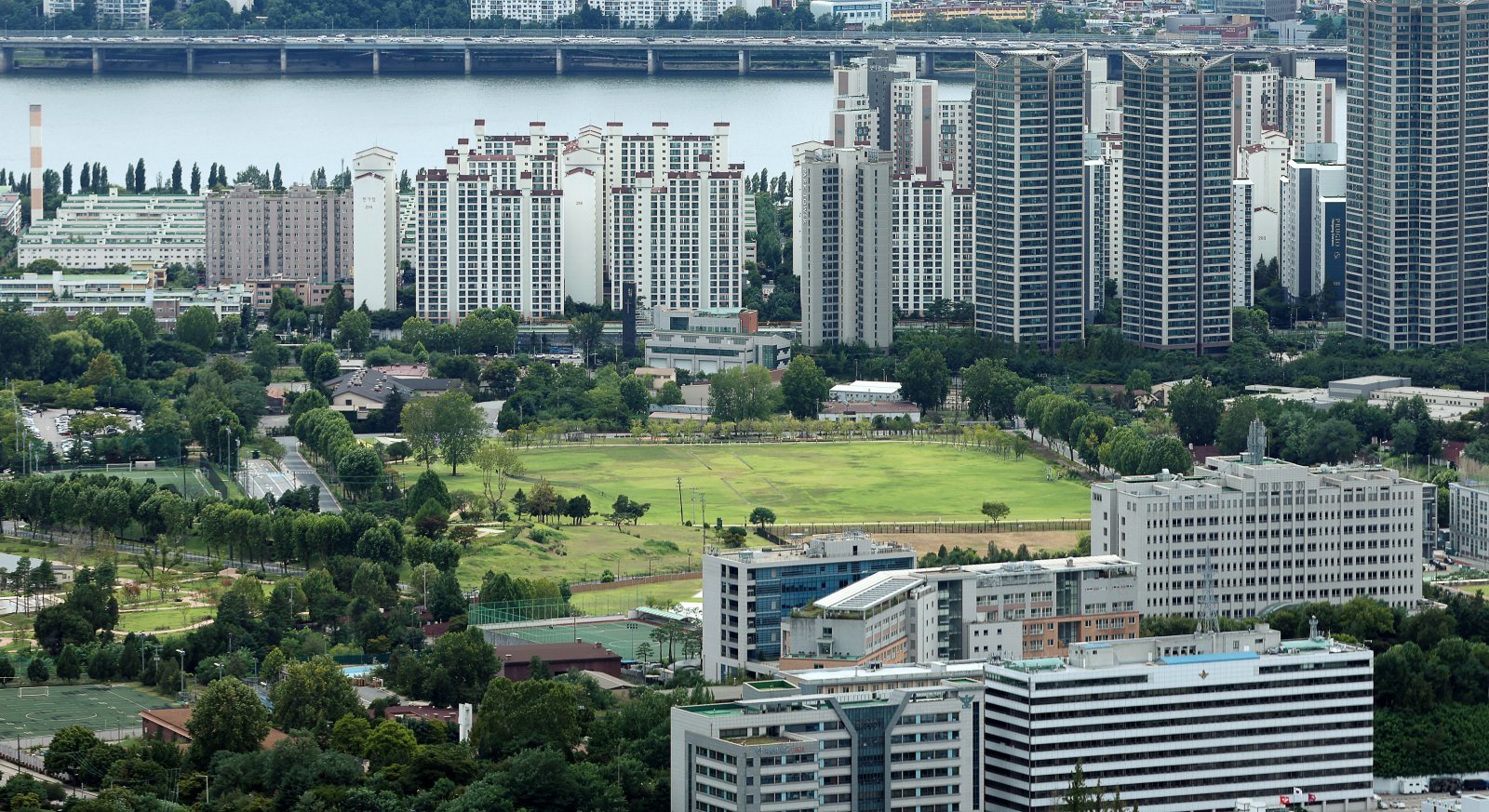
Seoul City and District Oppose Government's Yongsan Park Housing Plan
Translated from Korean, summarized and contextualized by DistantNews.
At a glance
News
Named sources
Context piece
- The South Korean government plans to use the entirety of Yongsan Park, including the Yongsan Children's Garden, as a site for new housing.
- Seoul city and Yongsan district officials oppose the plan, citing the park's value as a green space and national asset.
- The conflict highlights a clash between the government's push for rapid development and local authorities' desire to preserve the park.
The South Korean government's ambition to develop housing within Yongsan Park has sparked a fierce debate with local authorities. Minister of Land, Infrastructure, and Transport Kim Hyun-mee declared a "just build it" principle, suggesting the entire park, not just the children's garden, could be utilized for housing.
The principle is 'just build it.'
However, Seoul city officials immediately voiced strong opposition. They argue that Yongsan Park is a vital urban green space, crucial for protecting citizens amid the climate crisis and a precious national asset for future generations. Seoul Mayor Oh Se-hoon has consistently stated his refusal to allow any part of the park to be damaged, even by a centimeter.
It is very important to be cautious about supplying housing by damaging Yongsan Park, Seoul's last large-scale urban green space.
The Yongsan district government echoed these concerns, expressing deep regret over the Ministry's review of the park for housing. They emphasized that Yongsan Park should be viewed as a symbolic space for national history and the future, not merely as available land for housing.
Yongsan Park is not simply vacant land, but a precious national asset that must be protected for citizens in the era of climate crisis and passed on intact to future generations.
Despite the local resistance, Minister Kim indicated a willingness to cooperate with Seoul but also signaled a determination to push forward, stating that the city's opposition should not be seen as a sign of incompetence. The government is currently pursuing housing development on the 48,000-square-meter Camp Kim site adjacent to the park, aiming for 2,500 units. The children's garden alone, at 300,000 square meters, could potentially accommodate over 10,000 homes. However, current law prohibits changing the purpose or disposing of returned U.S. military land designated for national parks without legal amendments.
Damaging Yongsan Park is something I cannot agree to, not even by 1cm.
DistantNews Editorial
Originally published by Dong-A Ilbo in Korean. Translated, summarized, and contextualized by our editorial team with added local perspective. Read our editorial standards.
More Stories


From Our Blog

What Gets Lost (and Found) When News Is Translated

The Critical Role of Diaspora Media in Global News

What Travellers Should Know About Countries with Restricted Press

A Digital Nomad's Guide to Following Local News

How the Same Story Looks Different in Different Countries
