


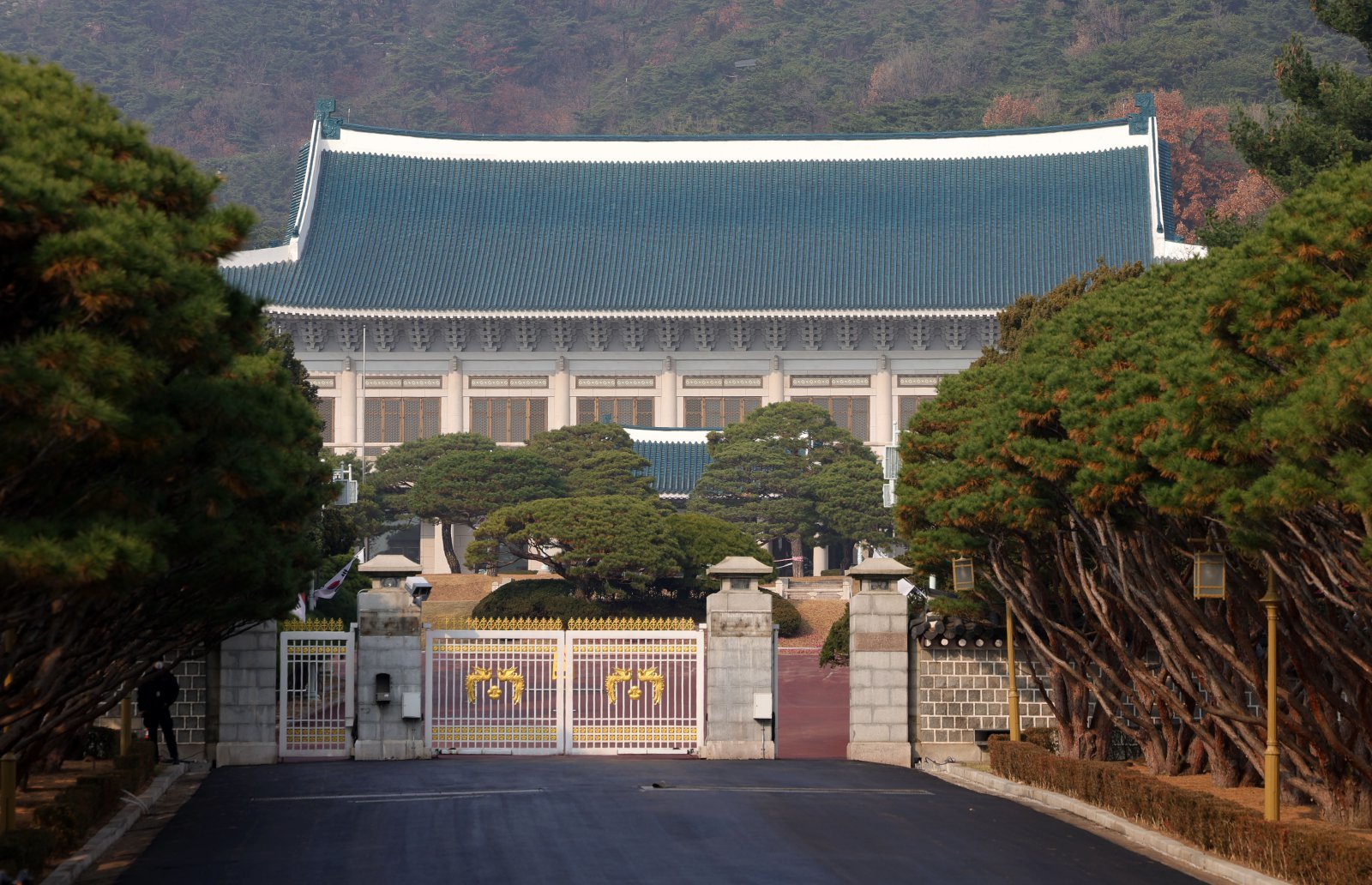
Seoul Defends Extended Deterrence as 'Responsible Duty' Amid North Korea's Criticism
Translated from Korean, summarized and contextualized by DistantNews.
At a glance
News
Official statement
New plan
- South Korea's Presidential Office stated that the US-ROK cooperation on extended deterrence is a "responsible government's duty."
- This statement came in response to North Korea's criticism of the recent US-ROK Nuclear Consultative Group (NCG) joint statement.
- Pyongyang reiterated its nuclear-armed state status and condemned the extended deterrence cooperation as "nuclear threat cooperation."
South Korea's Presidential Office has defended the ongoing cooperation on extended deterrence with the United States, calling it a "responsible government's duty" to protect its citizens. The statement was issued in direct response to North Korea's strong objections to a joint declaration made during the recent US-ROK Nuclear Consultative Group (NCG) meeting.
US-ROK extended deterrence cooperation is the duty of a responsible government to protect the people's lives and safety.
Pyongyang had vehemently criticized the NCG's reaffirmation of denuclearization as a shared goal, with its Foreign Ministry spokesperson declaring that denuclearization was a "closed issue" and reasserting the country's status as a nuclear power. North Korea further characterized the enhanced US-ROK security cooperation as "nuclear threat cooperation."
This is fully in line with international non-proliferation regimes and norms, including the NPT.
Seoul, however, maintains that its commitment to extended deterrence aligns with international norms, including the Nuclear Non-Proliferation Treaty (NPT). A presidential office official emphasized that the government is striving for a nuclear-free Korean Peninsula through peaceful coexistence and joint growth. The statement underscored that denuclearization remains a consistent objective of the international community, as confirmed by numerous UN Security Council resolutions.
Denuclearization of the Korean Peninsula is a consistent goal of the international community.
DistantNews Editorial
Originally published by Dong-A Ilbo in Korean. Translated, summarized, and contextualized by our editorial team with added local perspective. Read our editorial standards.
More Stories



From Our Blog

What Gets Lost (and Found) When News Is Translated

The Critical Role of Diaspora Media in Global News

What Travellers Should Know About Countries with Restricted Press

A Digital Nomad's Guide to Following Local News

How the Same Story Looks Different in Different Countries
