


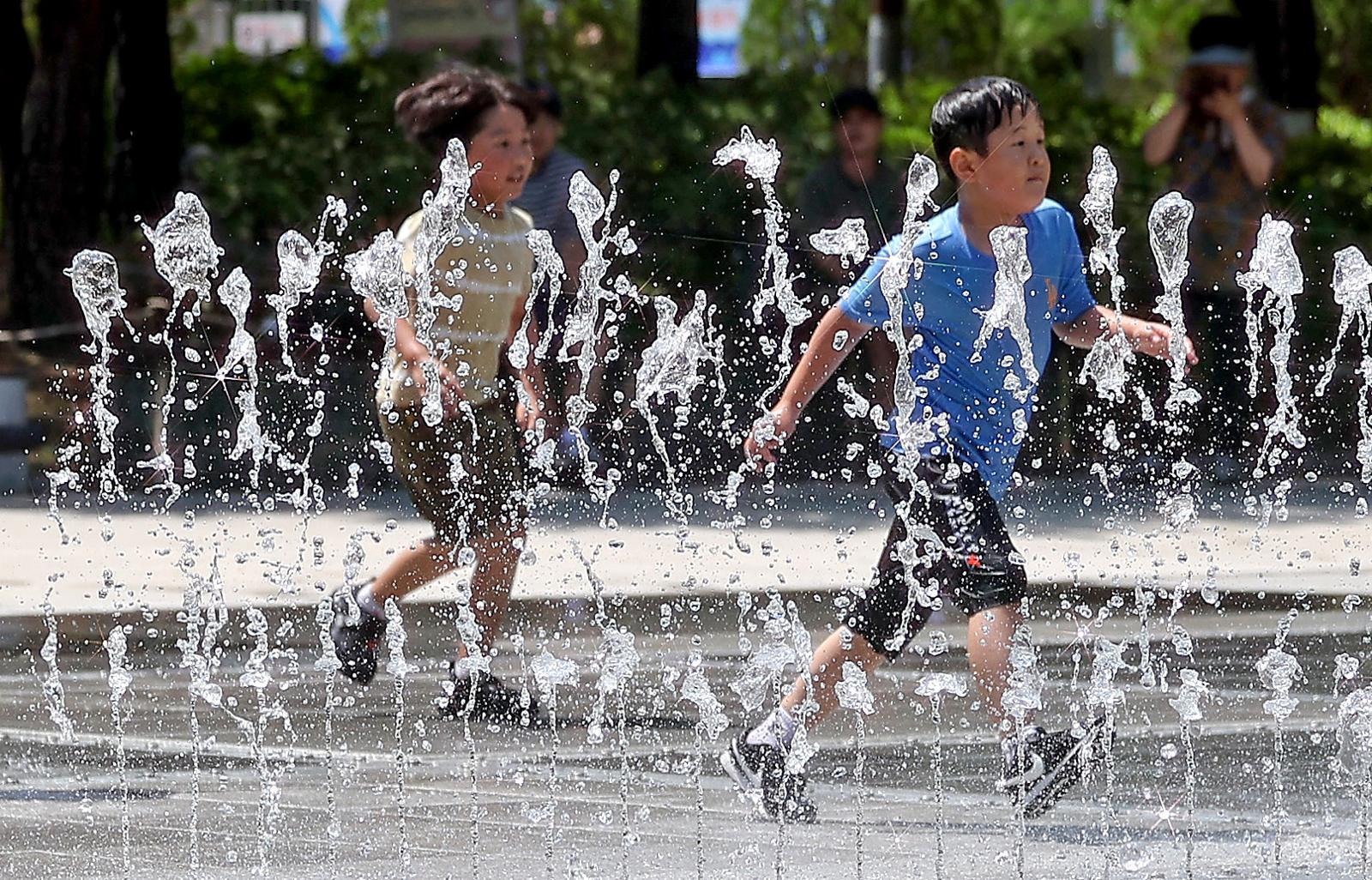
Seoul Issues Heatwave Advisory as Temperatures Hit 33°C, Experts Warn of Dangers for Children
Translated from Korean, summarized and contextualized by DistantNews.
At a glance
News
Sources not specified
Context piece
- Seoul issued its first heatwave advisory of the summer as temperatures reached 33 degrees Celsius (91.4 degrees Fahrenheit).
- Children are particularly vulnerable to heat-related illnesses like heat exhaustion and heatstroke due to underdeveloped temperature regulation.
- Experts advise limiting outdoor activities during peak heat hours, staying hydrated, and taking frequent breaks, especially for children.
Seoul is experiencing its first heatwave advisory of the summer, with temperatures soaring to 33 degrees Celsius (91.4 degrees Fahrenheit). This marks the second heatwave warning this summer, but the first to cover the entire city. A heatwave advisory is issued when the apparent temperature is expected to exceed 33 degrees Celsius for two consecutive days.
Children are more susceptible to heat-related illnesses such as heat exhaustion and heatstroke because their bodies are less efficient at regulating temperature. Prolonged outdoor activity in hot weather can lead to a rapid rise in body temperature, potentially causing heat exhaustion or, in severe cases, heatstroke.
Children often don't feel thirsty, so it's important to get them into the habit of drinking a little water frequently, even if they don't feel thirsty.
Experts recommend that children avoid outdoor activities between 11 a.m. and 2 p.m., when the sun is strongest. If outdoor activity is unavoidable, they should wear hats, light-colored, breathable clothing, and take breaks every 20-30 minutes. It is crucial for children to drink water frequently, even if they do not feel thirsty, as they may not recognize thirst as readily as adults.
If a child loses consciousness or shows abnormal behavior, do not force them to drink water; immediately transport them to the emergency room via 119.
Even during water play, continuous sun exposure can raise body temperature. Dehydration can also go unnoticed due to focus on the activity. It is advised to take breaks from the water every so often, rest in the shade, and rehydrate. Wearing wet swimsuits for extended periods can lower body temperature, so drying off with a towel or changing into dry clothes is recommended. Additionally, hot surfaces can burn bare feet, so prolonged walking on them should be avoided. Sunscreen should be reapplied every two hours or after water play.
Signs of heatstroke in children include headache, dizziness, vomiting, severe fatigue, muscle cramps, high body temperature, hot skin, and confusion. In such emergencies, move the child to a cool place, loosen clothing, and cool the body with water or wet towels. Applying ice packs to the neck, armpits, and groin can help lower body temperature. If a child loses consciousness or exhibits unusual behavior, do not force them to drink water; call emergency services immediately. It is also important to handle them carefully if they fall, as they may have injured their head or neck.
Prevention of heat-related illnesses in children is paramount, so adjusting outdoor activity times and checking weather information in advance on days with a heatwave warning is the most effective preventive measure.
DistantNews Editorial
Originally published by Dong-A Ilbo in Korean. Translated, summarized, and contextualized by our editorial team with added local perspective. Read our editorial standards.
More Stories


From Our Blog

What Gets Lost (and Found) When News Is Translated

The Critical Role of Diaspora Media in Global News

What Travellers Should Know About Countries with Restricted Press

A Digital Nomad's Guide to Following Local News

How the Same Story Looks Different in Different Countries
