


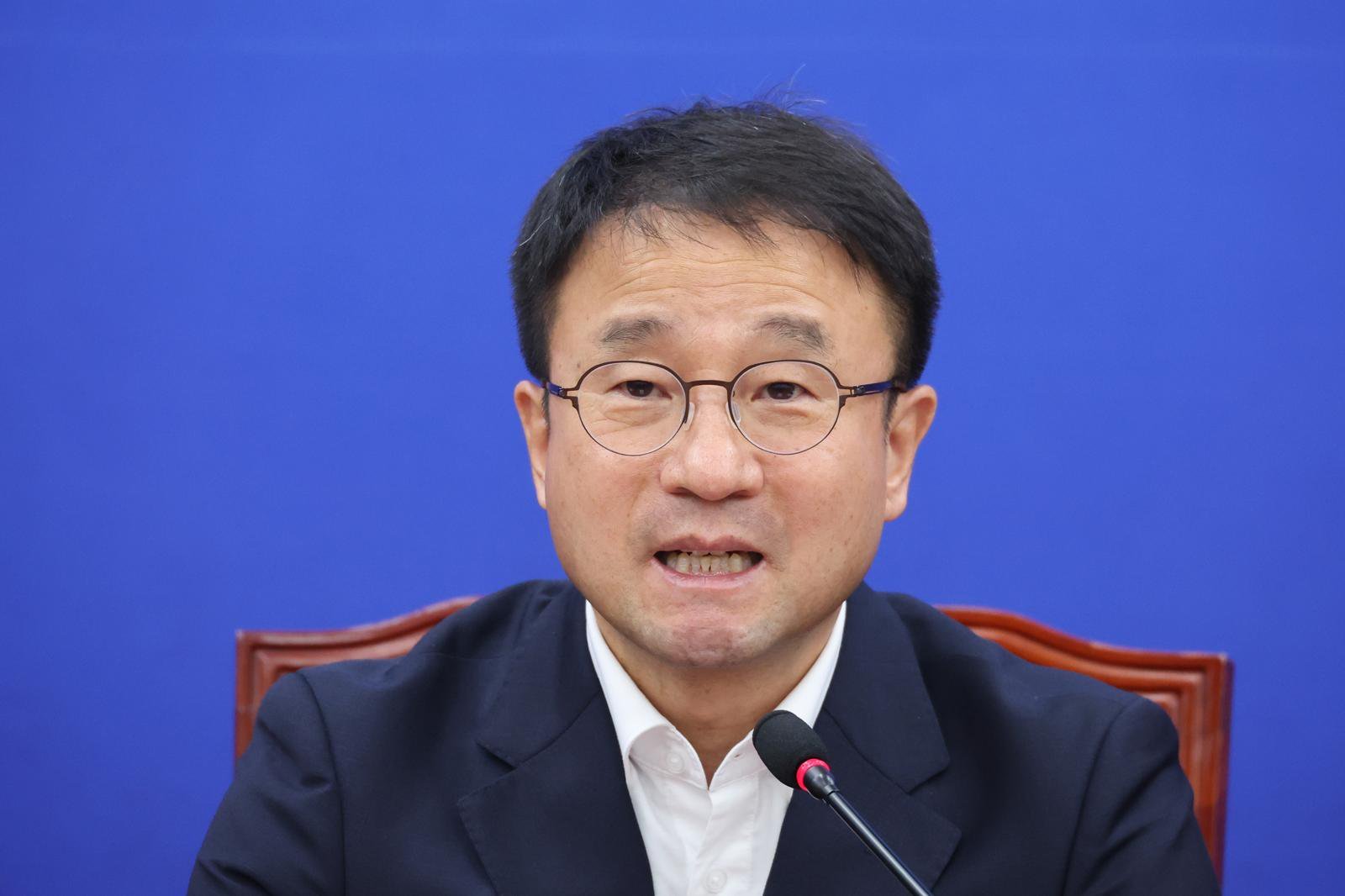
Seoul Mayor criticized over Yongsan Park housing plan opposition
Translated from Korean, summarized and contextualized by DistantNews.
At a glance
News
Sources not specified
Context piece
- Han Byung-do, floor leader of the Democratic Party, criticized Seoul Mayor Oh Se-hoon's opposition to plans for housing development within Yongsan Park.
- Han argued that the mayor's objections are premature and that the park's land should be utilized for housing to address future generations' needs.
- He also criticized the Chief Justice of the Supreme Court for perceived political decision-making in judicial appointments.
Han Byung-do, the floor leader of the Democratic Party, strongly criticized Seoul Mayor Oh Se-hoon for opposing housing development plans within Yongsan Park. Han stated that the mayor's objections, which label the project as "reckless development" even at the review stage, are unwarranted. He questioned the mayor's reasoning for opposing any consideration of how to utilize park land that would otherwise struggle to serve its intended function.
It is not a matter of obstructing from the review stage.
Speaking at a party policy coordination meeting, Han Byung-do emphasized that the utilization of the Yongsan Park site should be calmly discussed from the perspective of providing quality housing for future generations in areas close to workplaces and residences. He also addressed the "Yongsan Park Development Special Act," which prohibits the repurposing or disposal of land returned from U.S. military bases for purposes other than a national park. Han noted that while national park designation was a public consensus 20 years ago, the housing reality for young couples and Seoul's housing demand and demographic structure have significantly changed.
What is the reason for opposing even the consideration of how to utilize park land that is difficult to fulfill its function as green space?
Han pointed out that Mayor Oh and the People Power Party had previously agreed to a plan in 2024 under the Yoon Suk-yeol administration to release the Seoripul area's green belt for 20,000 homes. He urged the mayor and his party to shift their perspective on Yongsan towards the lives of young people, suggesting that finding a path that preserves green space while creating opportunities for the youth is a responsible approach.
The Chief Justice's clock seems to be moving according to political calculations, not law and principle.
In separate remarks, Han Byung-do also criticized Chief Justice Cho Hee-dae, suggesting his actions are guided by political calculations rather than law and principle. Han accused the Chief Justice of infringing upon the president's appointment rights through unilateral notifications disguised as recommendations for judicial appointments, effectively reducing the president's authority to a mere rubber stamp. He asserted that judicial independence does not grant the Chief Justice the privilege of unilateral decision-making and vowed that the Democratic Party would hold Cho accountable and review institutional measures to prevent the Supreme Court justice appointment process from being swayed by the Chief Justice's arbitrary judgment.
Judicial independence is not a privilege that guarantees the Chief Justice's arbitrariness.
DistantNews Editorial
Originally published by Dong-A Ilbo in Korean. Translated, summarized, and contextualized by our editorial team with added local perspective. Read our editorial standards.
More Stories

From Our Blog

What Gets Lost (and Found) When News Is Translated

The Critical Role of Diaspora Media in Global News

What Travellers Should Know About Countries with Restricted Press

A Digital Nomad's Guide to Following Local News

How the Same Story Looks Different in Different Countries
