


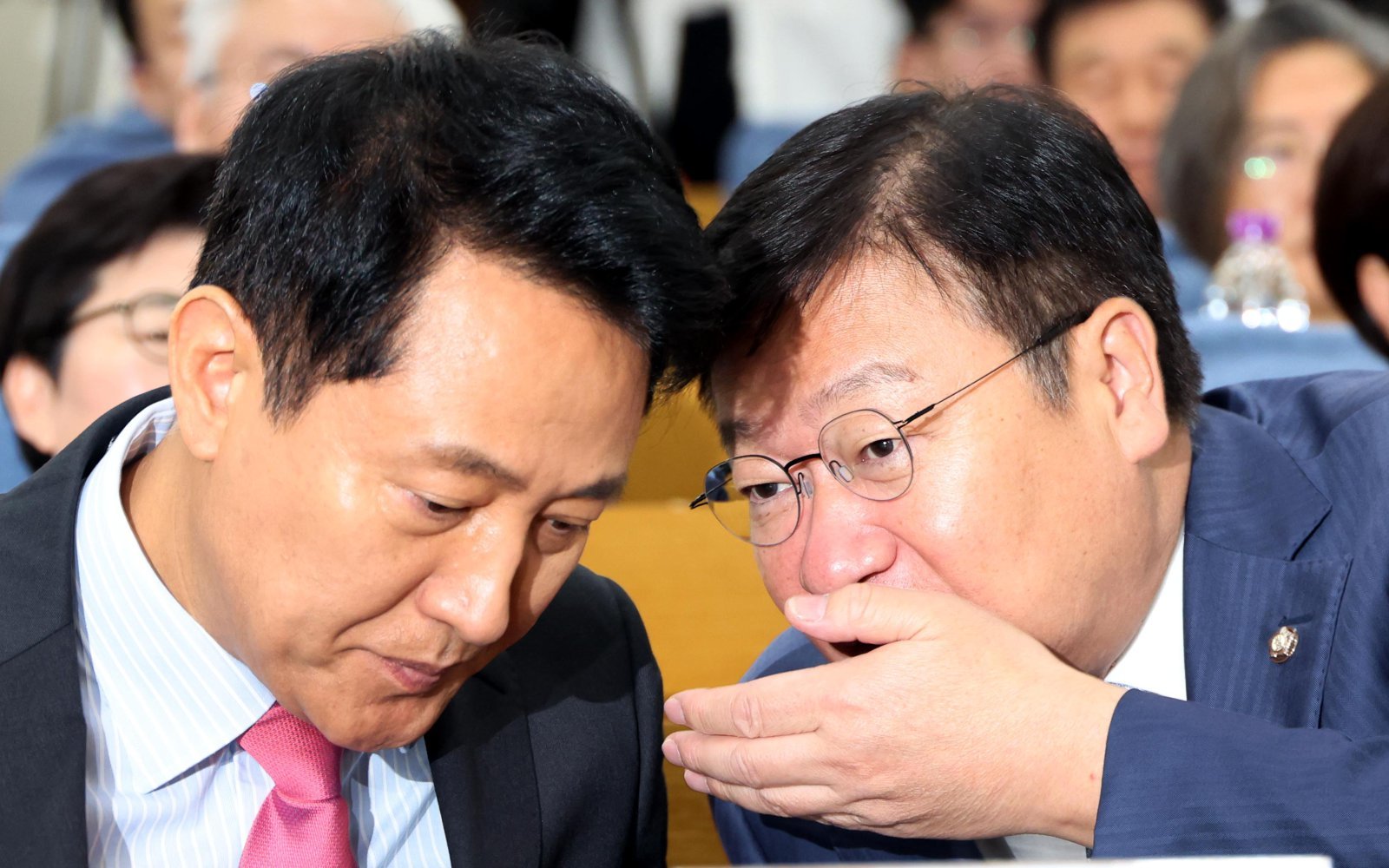
Seoul Mayor urges ruling party to become parliamentary-centered
Translated from Korean, summarized and contextualized by DistantNews.
At a glance
News
Named sources
Context piece
- Seoul Mayor Oh Se-hoon advocated for the ruling party to transform into a parliamentary-centered organization, suggesting this would minimize unnecessary conflict.
- He drew parallels with the U.S. political system, where a separate party leader is not appointed, implying a parliamentary leader could suffice.
- Oh also commented on the party's internal situation, suggesting that hasty changes could lead to negative side effects and that senior members should take on more responsibility.
Seoul Mayor Oh Se-hoon urged the ruling People Power Party (PPP) to transition into a parliamentary-centered organization, arguing that such a shift would effectively reduce internal conflicts. Speaking at a seminar hosted by the party's research group, the Future Innovation Forum, Oh stated, "I believe it should change into a parliamentary-centered party. That way, unnecessary conflicts can be minimized."
I believe it should change into a parliamentary-centered party. That way, unnecessary conflicts can be minimized.
Oh drew a comparison to the political landscape in the United States, noting its structure as a parliamentary party without a separate party leader. "In the case of the United States, it is a parliamentary party, isn't it? There is no separate party leader," he remarked, suggesting that a parliamentary leader could adequately manage party operations. He expressed frustration with the current political climate, where party leaders often become involved in every issue, leading to politicization and ideological distortions rather than constructive policy competition.
In the case of the United States, it is a parliamentary party, isn't it? There is no separate party leader.
Reflecting on his own early political career as a first-term lawmaker, Oh recalled questioning the necessity of a separate party leader, believing a parliamentary leader could manage the party effectively through legislative changes. He criticized a political culture that rewards those skilled in conflict, deeming it shameful for public consumption. "It is a shameful act to approach the public openly displaying that one is adept at fighting," he stated, while acknowledging that such tactics might yield political gains.
It is a shameful act to approach the public openly displaying that one is adept at fighting.
Addressing the party's current internal dynamics, Oh alluded to the ongoing discussions surrounding leadership positions, suggesting that the "frustrating reality" prompts such questions. However, he cautioned against rushing changes, stating, "I don't think anything can be achieved by rushing." He believes that any transformation should be pursued with the consensus of party members, minimizing harm and emotional distress. "If we can find a solution without bloodshed, minimizing the number of people who are hurt emotionally, that would be a good solution," he added, advocating for a period of observation before implementing significant changes. Oh also called upon senior party members to step forward with responsibility during this time.
I don't think anything can be achieved by rushing. If we can find a solution without bloodshed, minimizing the number of people who are hurt emotionally, that would be a good solution.
DistantNews Editorial
Originally published by Dong-A Ilbo in Korean. Translated, summarized, and contextualized by our editorial team with added local perspective. Read our editorial standards.
More Stories


From Our Blog

What Gets Lost (and Found) When News Is Translated

The Critical Role of Diaspora Media in Global News

What Travellers Should Know About Countries with Restricted Press

A Digital Nomad's Guide to Following Local News

How the Same Story Looks Different in Different Countries
