


Seoul's Gangnam luxury property market sees more listings but fewer buyers amid tax and loan concerns
Translated from Korean, summarized and contextualized by DistantNews.
At a glance
News
Sources not specified
Context piece
- In Seoul's Gangnam 3 districts, apartment listings increased, but buyer interest declined significantly.
- Land transaction permit applications dropped 40% in the first week of August, hitting a yearly low.
- Stricter loan regulations and concerns over property tax hikes are deterring potential buyers, leading to a buildup of unsold inventory.
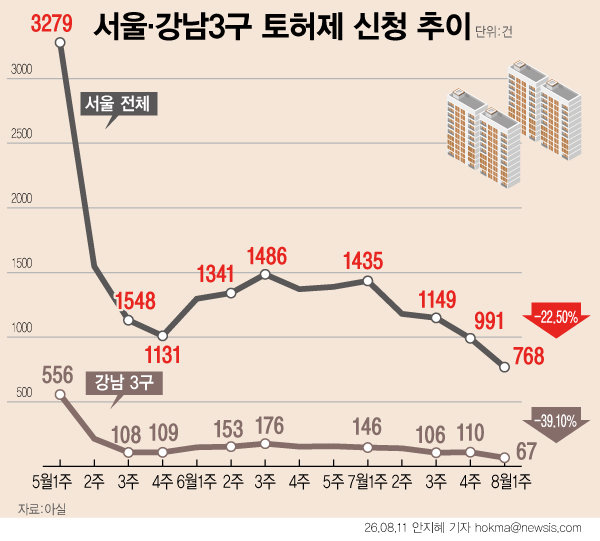
Despite a rise in apartment listings in Seoul's affluent Gangnam 3 districts, potential buyers are scarce, leading to a significant drop in property transactions. Land transaction permit applications, a leading indicator of market activity, fell by 39.1% in the first week of August, reaching the lowest point of the year for the area.
With the expected increase in holding taxes and the emergence of distressed sales, not many people can afford to buy even if they come up. Due to loan regulations, expensive apartments in Gangnam have become exclusive to high-income earners with billions of won in cash.
Across Seoul, land transaction permit applications decreased by 22.5% during the same period. These figures indicate a broader market slowdown, with applications in both Gangnam 3 and the wider Seoul area reaching their second-lowest point this year, surpassed only by the short Lunar New Year holiday week. This trend suggests a market characterized by increased inventory but subdued demand.
The downturn is attributed to several factors, primarily stricter loan regulations and anticipated increases in property taxes. The current loan-to-value ratios limit mortgages for high-priced properties, requiring buyers to have substantial cash reserves. For instance, purchasing a 3 billion won apartment in Gangnam now necessitates billions of won in personal funds, effectively limiting the buyer pool to the wealthiest individuals.
Due to loan restrictions, purchasing power is insufficient, and there is an expectation that prices may fall further after major policy announcements, leading the market to observe. Transactions are unlikely to become active. Especially for high-priced homes, price fluctuations can be in the hundreds of millions of won, so buyers do not move immediately even if distressed sales appear.
Real estate agents report that while homeowners are listing more properties due to tax concerns, the lack of accessible financing and the expectation of further price drops are causing potential buyers to adopt a wait-and-see approach. This dynamic is creating a market where sellers are present, but buyers, particularly those reliant on financing, are hesitant to commit, leading to a growing overhang of unsold properties.
There is not much incentive to buy right now, as owning a home means taking on tax burdens and considering the possibility of additional regulations. When regulations tighten, transaction contraction often follows, so this trend is likely to continue for some time.
DistantNews Editorial
Originally published by Dong-A Ilbo in Korean. Translated, summarized, and contextualized by our editorial team with added local perspective. Read our editorial standards.
More Stories


From Our Blog

What Gets Lost (and Found) When News Is Translated

The Critical Role of Diaspora Media in Global News

What Travellers Should Know About Countries with Restricted Press

A Digital Nomad's Guide to Following Local News

How the Same Story Looks Different in Different Countries
