


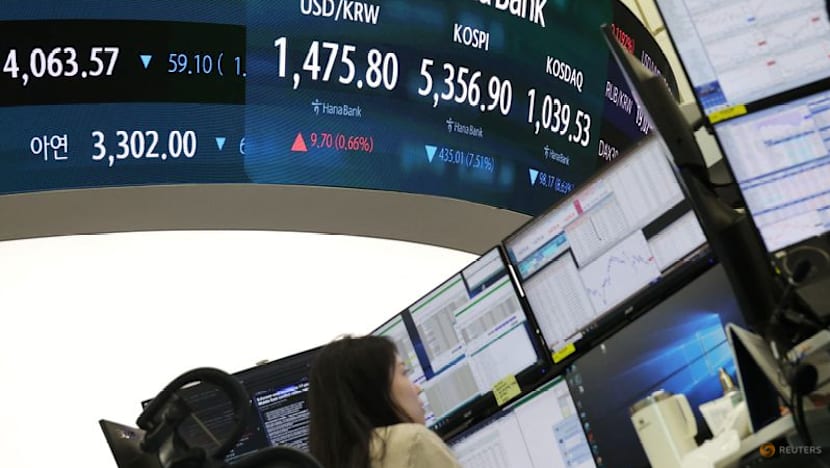
Seoul, Tokyo lead Asian plunge as tech stocks suffer fresh rout
Summarized and contextualized by DistantNews.
At a glance
News
Named sources
Context piece
- Asian stock markets, led by South Korea and Tokyo, experienced a significant plunge, with tech stocks suffering heavily.
- The sell-off was partly triggered by a report of a breakthrough in China's chip industry, raising concerns about the AI boom's sustainability.
- Semiconductor firms like SK hynix and Samsung saw substantial losses, impacting major indices.
Asian stock markets, particularly South Korea's Kospi and Tokyo's Nikkei, experienced a sharp decline on Tuesday, with technology stocks bearing the brunt of the sell-off. The Kospi plummeted 10 percent, while the Nikkei fell over 4 percent, extending a global rout in the sector.
The downturn was exacerbated by a report suggesting a breakthrough in China's chip industry, specifically Shanghai Yuliangsheng's alleged mass production of chipmaking technology previously dominated by Dutch firm ASML. This development has intensified worries about the longevity of the artificial intelligence (AI) boom, which has fueled a significant rally over the past two years.
The immediate fundamentals of semiconductors have not collapsed. Demand for high-bandwidth memory remains strong, hyperscalers are still spending, and the largest technology companies have not yet abandoned their capital expenditure plans.
Semiconductor giants were at the forefront of the regional decline. Seoul-listed SK hynix and Samsung Electronics saw their shares drop around 13 percent, contributing to the Kospi's steep fall. Both companies have experienced substantial losses, down nearly 50 percent since reaching all-time highs last month, with the Kospi index itself down over 30 percent from its peak.
What has changed is the market's willingness to capitalise those promises at almost any price.
In Tokyo, Kioxia Holdings shed 18 percent, while Advantest and Tokyo Electron plunged 11 percent. Taipei also saw losses, with market heavyweight TSMC taking a hit. While most markets declined, Hong Kong's tech firms saw some buying interest after a difficult first half of the year.
The tech sell-off followed a bleak day on Wall Street, where the Philadelphia Semiconductor Index dropped 2.2 percent. Analysts noted that while the immediate fundamentals of semiconductors remain strong, with continued demand for high-bandwidth memory and significant capital expenditure plans by major tech companies, the market's willingness to finance these promises at any price has diminished. The AI trade, which had been a powerful flywheel, is now showing signs of throwing investors off as concerns about returns on massive investments and extended valuations grow.
The AI trade spent the past several years behaving like a flywheel: rising equity values encouraged more spending, more spending validated higher earnings expectations, and those expectations pushed valuations higher again. Now that same wheel is beginning to throw investors off at speed.
DistantNews Editorial
Originally published by CNA. Summarized and contextualized by our editorial team with added local perspective. Read our editorial standards.
More Stories



From Our Blog

What Gets Lost (and Found) When News Is Translated

The Critical Role of Diaspora Media in Global News

What Travellers Should Know About Countries with Restricted Press

A Digital Nomad's Guide to Following Local News

How the Same Story Looks Different in Different Countries
