


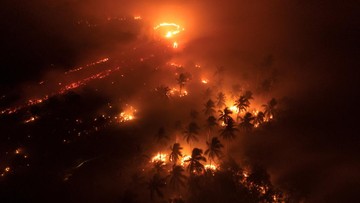
September Expected to Bring Peak Forest Fires as Indonesia Maximizes Weather Modification and Water Bombing
Translated from Indonesian and summarized by DistantNews. Read the original for the full story.
At a glance
News
Named sources
Ongoing story
- Indonesian Forestry Minister Raja Juli Antoni said September is expected to be the peak period for forest and land fires and urged authorities to maximize weather modification operations.
- Water bombing and ground teams will supplement the response, with deployments focused on areas reporting large numbers of hotspots and personnel rotated to limit fatigue.
- Hotspots and fires remained high in parts of Kalimantan, while visibility in several affected areas fell below one or two kilometers.
Indonesia’s Forestry Minister Raja Juli Antoni has described September as the country’s main battleground in the response to forest and land fires, with rain not expected in some forecasts until early October.
Raja Juli said weather modification operations should be maximized while conditions still allow them. He called the intervention the most effective available response and said authorities were seeking advice on how to use the remaining operational window.
The response will also include water bombing and ground teams. Raja Juli asked officials to place personnel according to the concentration of hotspots and rotate them several times a day to protect crews from exhaustion. The Forestry Ministry is working to add more than 1,000 personnel through a temporary support arrangement known as BKO. Additional staff without specialized firefighting skills can still assist with support duties.
This month is our battleground.
The National Disaster Management Agency reported that hotspots in West Kalimantan continued to rise, while South and Central Kalimantan recorded declines. West Kalimantan had 7,377 hotspots, an increase of 3,553, and 72 fire spots, up by 16. Visibility there fell below one kilometer.
Central Kalimantan recorded 5,244 hotspots after a decline of 147, while its fire spots rose by 16 to 72. South Kalimantan had 504 hotspots, down by 405, and 55 fire spots, an increase of three. Visibility in South Kalimantan remained below two kilometers. In Sumatra, fire spots in Riau, South Sumatra and Jambi generally declined, although hotspots increased in South Sumatra.
The most effective one is indeed weather modification operations.
About this summary
Originally published by CNN Indonesia in Indonesian. Translated, summarized, and contextualized automatically by DistantNews, with a note on how the source frames the story. Not individually reviewed before publishing. How this works.
More Stories


From Our Blog

What Gets Lost (and Found) When News Is Translated

The Critical Role of Diaspora Media in Global News

What Travellers Should Know About Countries with Restricted Press

A Digital Nomad's Guide to Following Local News

How the Same Story Looks Different in Different Countries
