

Serious Accusation: Ceuta Was EU's "First Algorithmic Hybrid Attack"
Translated from Romanian, summarized and contextualized by DistantNews.
At a glance
News
Named sources
Context piece
- Former European Commissioner Thierry Breton described the migrant influx at Ceuta as the EU's "first algorithmic hybrid attack."
- The incident involved the deliberate manipulation of social media algorithms to create a physical crisis, destabilizing borders and potentially leading to social unrest.
- This digital warfare tactic targets a nation's cognitive architecture by fracturing social bonds and undermining critical thinking, according to the article.
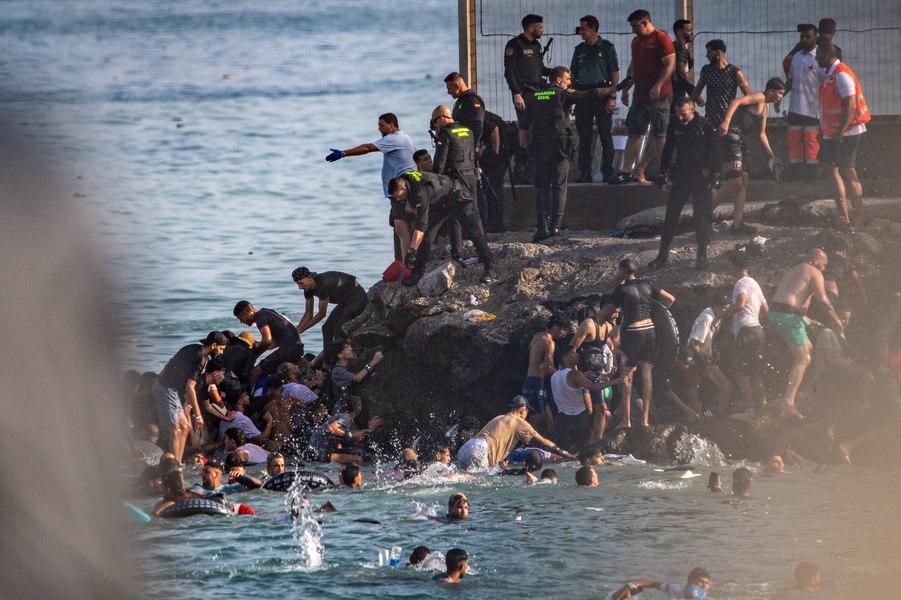
The recent migrant surge at the Spanish enclave of Ceuta was not a spontaneous event but rather the European Union's "first algorithmic hybrid attack," according to former European Commissioner Thierry Breton. This assertion, now circulating among international intelligence services, highlights a significant security vulnerability that could be exploited in various future scenarios.
The first algorithmic hybrid attack.
The concept of an "algorithmic hybrid attack" describes the deliberate manipulation of social media algorithms. The goal is to engineer physical or material crises, starting with border destabilization and escalating into major social unrest. Breton suggests the Ceuta incident served as a test case for interconnected networks, capable of rapid, uncontrollable escalation.
This digital strategy involves targeted manipulation of information flows and social networks. It employs fake news, distorted interpretations of real events, or algorithmically amplified content. The aim is to provoke sudden, large-scale movements of people, as seen in Ceuta, to destabilize borders and sow chaos. This represents an evolution of traditional "hybrid warfare," incorporating a manipulated digital and informational dimension.
targeted manipulation of information flows and social networks (using fake news, distorted interpretations of a real fact or content amplified by algorithms) precisely to generate sudden and large-scale movements of people, in this case to destabilize borders and, further, to cause chaos.
Such attacks ultimately seek to dismantle a nation's cognitive architecture. While traditional warfare destroys critical infrastructure, digital warfare erodes social cohesion, annihilates critical thinking, and fragments national unity. UNESCO reports indicate that 70% of young people in developing countries rely solely on social media for information, with a significant portion unable to verify sources or distinguish fake news.
the authorities did not know anything about the super-massive dissemination of these calls, 'we did not know anything about what was being disseminated on the networks', none of the platforms communicated the exact traffic figures and no official request for data access was registered, which, after a few hours, made emergency traceability operations practically impossible.
DistantNews Editorial
Originally published by Adevărul in Romanian. Translated, summarized, and contextualized by our editorial team with added local perspective. Read our editorial standards.
More Stories

From Our Blog

What Gets Lost (and Found) When News Is Translated

The Critical Role of Diaspora Media in Global News

What Travellers Should Know About Countries with Restricted Press

A Digital Nomad's Guide to Following Local News

How the Same Story Looks Different in Different Countries
