

'Shameful': Proposed bill allowing blue passports for ex-legislators’ kids comes under scrutiny on social media
Summarized and contextualized by DistantNews.
At a glance
News
Named sources
New plan
- A proposed bill in Pakistan to grant blue passports to children of former legislators under 28 has drawn widespread criticism.
- Critics argue the bill unfairly benefits former lawmakers' families, drawing parallels to other controversial legislative privileges.
- The bill's approval by a Senate panel has sparked debate on social media about political elites and public trust.
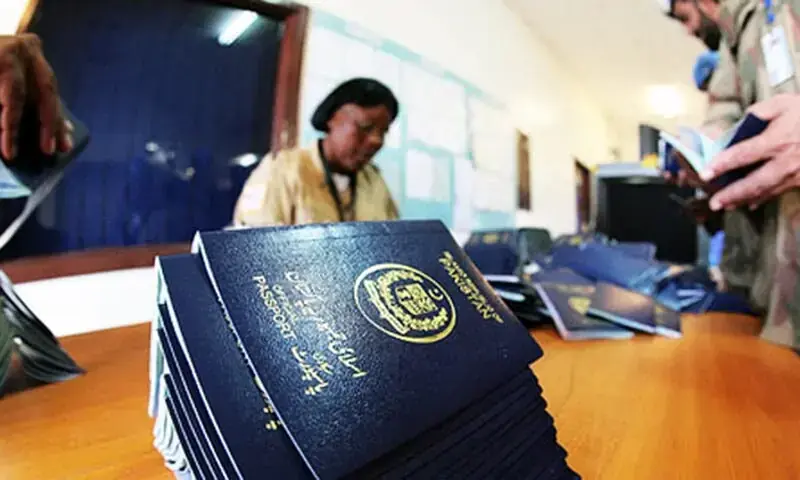
A bill approved by a Pakistani Senate panel that would allow children of former legislators under the age of 28 to receive blue passports has ignited a firestorm of criticism on social media. The legislation, if enacted, would align the privileges of former parliamentarians' dependent children with those currently available to children of retired Grade-22 government officers.
Despite my reservations, the Senate & Standing Committee on Interior proceeded with its decision to pass the bill.
Politicians, journalists, and experts have voiced strong disapproval, labeling the move "shameful" and "shameless." State Minister for Interior Tallal Chaudhry, however, denied supporting the bill, stating he had opposed it and advised the committee to consult the federal cabinet and stakeholders. He noted that the committee proceeded despite his reservations.
Until the extraordinary privileges enjoyed by politicians, bureaucrats, higher judiciary, and senior military officers are brought to an appropriate level, injustice will continue to gnaw at society like termites, fostering social discord and public unrest.
Senior PML-N leader Khawaja Saad Rafique condemned the bill, comparing it to a recent provincial assembly decision granting additional privileges to lawmakers. He argued that such actions erode public trust and perpetuate injustice. Journalist Fahd Husain described the bill as evidence of a widening trust deficit between political elites and citizens, suggesting it allows lawmakers to "bypass the consequences of their incompetence."
Our ordinary passport is laughed at because of their inability to make policies and pass reforms to generate wealth in this country and spread it equitably.
Further criticism came from journalist Iftikhar Firdous, who viewed the legislation as an attempt to secure "foreign escape routes." He advocated for leaders invested in Pakistan's future rather than those with offshore accounts. Other commentators, including journalist Arifa Noor and Professor Ilhan Niaz, questioned the necessity of diplomatic passports for parliamentarians' children, with Niaz suggesting that honor lies in declining privileges. Sociologist Umair Javed also weighed in, highlighting the potential for such undue privileges to undermine democracy.
If you don’t have skin in the game, you shouldn’t be deciding its future.
DistantNews Editorial
Originally published by Dawn. Summarized and contextualized by our editorial team with added local perspective. Read our editorial standards.
More Stories
From Our Blog

What Gets Lost (and Found) When News Is Translated

The Critical Role of Diaspora Media in Global News

What Travellers Should Know About Countries with Restricted Press

A Digital Nomad's Guide to Following Local News

How the Same Story Looks Different in Different Countries
