


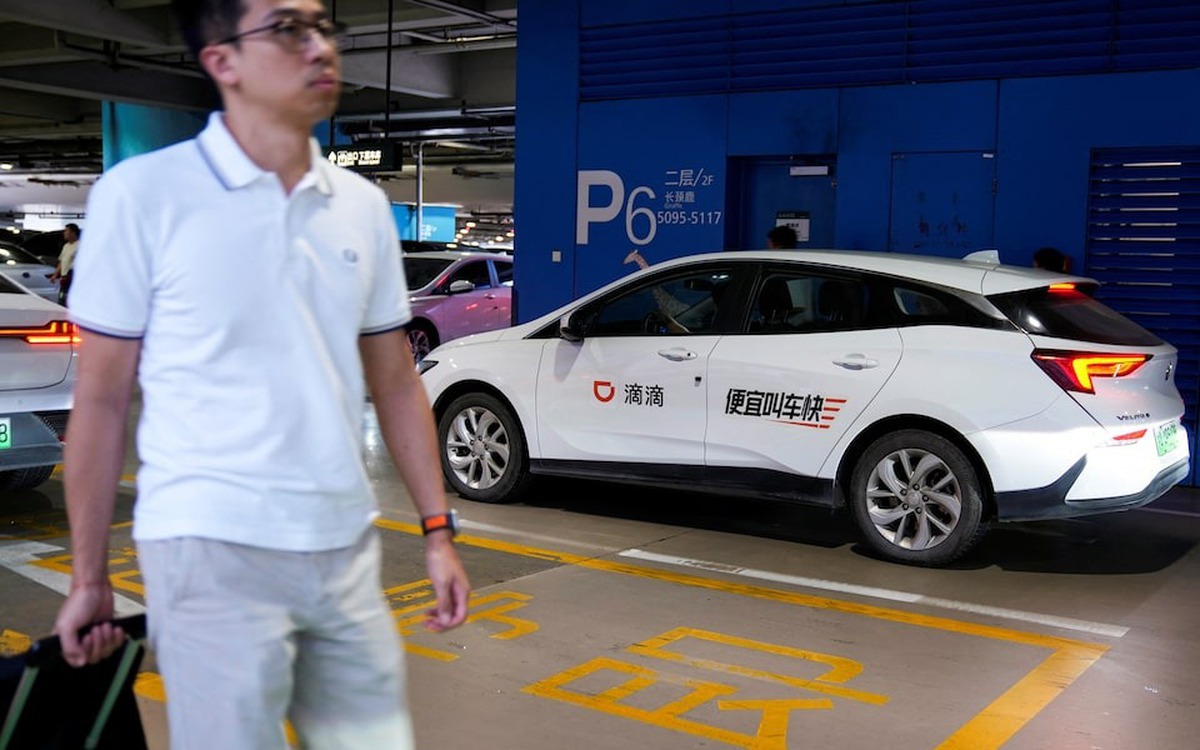
Shenzhen's ride-hailing market saturated, drivers struggle amid oversupply
Translated from Vietnamese, summarized and contextualized by DistantNews.
At a glance
News
Sources not specified
Context piece
- Shenzhen's ride-hailing market is generally saturated, with nearly 400,000 certified drivers but only over 142,000 eligible vehicles as of April 2026.
- This imbalance has led to a significant drop in orders per vehicle, averaging just over 13 per day.
- Many drivers turned to ride-hailing due to unemployment, with a substantial percentage being the sole earners in their households.
The ride-hailing market in Shenzhen, a major Chinese tech hub, is facing significant saturation, according to a report from the Shenzhen Transportation Bureau released on May 25. As of April 2026, the city boasts nearly 400,000 certified drivers, yet only just over 142,000 vehicles are deemed eligible to operate. This stark disparity has resulted in a sharp decline in the number of orders each vehicle can secure, averaging a mere 13.01 trips per day.
The influx of drivers is largely attributed to rising unemployment. A report by the China New Employment Forms Research Center surveyed 5,417 drivers across 13 regions and found that 77% transitioned to ride-hailing because they lost their jobs. Furthermore, 62.8% of these drivers are the sole income earners in their families, highlighting the critical role ride-hailing plays for many households.
The problem is that we cannot control the number of drivers; even if the order price is high, it doesn't help.
Drivers are experiencing reduced earnings. One driver with eight years of experience in Guangdong province shared with Yicai that his monthly income in 2025 dropped to approximately 7,000 yuan (about $1,000 USD), a noticeable decrease from the 8,000 yuan per month he earned in 2024. Despite keeping his app active for extended periods to maximize chances of receiving fares, the number of trips has dwindled. He attributes this to the rapid increase in drivers, noting that even low-fare rides are being competed for.
Industry experts suggest multi-faceted solutions. Zhang Cheng-gang, director of the China New Employment Forms Research Center, observes that drivers are increasingly working longer hours to maintain previous income levels, with many operating for 10 hours daily and a small fraction exceeding 15 hours. He believes that platforms could improve driver income by reducing commission rates, optimizing dispatch algorithms, and ceasing low-price competition. In response to these pressures, some ride-hailing platforms have begun lowering their commission fees, with T3 committing to a maximum of 27% and Cao Cao reducing its cap from 22.7% to 22.5%. Gaode, a ride-hailing aggregator, is also urging partner platforms to maintain commission caps below 27% and has implemented its own fee reductions.
If the platform reduces the commission rate, optimizes the order dispatch algorithm, and stops low-price competition, drivers can completely increase their income without overworking.
DistantNews Editorial
Originally published by Tuổi Trẻ in Vietnamese. Translated, summarized, and contextualized by our editorial team with added local perspective. Read our editorial standards.
More Stories


From Our Blog

What Gets Lost (and Found) When News Is Translated

The Critical Role of Diaspora Media in Global News

What Travellers Should Know About Countries with Restricted Press

A Digital Nomad's Guide to Following Local News

How the Same Story Looks Different in Different Countries
