


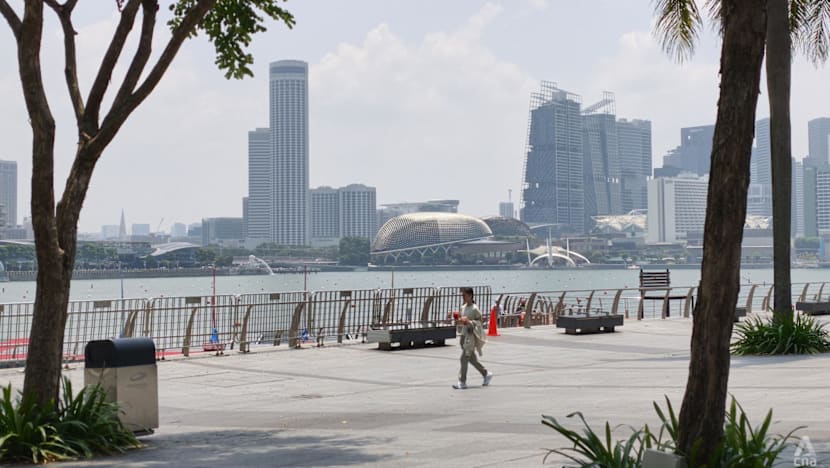
Singapore could experience haze if fires in Sumatra and Kalimantan intensify: Met Service
Summarized and contextualized by DistantNews.
At a glance
News
Named sources
Context piece
- Singapore could face haze if fires in Indonesia's Sumatra and Kalimantan intensify, according to the Meteorological Service Singapore.
- Dry conditions are expected to persist, with winds potentially carrying smoke from regional fires to Singapore.
- The National Environment Agency will monitor the Pollutant Standards Index (PSI) and issue advisories if it enters the unhealthy range.
Singapore may experience hazy conditions if the current fires in Indonesia's Sumatra and Kalimantan regions worsen, the Meteorological Service Singapore warned on Monday.
The region is expected to endure dry weather for the coming days. Hotspots emitting smoke plumes have been identified primarily in southern and central Sumatra, as well as various parts of Kalimantan. The Met Service indicated that prevailing winds, blowing from the southeast or southwest, could transport smoke from these fires to Singapore should the intensity of the fires increase.
Authorities are closely monitoring the situation. The National Environment Agency (NEA) will provide regular updates if conditions change. If Singapore's 24-hour Pollutant Standards Index (PSI) reaches unhealthy levels, the NEA will issue daily haze advisories. The PSI has shown a slight increase over the weekend but remains within the moderate range.
Looking ahead, rainfall for the latter half of August is forecast to be below average across most of Singapore. Southwest monsoon conditions are likely to continue, bringing localized, short-duration thundery showers in the afternoons on some days, interspersed with fair and windy periods. Daily temperatures are expected to hover between 33°C and 34°C, potentially reaching 35°C on a few days, with warm and humid nights where temperatures may stay above 27°C.
Singapore has experienced a notably dry August thus far, with minimal rainfall in the first half of the month contributing to below-average totals. This dryness is attributed to suppressed rain cloud formation due to a dry air mass over the island and surrounding areas. A Singaporean think-tank previously cautioned in June about a high risk of severe transboundary haze in Southeast Asia for the remainder of the year, predicting a peak between August and September due to a strong El Nino exacerbating hot and dry weather.
DistantNews Editorial
Originally published by CNA. Summarized and contextualized by our editorial team with added local perspective. Read our editorial standards.
More Stories

From Our Blog

What Gets Lost (and Found) When News Is Translated

The Critical Role of Diaspora Media in Global News

What Travellers Should Know About Countries with Restricted Press

A Digital Nomad's Guide to Following Local News

How the Same Story Looks Different in Different Countries
