


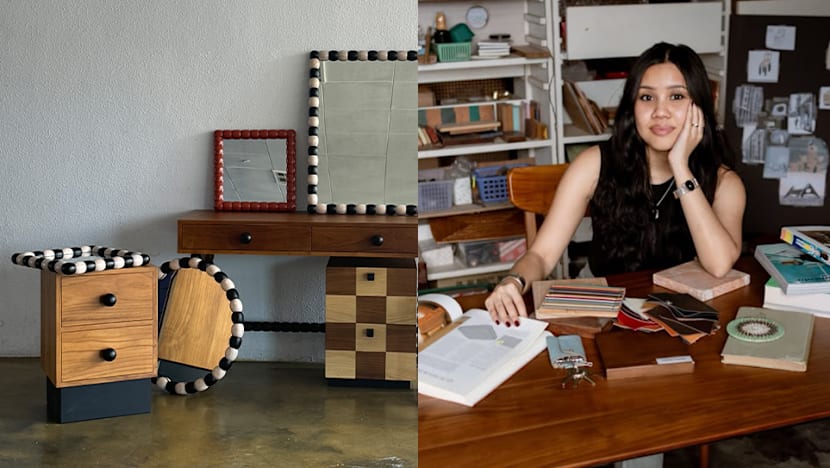
Singapore designer takes Malay cultural references global through furniture
Translated from English, summarized and contextualized by DistantNews.
At a glance
In-depth
Sources not specified
Context piece
- Singaporean designer Faezah Shaharuddin uses everyday Malay cultural references like desserts and biscuits to name her furniture collections.
- Her company, Studio Kallang, aims to express cultural memory through furniture, drawing on childhood experiences and Southeast Asian craft traditions.
- Shaharuddin's work has gained international recognition, challenging the dominance of European design traditions in the global furniture market.
Singaporean designer Faezah Shaharuddin is carving a unique niche in the global furniture market by infusing her creations with the rich tapestry of Malay cultural references. Her company, Studio Kallang, draws inspiration from childhood memories and Southeast Asian craft traditions, naming collections after familiar items like 'Onde,' 'Agar,' and 'Biskut' – terms that evoke Malay desserts and biscuits for many Singaporeans.
I wanted to use things that are authentic to my experience and my culture and have them be valued exactly the same.
Shaharuddin, who is based in New York and is also part of her family's furniture business, Gamar, aims to elevate these everyday cultural touchstones to the level of international design appreciation. She noted that the language of collectible furniture has long been dominated by European design traditions and Japanese minimalism. "I wanted to use things that are authentic to my experience and my culture and have them be valued exactly the same," she stated.
Studio Kallang is basically my attempt to use furniture and objects to express cultural memory.
Within five years of founding Studio Kallang, Shaharuddin's work has been showcased at Milan Design Week and featured in design-forward spaces globally. She views furniture not merely as functional objects but as vehicles for exploring identity and cultural memory. Her formative years spent in furniture workshops across Southeast Asia, accompanying her mother who founded the vintage furniture business Second Charm, provided a visually rich foundation for her artistic vision.
She was a force of a woman.
DistantNews Editorial
Originally published by CNA in English. Translated, summarized, and contextualized by our editorial team with added local perspective. Read our editorial standards.
More Stories


From Our Blog

What Gets Lost (and Found) When News Is Translated

The Critical Role of Diaspora Media in Global News

What Travellers Should Know About Countries with Restricted Press

A Digital Nomad's Guide to Following Local News

How the Same Story Looks Different in Different Countries
