


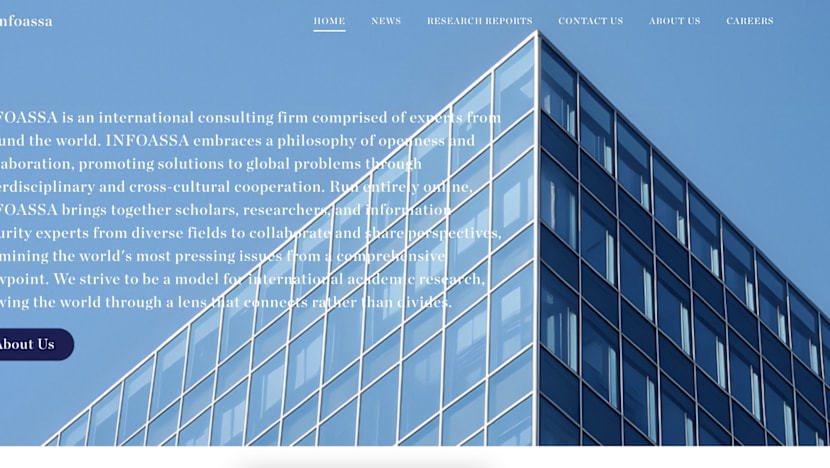
Singapore-registered firm used fake employees and recruitment methods mirroring foreign intelligence playbook
Summarized and contextualized by DistantNews.
At a glance
News
Named sources
Context piece
- A Singapore-registered firm, Infoassa, is suspected of being a front for a Chinese intelligence recruitment operation targeting former US government employees.
- The firm used a personal Gmail account for communication, offered payment for analysis without public information, and had website infrastructure linked to a site seized by US authorities.
- China's Global Times dismissed the US claims as baseless, part of an effort to exaggerate spying threats.
A former US government employee, identified only as Maria, grew suspicious of Infoassa, a Singapore-based think-tank, when its representative communicated via a personal Gmail account and offered payment for analysis on a planned US-China summit without using publicly available information. Her suspicions intensified when she found little online about the firm and learned that friends in think-tank circles had never heard of it. Recalling a past cautionary tale about espionage, Maria began to suspect Infoassa might be a foreign intelligence agency's recruitment attempt.
CNA's investigation uncovered further suspicious elements, including an employee with a falsified work history and website features shared with TheTruthInfo, a website seized by US authorities as part of an alleged Chinese intelligence recruitment operation. The US claimed this operation targeted Americans with access to classified and sensitive government information. Infoassa's online presence began in September 2025, and it has presented itself inconsistently as either a "think-tank" or a "consulting firm."
Chinese state-owned newspaper Global Times responded to the internet domain seizures by dismissing them as "baseless" and part of US efforts to exaggerate spying threats from China. The Infoassa playbook reportedly mirrors that of other fake think-tanks, such as the Institute of East Asia Strategic Studies (IEASS), which also claimed to be based in Singapore. These entities have used fabricated personas to recruit individuals with backgrounds in government, think-tanks, and international affairs research. Dr. Bill Hayton, an associate fellow at Chatham House, has also raised concerns about such operations.
I thought, what if this is part of a broader pattern? Maybe it starts with benign reports, and then that’s how they hook you in.
DistantNews Editorial
Originally published by CNA. Summarized and contextualized by our editorial team with added local perspective. Read our editorial standards.
More Stories



From Our Blog

What Gets Lost (and Found) When News Is Translated

The Critical Role of Diaspora Media in Global News

What Travellers Should Know About Countries with Restricted Press

A Digital Nomad's Guide to Following Local News

How the Same Story Looks Different in Different Countries
