


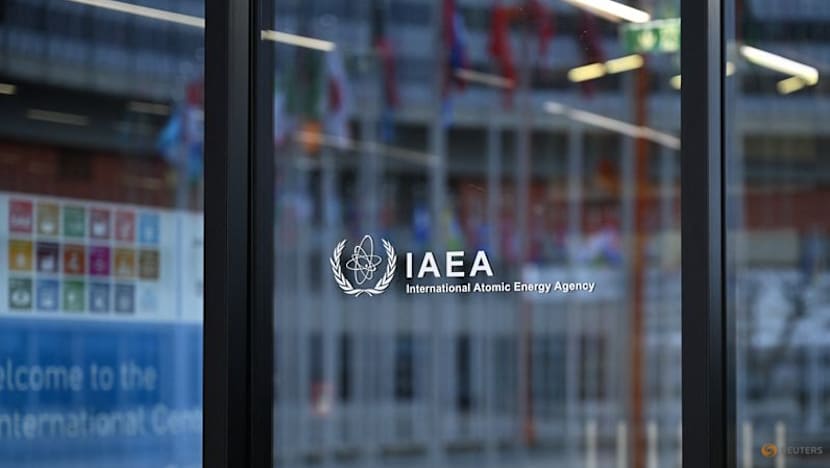
Singapore Signs Five-Year IAEA Framework to Bolster Nuclear Capabilities
Translated from English, summarized and contextualized by DistantNews.
TLDR
- Singapore has signed a new five-year cooperation framework with the International Atomic Energy Agency (IAEA) for 2026-2031.
- The agreement aims to strengthen Singapore's nuclear capabilities in areas such as safety, environment, food safety, health, energy, and industrial applications.
- This framework builds on decades of technical cooperation and supports Singapore's assessment of potential nuclear energy deployment.
Singapore is proactively strengthening its nuclear capabilities through a new five-year cooperation framework with the International Atomic Energy Agency (IAEA), set to run from 2026 to 2031. This marks the fourth iteration of the Country Programme Framework, underscoring a long-standing technical partnership that began when Singapore joined the IAEA in 1967. Developed collaboratively by the National Environment Agency (NEA) and the IAEA, in consultation with various government bodies and industry stakeholders, this framework identifies key priority areas where nuclear technology and resources can significantly contribute to national development goals.
The framework augments Singapore's efforts to build capabilities in nuclear safety as it assesses the potential deployment of nuclear energy and in light of the region’s growing interest in nuclear energy.
The six priority areas outlined in the agreement—nuclear and radiation safety, nuclear security, environment, food safety, human health, energy, and industrial applications—demonstrate Singapore's comprehensive approach to leveraging nuclear science and technology. The framework is designed to enhance the nation's capacity in crucial sectors, including assessing new energy technologies, bolstering environmental radiation monitoring, improving food radiochemistry and safety testing, and advancing nuclear imaging and cancer therapy. This strategic initiative aligns with Singapore's forward-looking vision, preparing the nation for potential future energy transitions and enhancing its resilience in various critical fields.
The agreement was signed by Mr Jaya Ratnam, Singapore's resident representative to the IAEA, and Mr Hua Liu, IAEA deputy director general and head of its department of technical cooperation.
Notably, this framework augments Singapore's ongoing efforts to build robust nuclear safety capabilities as it explores the potential deployment of nuclear energy. This is particularly relevant given the growing interest in nuclear energy within the region. The agreement not only helps Singapore harness nuclear science for its own development but also positions it to contribute to regional capacity-building efforts. The signing by Singapore's representative to the IAEA, Mr. Jaya Ratnam, and IAEA Deputy Director General Hua Liu signifies a strong commitment to this collaborative path. This proactive stance, including the development of new training programs with the US Nuclear Regulatory Commission and the designation of its National Radiochemistry Laboratory as an IAEA collaborating center, reflects Singapore's dedication to maintaining the highest standards of nuclear safety and security while exploring its potential benefits.
Prime Minister and Finance Minister Lawrence Wong said that the government will study the potential deployment of nuclear power in Singapore and take further steps to systematically build up capabilities in this area.
DistantNews Editorial
Originally published by CNA in English. Translated, summarized, and contextualized by our editorial team with added local perspective. Read our editorial standards.
More Stories


From Our Blog

What Gets Lost (and Found) When News Is Translated

The Critical Role of Diaspora Media in Global News

What Travellers Should Know About Countries with Restricted Press

A Digital Nomad's Guide to Following Local News

How the Same Story Looks Different in Different Countries
