


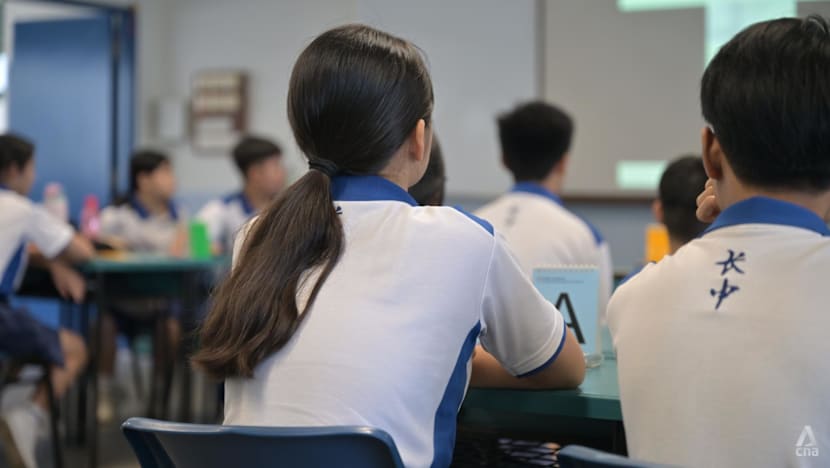
Singapore students get 15 more minutes of sleep in 2025
Translated from English, summarized and contextualized by DistantNews.
At a glance
News
Sources not specified
New plan
- Primary 5 and Secondary 3 students in Singapore slept 15 minutes longer on school days in 2025 compared to 2023.
- Despite the increase, their average sleep duration still falls short of recommended hours for their age groups.
- Measures like default sleep mode on devices and sleep habit education are in place, but later start times face trade-offs.
Students in Singapore's Primary 5 and Secondary 3 grades are getting slightly more sleep on school days, with a 15-minute increase observed in 2025 compared to 2023. Senior Parliamentary Secretary for Education Syed Harun Alhabsyi shared this finding on Wednesday, based on the Ministry of Education's latest survey. However, the average sleep duration of about seven hours still falls short of the recommended nine to 11 hours for 11- to 13-year-olds and eight to 10 hours for 14- to 17-year-olds, according to the Ministry of Health.
Dr. Syed Harun addressed these trends in parliament in response to a question about the government's tracking of sleep patterns and potential measures to improve students' sleep health. He highlighted several existing initiatives. Since January, personal learning devices for secondary students have been programmed to enter sleep mode by default at 10:30 p.m. Additionally, schools incorporate lessons on healthy sleep habits, emphasizing regular sleep schedules and avoiding caffeine and digital devices before bed, as part of broader self-management and time management education.
The Ministry of Education has also collaborated with KK Women's and Children's Hospital to conduct sessions for parents, offering guidance on supporting their children's sleep health with input from medical experts. Responding to a supplementary question about assessing sleep quality and potentially piloting later school start times for older students, Dr. Syed Harun stated that MOE does not currently collect data on sleep quality. Regarding start times, he noted that schools possess autonomy, with lessons permitted to begin no earlier than 7:30 a.m.
However, he cautioned that shifting school start times later involves trade-offs. Such a change could extend lessons into the hotter afternoon hours, potentially impacting learning conditions. It would also lead to later dismissal times, which might affect participation in after-school programs. "I ask that we take a balance with regard to school start times and we give the schools the specific autonomy to do so," Dr. Syed Harun concluded, emphasizing the need for a balanced approach.
I ask that we take a balance with regard to school start times and we give the schools the specific autonomy to do so.
DistantNews Editorial
Originally published by CNA in English. Translated, summarized, and contextualized by our editorial team with added local perspective. Read our editorial standards.
More Stories



From Our Blog

What Gets Lost (and Found) When News Is Translated

The Critical Role of Diaspora Media in Global News

What Travellers Should Know About Countries with Restricted Press

A Digital Nomad's Guide to Following Local News

How the Same Story Looks Different in Different Countries
