


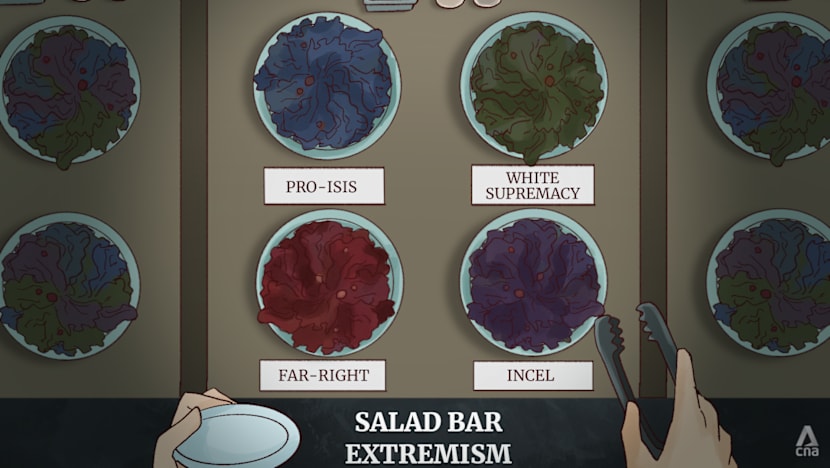
Singapore tackles 'salad bar' extremism, questions need for new rehab playbook
Translated from English, summarized and contextualized by DistantNews.
At a glance
News
Official statement
Context piece
- Singapore's Internal Security Department (ISD) has handled at least three cases of 'salad bar' extremism in the past 10 months.
- This phenomenon involves individuals consuming extremist content from various sources, creating a personalized ideology.
- The article questions whether a new playbook is needed to address this evolving form of radicalization.
The Internal Security Department (ISD) in Singapore has recently dealt with at least three instances of what is termed 'salad bar' extremism within the last 10 months, raising concerns about a new frontier in radicalization. This concept describes individuals who curate their own extremist ideologies by selectively consuming content from a wide array of sources, much like assembling a salad from a bar.
This eclectic approach to radicalization means that individuals may not adhere to a single, defined extremist group or narrative. Instead, they piece together beliefs and justifications from various online platforms and materials, creating a personalized and potentially more insidious form of extremism. The ISD's intervention under the Internal Security Act highlights the seriousness with which the authorities are treating this trend.
The rise of 'salad bar' extremism prompts a critical question: Is the current approach to counter-radicalization sufficient? The article suggests that the evolving nature of how individuals become radicalized may necessitate a new playbook. Understanding and tackling this phenomenon requires adapting strategies to address the personalized and fragmented consumption of extremist content.
In the last 10 months, the Internal Security Department (ISD) has handled at least three instances of “salad bar” extremism under the Internal Security Act.
DistantNews Editorial
Originally published by CNA in English. Translated, summarized, and contextualized by our editorial team with added local perspective. Read our editorial standards.
More Stories


From Our Blog

What Gets Lost (and Found) When News Is Translated

The Critical Role of Diaspora Media in Global News

What Travellers Should Know About Countries with Restricted Press

A Digital Nomad's Guide to Following Local News

How the Same Story Looks Different in Different Countries
