

Singapore weighs trade-offs before seeking lower US tariffs: Gan Kim Yong
Translated from English, summarized and contextualized by DistantNews.
At a glance
News
Named sources
Context piece
- Singapore is cautiously considering concessions to secure lower US tariffs, assessing the significant costs and trade implications, Deputy Prime Minister Gan Kim Yong stated.
- The US imposed tariffs on 60 economies, with Singapore facing the highest rate due to lacking a law prohibiting forced labor imports or a reciprocal trade agreement.
- Approximately one-third of Singapore's domestic exports to the US, valued at S$9.5 billion annually, are affected, though key sectors like energy and some electronics are excluded.
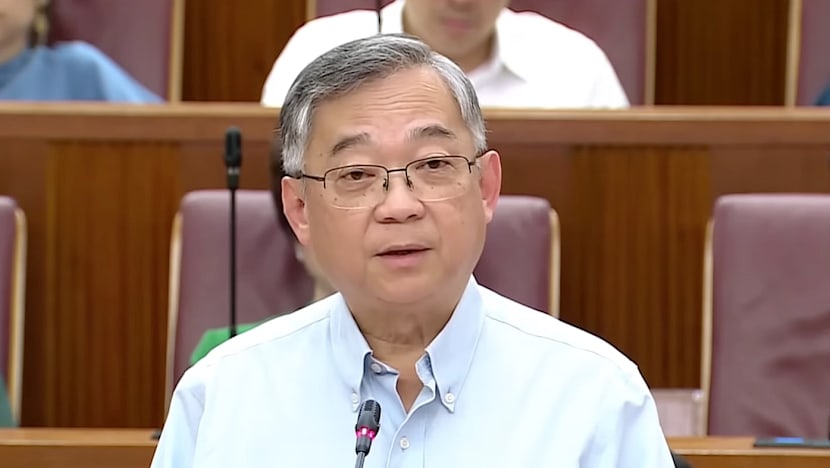
Singapore is carefully evaluating potential concessions before seeking lower tariffs from the United States, according to Deputy Prime Minister Gan Kim Yong. He emphasized that the government must thoroughly assess the substantial costs and broader trade consequences of any measures Washington might seek.
In a written response to parliamentary questions, Gan, who also serves as Minister for Trade and Industry (Trade), confirmed ongoing engagement with the US Trade Representative (USTR). However, he stressed that any response would be "considered carefully." The US has imposed tariffs ranging from 10 to 12.5 percent on 60 economies under its forced labor investigation. Singapore received the highest tariff rate because it lacks a law prohibiting imports produced with forced labor and does not have a reciprocal trade agreement with the US that would commit it to introducing one.
We made clear that there is no evidence that Singapore is involved in the trade of goods associated with forced labour.
Gan explained that roughly one-third of Singapore's domestic exports to the US, totaling about S$9.5 billion (US$7.4 billion) annually, are impacted by the new tariffs. These affected products include optical instruments and chemical products. Notably, energy and energy products, along with certain electronics and aerospace items, are exempt. Products already subject to separate US tariffs or investigations, such as pharmaceuticals and semiconductors, are also excluded.
Compared to a previous 10 percent US tariff that expired last month, the new measure is estimated to increase Singapore's overall effective tariff rate by approximately 0.7 percentage point. Gan highlighted that Singapore actively engaged the USTR throughout the investigation, including during his visit to Washington D.C. in April. He asserted that there is no evidence of Singapore's involvement in the trade of goods associated with forced labor, citing data from the US Department of Labor and Customs and Border Protection. Furthermore, he pointed out that Singapore's policies do not burden US commerce, as evidenced by the substantial and long-standing trade surplus the US maintains with Singapore.
We emphasised that our policies do not burden US commerce, as reflected in the longstanding and substantial trade surplus the US continues to enjoy with Singapore.
DistantNews Editorial
Originally published by CNA in English. Translated, summarized, and contextualized by our editorial team with added local perspective. Read our editorial standards.
More Stories
From Our Blog

What Gets Lost (and Found) When News Is Translated

The Critical Role of Diaspora Media in Global News

What Travellers Should Know About Countries with Restricted Press

A Digital Nomad's Guide to Following Local News

How the Same Story Looks Different in Different Countries
