

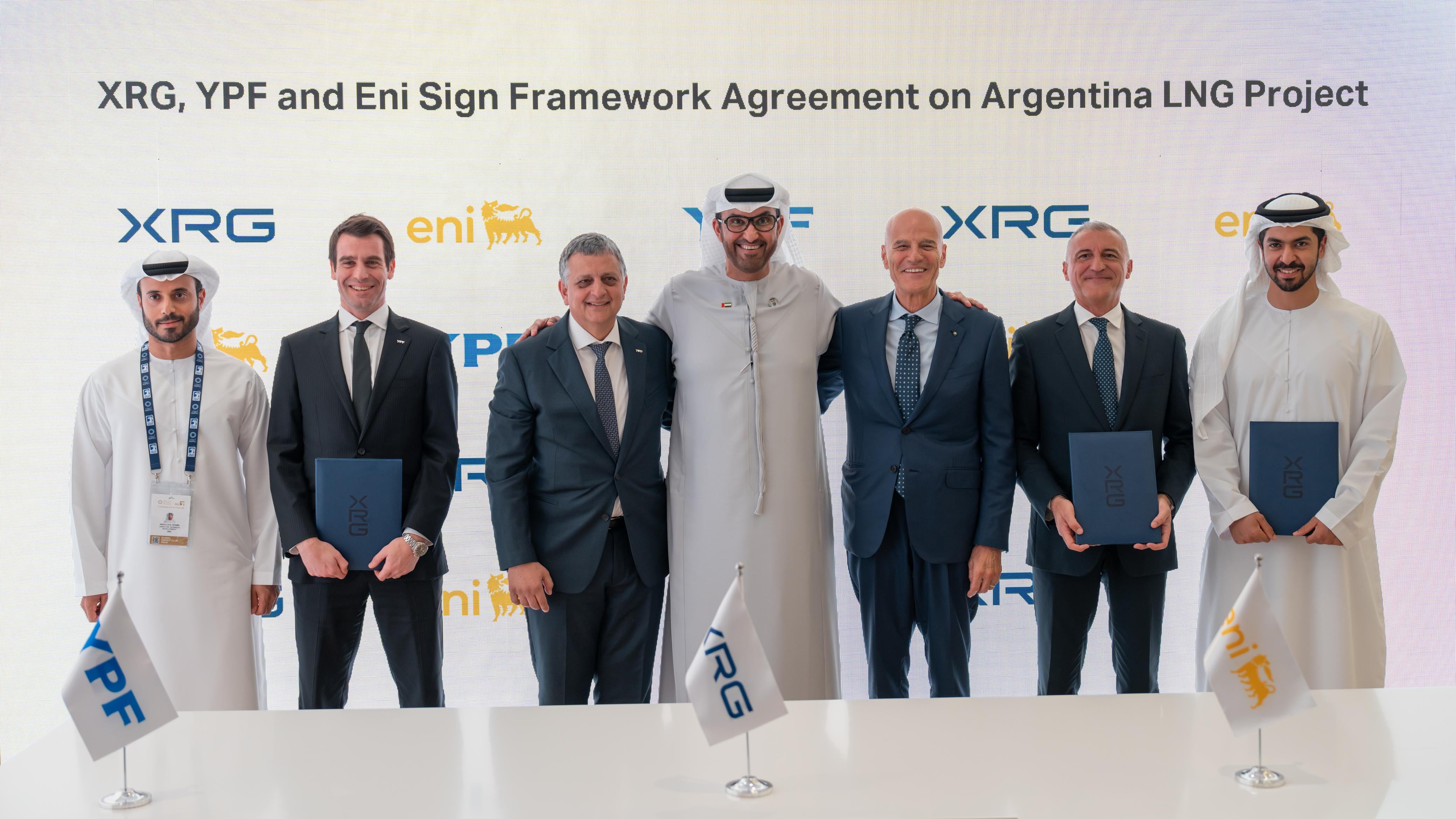

Six Mega Infrastructure Projects Reshaping Argentina's Energy Matrix
Translated from Spanish, summarized and contextualized by DistantNews.
At a glance
News
Named sources
Context piece
- Argentina's energy matrix is undergoing a transformation driven by infrastructure projects, primarily linked to the Vaca Muerta shale formation.
- Vaca Muerta currently accounts for 67% of oil and 60% of natural gas production, with ambitious goals to increase output and boost exports.
- Key infrastructure projects include the Vaca Muerta Oleoducto Sur (VMOS) and the expansion of the Perito Moreno gas pipeline, aimed at increasing transport capacity and reducing reliance on imported energy.
Argentina's energy landscape is being reshaped by a wave of private infrastructure development, largely centered around the Vaca Muerta shale formation. This region has become a powerhouse, now responsible for 67% of the country's oil production and 60% of its natural gas output, producing 900,000 barrels of oil and 160 million cubic meters of gas daily.
Ambitious targets are set for further growth, aiming for one million barrels of oil by year-end and 1.5 million by 2030. With domestic consumption around 540,000 barrels per day, the surplus is destined for export, promising significant foreign currency inflows. Projections suggest that if the industry meets its 2030 goals, it could generate annual revenues of at least $21.6 billion, assuming an average oil price of $60 per barrel.
Beyond exports, enhanced pipeline capacity is crucial for reducing the country's dependence on liquefied natural gas (LNG) imports during winter, a significant drain on the Central Bank's reserves in recent years. The development of pipelines to transport crude oil and natural gas from Neuquén to ports and consumption centers is a critical bottleneck currently being addressed by several simultaneous infrastructure projects.
Among the most advanced is the $3 billion VMOS (Vaca Muerta Oleoducto Sur) project, a nearly 600-kilometer pipeline connecting Neuquén to an Atlantic coast export terminal in Río Negro. Led by a consortium of major energy companies, VMOS will enable exports of up to 550,000 barrels per day, with potential to scale to 700,000. The terminal's deep-water access will accommodate VLCC supertankers, reducing freight costs and opening new markets. Operations are expected to commence in November, with the first exports anticipated in early 2027 after tanks are filled. This project alone is projected to add approximately $14 billion annually in exports starting in 2027.
Concurrently, TGS is expanding the Perito Moreno gas pipeline (formerly Néstor Kirchner) with a $700 million investment. This expansion will add 14 million cubic meters per day of capacity, increasing the total transport system from Vaca Muerta to Buenos Aires from 26 to 40 million cubic meters per day. These upgrades, including new compressor stations, are slated for completion by winter 2027 and are expected to further decrease the need for imported LNG.
DistantNews Editorial
Originally published by La Nación in Spanish. Translated, summarized, and contextualized by our editorial team with added local perspective. Read our editorial standards.
More Stories



From Our Blog

What Gets Lost (and Found) When News Is Translated

The Critical Role of Diaspora Media in Global News

What Travellers Should Know About Countries with Restricted Press

A Digital Nomad's Guide to Following Local News

How the Same Story Looks Different in Different Countries
