

Six pro-Russian opposition politicians arrested in Armenia ahead of parliamentary elections
Translated from German, summarized and contextualized by DistantNews.
At a glance
News
Official statement
New plan
- Six pro-Russian opposition politicians were arrested in Armenia just before parliamentary elections.
- The "Strong Armenia" party, led by billionaire Samvel Karapetyan, advocates for maintaining economic and political ties with Russia.
- Polls suggest the ruling "Civil Contract" party has a significant lead over "Strong Armenia."
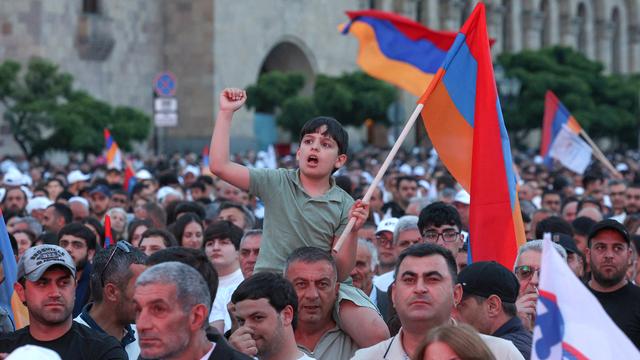
Armenian authorities arrested six politicians from the pro-Russian opposition party "Strong Armenia" just one day before the parliamentary elections. The state news agency Armenpress reported that the Central Election Commission permitted criminal proceedings against the politicians, though specific reasons for the arrests were not immediately disclosed. The state investigation committee declined to comment.
The party is led by Russian-Armenian billionaire Samvel Karapetyan, who is currently under house arrest and accused of inciting the overthrow of the government, charges he denies as politically motivated. Earlier, the election commission dismissed a complaint seeking to disqualify "Strong Armenia" over alleged vote-buying and illegal campaign financing.
These arrests occur as Armenia prepares for elections, which are also seen as a test for Prime Minister Nikol Pashinyan's efforts to achieve peace with Azerbaijan. The "Strong Armenia" party opposes Pashinyan's pro-Western leanings, advocating for continued strong ties with Russia and accusing the prime minister of provoking conflict with Moscow. Recent Russian restrictions on Armenian exports are seen as a response to Armenia's pivot towards the West.
Opinion polls indicate that Pashinyan's "Civil Contract" party is leading, with support ranging from 24 to 32 percent, while "Strong Armenia" garners between six and eleven percent. Civil rights groups have also expressed concerns about disinformation campaigns allegedly orchestrated by the Russian state, though Russia consistently denies such accusations.
DistantNews Editorial
Originally published by Die Zeit in German. Translated, summarized, and contextualized by our editorial team with added local perspective. Read our editorial standards.
More Stories

From Our Blog

What Gets Lost (and Found) When News Is Translated

How the Same Story Looks Different in Different Countries

The Critical Role of Diaspora Media in Global News

What Travellers Should Know About Countries with Restricted Press

A Digital Nomad's Guide to Following Local News
