


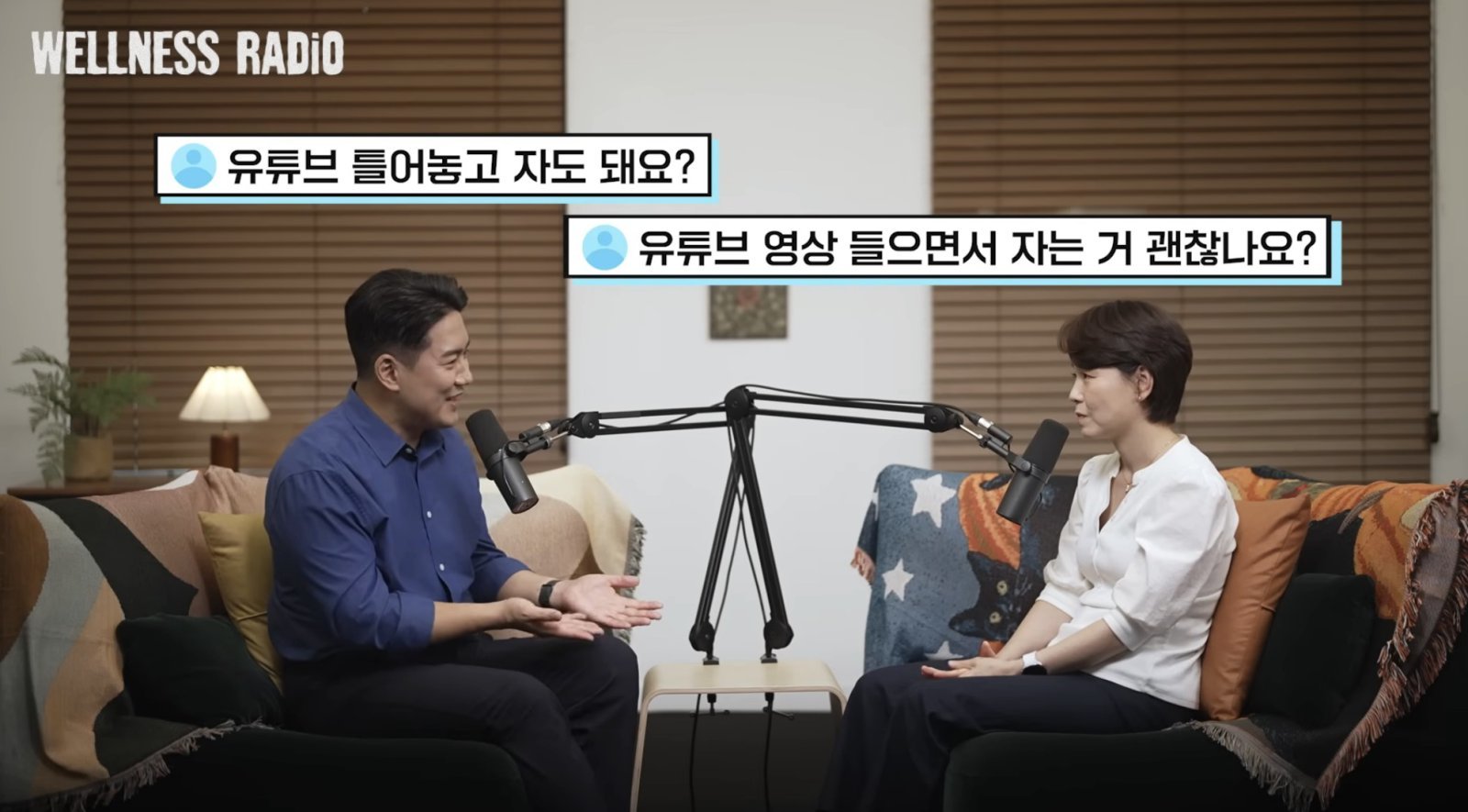
Sleep Specialist: Screen Light, Not Sound, is the Real Problem for Sleep
Translated from Korean, summarized and contextualized by DistantNews.
At a glance
News
Named sources
Context piece
- Sleeping with YouTube or music on is not inherently problematic, but exposure to screen light must be avoided, according to a sleep specialist.
- The light emitted from screens, especially blue light, disrupts melatonin production, crucial for sleep.
- Experts advise sleeping in a dark environment and reducing exposure to bright lights, including ceiling lights, before bedtime.
While listening to music or watching YouTube while falling asleep may not be detrimental, the light emitted from screens poses a significant sleep disruption, according to a sleep specialist. Joo Eun-yeon, a professor at Samsung Seoul Hospital's Sleep Clinic, clarified common misconceptions about sleep and smartphone use during an appearance on the YouTube channel "Jang Dong-sun's Curious Brain."
Joo explained that the act of listening to something while trying to sleep is a matter of personal preference and does not directly impact sleep quality. "Some people sleep better listening to it," she said, adding that sound, whether it's white noise or music, can help reduce anxious thoughts. White noise, originally intended to mask ambient noise, can serve a similar purpose by creating a consistent sound that aids relaxation.
It's okay to have it on, but absolutely no light should be emitted. The rule is to turn the screen face down and only let the sound play.
However, Joo strongly emphasized the critical need to avoid light exposure from screens. "It's okay to have it on, but absolutely no light should be emitted," she stressed. "The rule is to turn the screen face down and only let the sound play." She advised sleeping in a completely dark room and gradually reducing light intensity before sleep to help regulate the body's natural sleep-wake cycle.
Melatonin begins to be released two to three hours before bedtime and is highly sensitive to light, so it reacts very sensitively to ceiling lights.
Particular caution was advised regarding lighting before bedtime. Joo noted that many individuals, especially those in their teens and twenties, watch videos or use their phones with ceiling lights on, which is counterproductive. Melatonin, a hormone essential for sleep, begins to be released two to three hours before bedtime and is highly sensitive to light. Therefore, keeping ceiling lights off before sleep is crucial.
Joo also pointed out that while smartphones have blue light filtering features, their effectiveness is limited. Any screen brightness visible to the eye can delay melatonin release. She further linked the rise in sleep disorders among young people to lifestyle changes and mental health issues, stating, "Sleep disorders in the younger generation are intertwined with emotional problems like depression, anxiety, and loneliness, as well as lifestyle habits." She underscored the importance of managing sleep hygiene effectively.
Sleep disorders in the younger generation are intertwined with emotional problems like depression, anxiety, and loneliness, as well as lifestyle habits.
DistantNews Editorial
Originally published by Dong-A Ilbo in Korean. Translated, summarized, and contextualized by our editorial team with added local perspective. Read our editorial standards.
More Stories



From Our Blog

What Gets Lost (and Found) When News Is Translated

The Critical Role of Diaspora Media in Global News

What Travellers Should Know About Countries with Restricted Press

A Digital Nomad's Guide to Following Local News

How the Same Story Looks Different in Different Countries
