

Slowed by Hamas’s grip and Israeli politics, Gaza plan advancing in ‘baby steps,’ officials say
Summarized and contextualized by DistantNews.
At a glance
News
Named sources
Ongoing story
- A US-backed Gaza peace plan, initiated over nine months ago, is advancing only in "baby steps" due to Hamas's refusal to disarm and Israeli political hesitations.
- Officials are exploring workarounds to begin reconstruction and aid in areas outside Hamas's control, but progress remains slow amid challenges from Hamas and Israeli political maneuvering ahead of elections.
- Despite significant hurdles, including Hamas's reluctance to disarm and Israeli procedural delays, the plan is inching forward, though widespread reconstruction could take years.
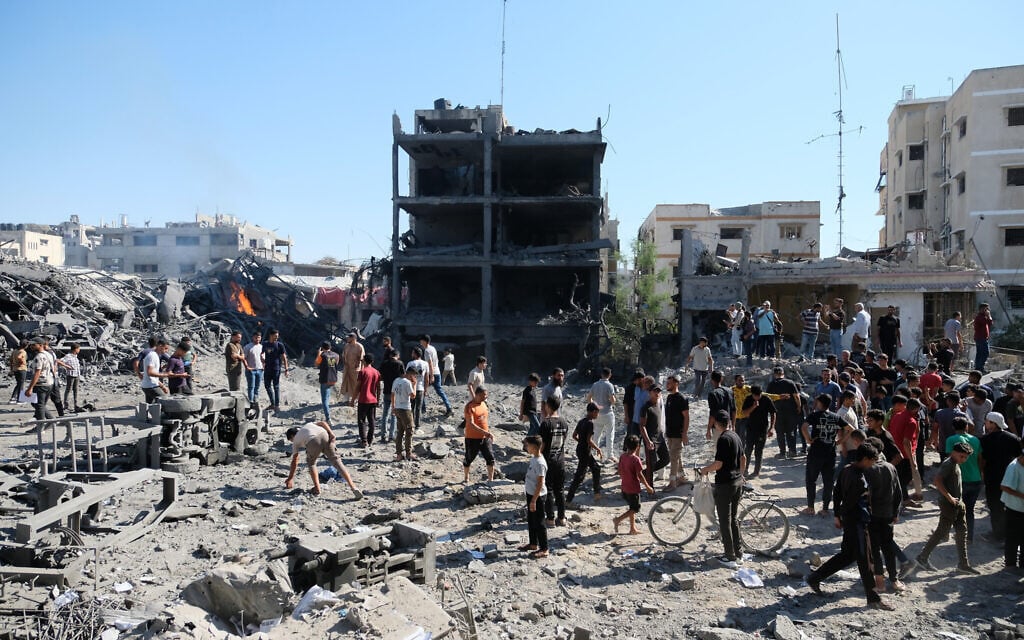
A US-backed Gaza peace plan, intended to end the conflict and initiate reconstruction, is progressing at a glacial pace, described by officials as "baby steps" more than nine months after its inception. The primary obstacle remains Hamas's refusal to disarm, a prerequisite for reconstruction to begin.
the framework is only moving forward in “baby steps,”
This deadlock has prompted mediators and the international community to focus on alternative strategies. The current workaround aims to secure and develop areas outside of Hamas's direct control, allowing for the commencement of aid distribution, the establishment of temporary housing, and eventual reconstruction. However, even this modified approach faces considerable challenges, stemming from both Hamas's continued grip on power and Israeli political considerations ahead of its October elections.
Hamas is still refusing to disarm, which it is meant to start doing before reconstruction begins.
Israeli officials point to Prime Minister Benjamin Netanyahu's government adopting a more hardline stance during the election campaign as a factor slowing down approval of crucial procedural measures. These include the deployment of foreign peacekeeping troops, the vetting of a new Palestinian police force, and humanitarian processes. Meanwhile, Hamas's recent dissolution of its emergency government in favor of a technocratic committee is viewed by US and Israeli officials not as a sign of readiness to disarm, but as a tactic to pressure Israel.
even that workaround is not expected to move quickly, as officials face challenges stemming both from Hamas’s grip on power and Israeli hesitance ahead of its October election
Despite these significant impediments, the plan is moving forward, albeit slowly. Talks in Cairo have yielded incremental progress on a roadmap for disarmament, with consensus reached on most points, though major disagreements persist regarding the exact mechanisms for Hamas relinquishing its weapons. The framework is invoking Article 17 of the plan, which allows certain steps to proceed in "terror-free areas" even if Hamas delays or rejects the overall framework, underscoring the determination to move forward despite the ongoing challenges.
Hamas’s dissolution of its emergency government this month, in favor of a new US-backed technocratic committee, was seen as a means of creating pressure on Israel, rather than as signaling a real readiness to lay down its arms and relinquish authority
DistantNews Editorial
Originally published by Times of Israel. Summarized and contextualized by our editorial team with added local perspective. Read our editorial standards.
More Stories
From Our Blog

What Gets Lost (and Found) When News Is Translated

The Critical Role of Diaspora Media in Global News

What Travellers Should Know About Countries with Restricted Press

A Digital Nomad's Guide to Following Local News

How the Same Story Looks Different in Different Countries
