


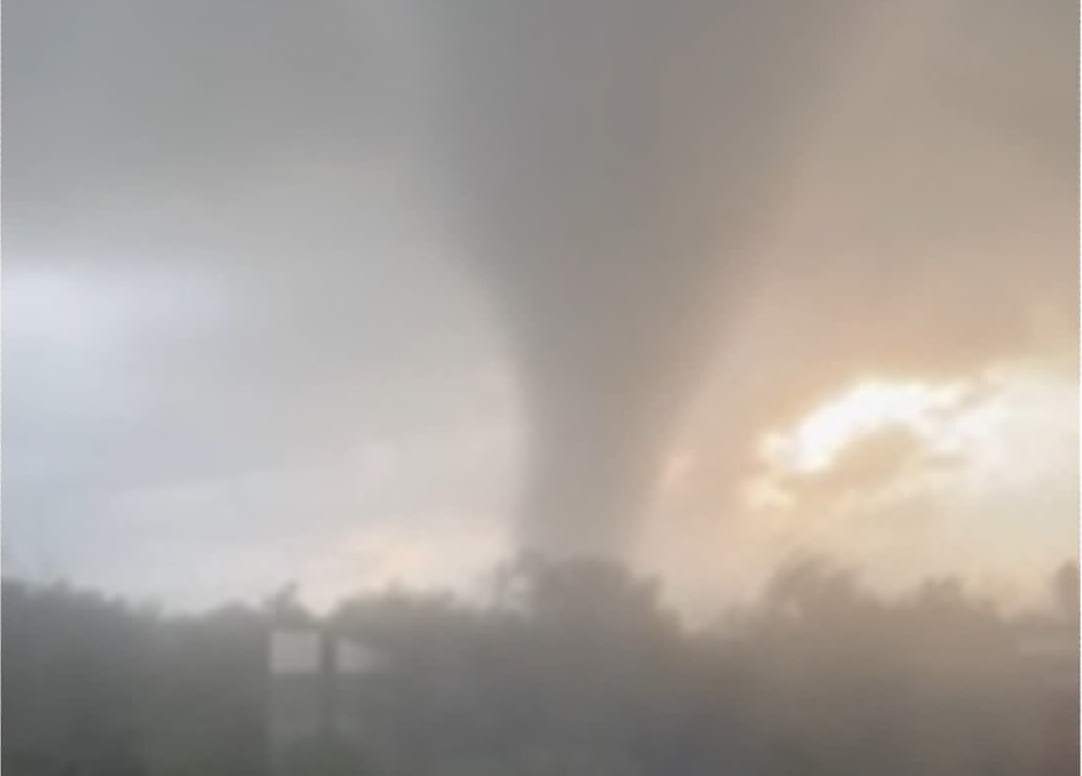
Soaring Number of Alberta Tornadoes Blamed on 'Perfect Concoction of Ingredients'
Translated from English, summarized and contextualized by DistantNews.
At a glance
News
Named sources
Context piece
- Alberta has experienced an exceptionally busy tornado season with 23 confirmed tornadoes so far this year, significantly exceeding the annual average.
- The total number of tornadoes across the three prairie provinces has reached 48, well above the average of 34.
- While the number is high, the severity of Alberta's tornadoes has been typical, ranging from EF0 to EF2, though two EF3 tornadoes have been reported in Manitoba and Saskatchewan.
Alberta is experiencing an unusually active tornado season, with at least two more twisters touching down this week, bringing the provincial total to 23 confirmed tornadoes for the year. This figure is nearly as many as the previous two years combined and significantly surpasses the annual average.
So we’re well ahead of the annual average.
Dave Sills, director of the Northern Tornadoes Project at Western University, described the season as "exceptionally busy." Across the three prairie provinces – Alberta, Saskatchewan, and Manitoba – there have been 48 tornadoes so far this year. This is well ahead of the 30-year annual average of 34 tornadoes for the region.
We’ve had tornado strengths going from the default EF0, so didn’t hit anything, but we assume it’s at least 90 km/h, to an EF2. That’s fairly typical of what we see every year.
Despite the high frequency, the intensity of Alberta's tornadoes has remained within typical ranges, according to Sills. The strengths have varied from EF0 to EF2, which is standard for the area. However, he noted that Manitoba and Saskatchewan have each recorded an EF3 tornado, which is considered rare and capable of destroying houses.
In Manitoba and Saskatchewan there have been two EF3 tornadoes, and that is a bit rare to have two tornadoes that are EF 3 in one season, and we’re only halfway through the season. Hopefully we won’t see more of those. When you get to EF3, you’re talking about houses being destroyed.
Environment Canada meteorologist Brian Proctor attributed the surge in tornado activity to a "perfect concoction of ingredients" this spring and early summer. He explained that the necessary elements for tornado formation – moisture, instability from daytime heating, and wind shear aloft – have been abundant. Proctor specifically highlighted wind shear in the atmosphere as the most significant controlling factor this year, contributing to the unsettled weather patterns observed across the southern prairies.
If we think about the kind of spring we’ve had in this early part of summer across the southern part of the prairies, it has been really unsettled, is probably the best way to word it.
DistantNews Editorial
Originally published by Global News in English. Translated, summarized, and contextualized by our editorial team with added local perspective. Read our editorial standards.
More Stories


From Our Blog

What Gets Lost (and Found) When News Is Translated

The Critical Role of Diaspora Media in Global News

What Travellers Should Know About Countries with Restricted Press

A Digital Nomad's Guide to Following Local News

How the Same Story Looks Different in Different Countries
