


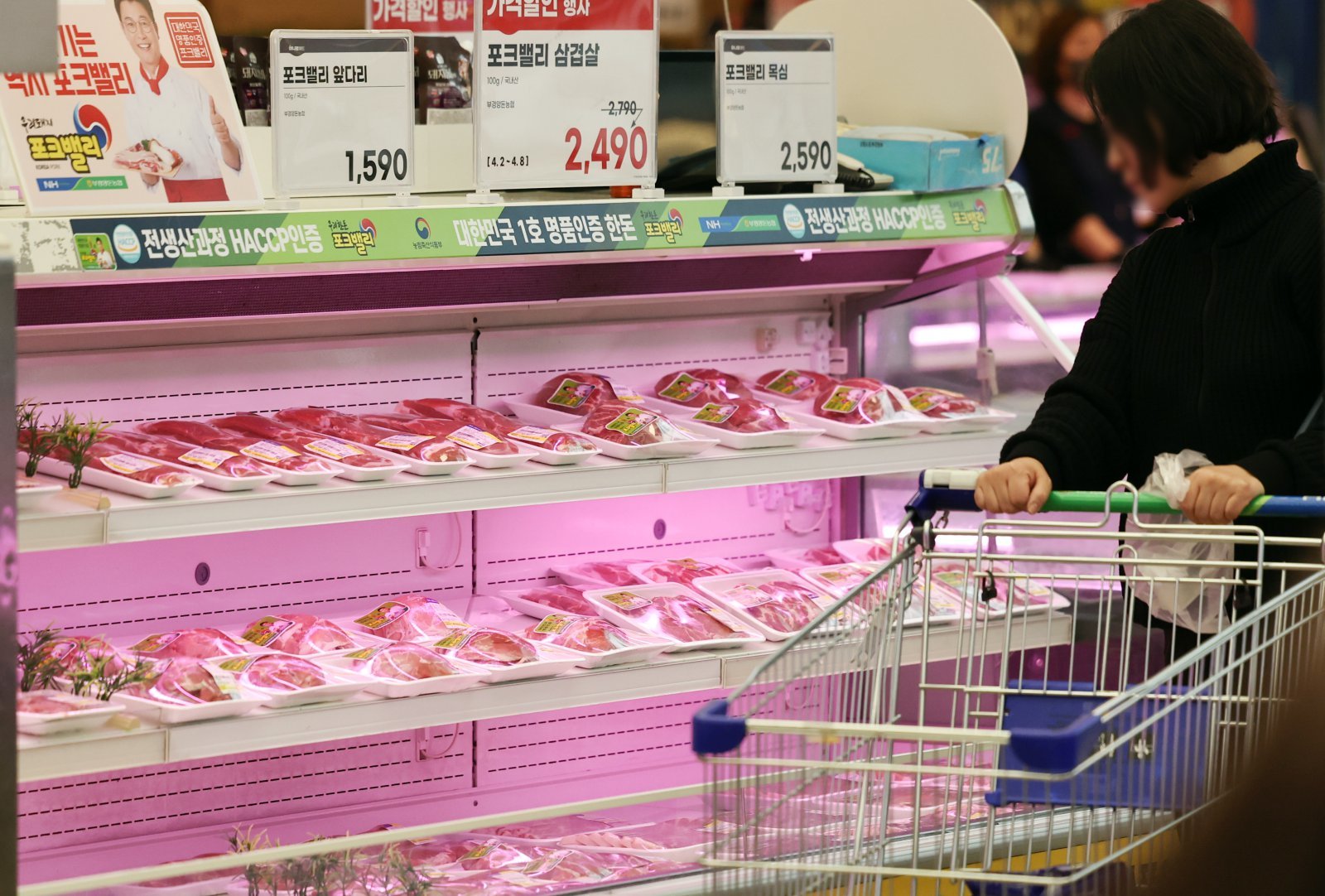
Soaring Prices Make Pork a Luxury; Consumers Turn to Imported Options
Translated from Korean, summarized and contextualized by DistantNews.
At a glance
News
Sources not specified
Context piece
- South Korean consumers are increasingly turning to imported frozen and refrigerated pork due to soaring domestic prices.
- Pork imports in the first five months of the year reached a record high, with U.S. and Spanish pork leading the way.
- Domestic pork prices have risen due to factors like livestock diseases, extreme weather, and a consumption structure favoring popular cuts like samgyeopsal.
The price of pork in South Korea has become so high that consumers are now opting for imported frozen and refrigerated options, a significant shift from previous preferences.
Data from the Ministry of Food and Drug Safety reveals that cumulative pork imports from January to May surged by 16.5% year-on-year to 235,000 tons. This averages out to 47,000 tons per month, a substantial increase from last year's monthly average of 37,500 tons. In April alone, pork imports exceeded 56,641 tons, surpassing the previous monthly record set in May 2025.
U.S. pork accounted for the largest share of imports at 30%, closely followed by Spanish pork at 28%. Other significant sources include Canada, Germany, and the Netherlands. Samgyeopsal, a popular pork belly cut, made up 45% of imports, with front legs and neck meat following at 40% and 9% respectively.
The surge in imported pork demand is directly linked to the rising cost of domestic pork. Consumer prices for domestic samgyeopsal in June increased by 7% year-on-year to 2,881 won per 100 grams. In contrast, imported frozen samgyeopsal saw a smaller increase of 2% to 1,519 won per 100 grams. This price disparity means that buying 1kg of domestic fresh samgyeopsal costs 28,810 won, while the imported frozen version costs only 15,190 won.
I used to feed my children only domestic pork, but these days I am also putting imported pork in my shopping basket to save on food expenses.
Major hypermarkets are actively promoting imported pork, often selling it for under 1,000 won per 100 grams. Sales of imported pork at E-mart and Lotte Mart have seen significant year-on-year increases of 156% and 77%, respectively, in the first 28 days of June.
Analysts attribute the high domestic pork prices to a combination of reduced supply and increased seasonal demand. Livestock diseases such as foot-and-mouth disease, African swine fever, and PRRS, along with extreme heatwaves, have impacted pig farms. The number of pigs sent to market and overall pork production decreased by 1.9% and 1.6% respectively by May this year. South Korea's unique consumption patterns, where both households and restaurants favor grilled cuts like samgyeopsal and neck meat from a limited supply, also contribute to the high prices.
"Pork was considered an affordable source of protein for ordinary people, but recent price hikes have shaken the price resistance for domestic products," said Lee Eun-hee, an honorary professor of consumer studies at Inha University. "As the psychological barrier to imported products has lowered, import volumes are expected to continue increasing for the time being."
Pork was considered an affordable source of protein for ordinary people, but recent price hikes have shaken the price resistance for domestic products. As the psychological barrier to imported products has lowered, import volumes are expected to continue increasing for the time being.
DistantNews Editorial
Originally published by Dong-A Ilbo in Korean. Translated, summarized, and contextualized by our editorial team with added local perspective. Read our editorial standards.
More Stories


From Our Blog

What Gets Lost (and Found) When News Is Translated

The Critical Role of Diaspora Media in Global News

What Travellers Should Know About Countries with Restricted Press

A Digital Nomad's Guide to Following Local News

How the Same Story Looks Different in Different Countries
