


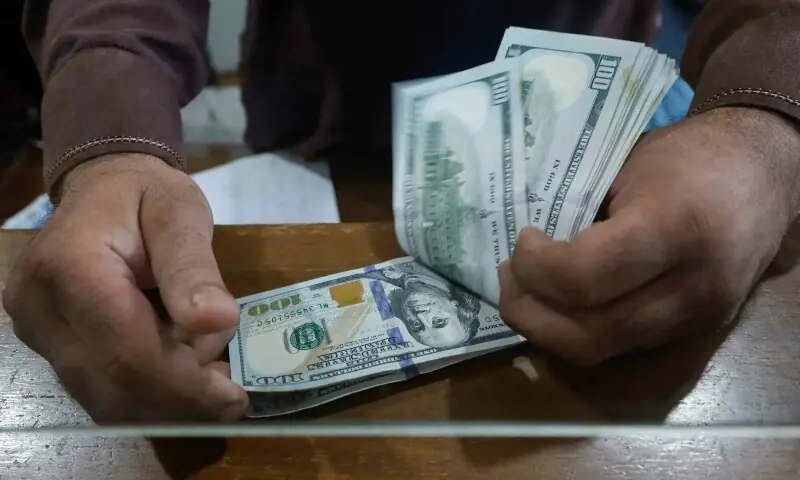
Soaring trade gap threatens Pakistan's dollar reserves
Translated from English, summarized and contextualized by DistantNews.
At a glance
News
Sources not specified
Context piece
- Pakistan's foreign exchange reserves are nearing their annual target of $18 billion, but a widening trade deficit threatens to erase this growth.
- The trade deficit for the first 11 months of fiscal year 2026 has soared to $35 billion, a significant increase from the previous year, putting pressure on the rupee.
- Experts warn that substantial payments to foreign creditors are due this month, and the managed exchange rate may face depreciation pressure after June 30.
Pakistan's foreign exchange reserves are approaching their fiscal year 2026 target of $18 billion, with reserves increasing by $43 million to $17.2 billion in the week ending May 29. However, financial experts express concern that a rapidly widening trade deficit could negate this progress and lead to a large current account deficit.
More important is the managed exchange rate, which may burst after June after large payments are made before the end of the fiscal year on June 30.
The trade deficit for the first 11 months of FY26 has reached an alarming $35 billion, a substantial rise from $29.58 billion in the same period last year. This deficit, driven largely by increased imports of luxury items and food grains, is expected to put significant pressure on the Pakistani rupee, potentially causing it to depreciate against the dollar.
The trade deficit for the 11 months of FY26 has soared to $35bn, which is seen as alarming by economic managers of the country.
Adding to the financial strain, substantial payments to foreign creditors are due in June. Currency experts note that the State Bank of Pakistan has been intervening in the inter-bank market to manage the exchange rate, but this managed stability may not last. "More important is the managed exchange rate, which may burst after June after large payments are made before the end of the fiscal year on June 30," said currency expert Atif Ahmed. He added that the rupee is under depreciation pressure as the dollar appreciates against regional currencies.
It will definitely take the current account deficit to an unexpected level, putting pressure on the rupee to depreciate against the dollar.
Remittances, a crucial source of foreign exchange, are also predicted to slow down, making the target of $41 billion for FY26 difficult to achieve. Experts place responsibility on the finance ministry for the large trade deficit, anticipating a challenging fiscal year 2027 with a higher current account deficit.
The remittances depend upon the situation in Middle East as more than 50 per cent remittances come from this region.
DistantNews Editorial
Originally published by Dawn in English. Translated, summarized, and contextualized by our editorial team with added local perspective. Read our editorial standards.
More Stories


From Our Blog

What Gets Lost (and Found) When News Is Translated

The Critical Role of Diaspora Media in Global News

What Travellers Should Know About Countries with Restricted Press

A Digital Nomad's Guide to Following Local News

How the Same Story Looks Different in Different Countries
