


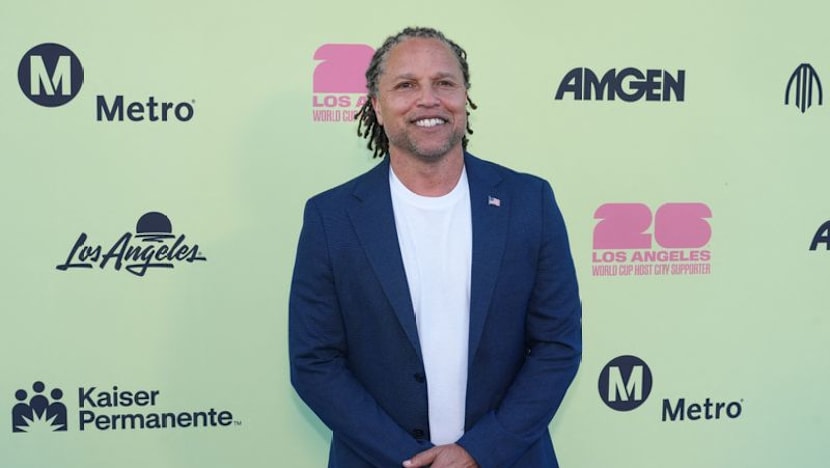
Soccer's American dream has room to grow, says Jones
Summarized and contextualized by DistantNews.
At a glance
Interview
Named sources
Context piece
- Former US international Cobi Jones believes the 2026 World Cup has the potential for exponential growth of soccer in the United States, far exceeding the impact of the 1994 tournament.
- Jones noted that while the 1994 World Cup was an 'event' for the U.S., the public now has a better understanding of the sport, with massive fan zones and increased corporate interest.
- He sees parallels between the 1994 U.S. squad, which had an international flavor, and the current team, highlighting the integration of players with diverse backgrounds.
The 2026 World Cup holds the potential for exponential growth of soccer in the United States, far beyond what was achieved when the country last hosted in 1994, according to former U.S. international Cobi Jones.
In 1994 the World Cup was more of an ‘event’, it was an oddity here within the U.S of, 'Okay, what's this big soccer thing all about?'
Jones, who played for the U.S. team that reached the knockout stages in 1994, told Reuters that the earlier tournament was more of an "event" and an "oddity" for Americans. "Everyone knew (about the World Cup) within the soccer world, but there were much more people on the peripheries in the U.S. still trying to figure it out," he said. "Now you have a good understanding by the American public of this tournament."
When we look at 1994, the MLS was a specific planned next step and something that came about because of the World Cup. When we look at this tournament, I’m thinking about the financial side and more companies wanting to get involved.
Unlike 1994, where watching matches often meant finding an English sports bar or tuning into Mexican channel Telemundo, the current tournament features massive fan zones attracting tens of thousands. Jones believes the impact extends beyond fan recognition, pointing to increased corporate interest and financial investment as key differentiators. "The potential is untapped, and we don't know where it could go," he said. "I know everyone says soccer will never be the biggest sport (in the U.S.), but it's continuing to grow and continuing to be exciting."
The potential is untapped, and we don't know where it could go. I know everyone says soccer will never be the biggest sport (in the U.S.), but it's continuing to grow and continuing to be exciting.
Jones also sees parallels between the diverse 1994 U.S. squad, managed by Bora Milutinovic and featuring players like Roy Wegerle and Thomas Dooley, and the current team. He cited players like Sergino Dest and Folarin Balogun, who have international backgrounds but are eligible to represent the U.S. "Everywhere that's the norm (these days), so we're not standing out or being different in any way," Jones observed, emphasizing the importance of integration within the team.
Everywhere that's the norm (these days), so we're not standing out or being different in any way.
DistantNews Editorial
Originally published by CNA. Summarized and contextualized by our editorial team with added local perspective. Read our editorial standards.
More Stories


From Our Blog

What Gets Lost (and Found) When News Is Translated

The Critical Role of Diaspora Media in Global News

What Travellers Should Know About Countries with Restricted Press

A Digital Nomad's Guide to Following Local News

How the Same Story Looks Different in Different Countries
