

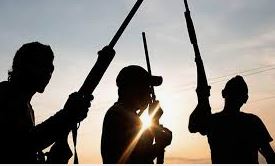

Social media fuels reprisal violence in Nigeria's Plateau State
Translated from English, summarized and contextualized by DistantNews.
At a glance
News
Named sources
Context piece
- Communal violence in Nigeria's Plateau State, often framed along ethnic and religious lines, has a new dangerous element: social media amplification.
- The February 29 March 2026 attacks in Barkin Ladi and Angwan Rukuba saw social media posts and recirculated old content used to incite violence and shape expectations.
- Platforms like Facebook were used to spread real-time reports, warnings of reprisals, and out-of-context information, fueling tensions during Ramadan and leading to an explosion of violence.
Plateau State in Nigeria has a long history of communal violence, with clashes frequently framed along ethnic and religious lines, resulting in thousands of deaths and widespread displacement. While the cycle of violence has persisted for decades, the events of February to April 2026 introduced a dangerous new dimension: the amplified role of social media.
The events of February to April 2026 are part of this long and painful history, but with a new and dangerous element: social media amplified the violence in ways never seen before.
The first major incident occurred on February 23, 2026, when suspected Fulani gunmen attacked Dorowa Babuje village in Barkin Ladi Local Government Area, killing seven people. Within hours, youths from the affected community retaliated by blocking a road, leading to the deaths of four travelers. Details of these killings, including the origin of some victims, quickly surfaced on social media platforms like Facebook, spreading faster than official clarifications.
On Facebook, the violence unfolded in real time.
During the holy month of Ramadan, online tensions escalated. A screenshot shared in a Facebook group, purportedly warning of reprisals after Eid, was treated as evidence of impending violence, despite the original author claiming his words were misrepresented. Older content, such as a video from February warning of insurgents, was also recirculated after a March 29 attack on Angwan Rukuba, presented as proof of premeditated plans.
The Hausa conversation spread faster than any official clarification.
An eviction threat from 2025 targeting Hausa residents was also revived and recirculated in 2026, out of context. By the end of Ramadan, this sustained online tension had shaped expectations, creating a volatile atmosphere where a single spark could ignite further explosions, as seen in the subsequent attack on Angwan Rukuba.
During the holy month of Ramadan, a different kind of violence began to circulate online: repeated claims that reprisals would follow after Eid.
DistantNews Editorial
Originally published by Premium Times in English. Translated, summarized, and contextualized by our editorial team with added local perspective. Read our editorial standards.
More Stories


From Our Blog

How the Same Story Looks Different in Different Countries

What Gets Lost (and Found) When News Is Translated

The Critical Role of Diaspora Media in Global News

What Travellers Should Know About Countries with Restricted Press

A Digital Nomad's Guide to Following Local News
