


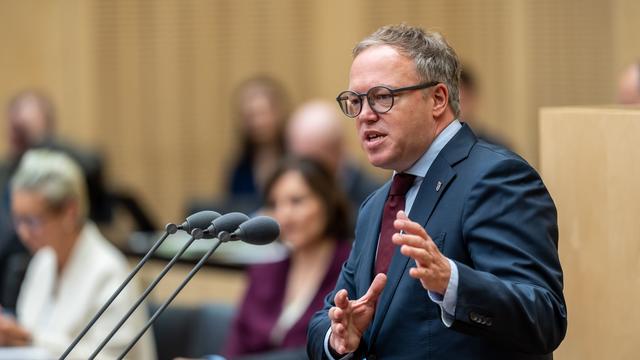
Social reforms: Voigt calls for consideration of East German living conditions
Translated from German, summarized and contextualized by DistantNews.
At a glance
News
Named sources
Context piece
- Thuringia's Minister President Mario Voigt urges the federal government to consider the specific living conditions in East Germany during upcoming social reforms.
- Voigt highlights that East Germans often rely solely on statutory pensions due to lower incomes, less private wealth, and less inheritance, and face older average populations.
- He advocates for affordable long-term care and maintaining pension benefits without deductions after 45 contribution years, emphasizing support for home-based care in rural areas.
Thuringia's Minister President Mario Voigt has appealed to the federal government to ensure that upcoming social reforms adequately consider the realities faced by people in East Germany. Voigt, a member of the CDU party, stated that East Germany is experiencing a confluence of challenging factors, often earlier than other regions.
All the aggravating factors come together in East Germany - and earlier.
He elaborated on the economic disparities, noting that statutory pensions are frequently the sole source of income for many in the East, unlike in other regions where they might be one of several pillars. This situation is compounded by lower average incomes, significantly less private wealth, and less frequent inheritance among East Germans. Furthermore, the region's population is, on average, older, adding to the social welfare demands.
Voigt, alongside his CDU counterparts from Saxony and Saxony-Anhalt, Michael Kretschmer and Sven Schulze, has published a joint declaration outlining their demands. Key among these are the preservation of pension benefits that allow for retirement without deductions after 45 years of contributions and ensuring the affordability of long-term care services. The ministers plan to present their proposals in detail soon.
The statutory pension is often not just one pillar among several for us, but it is the only one for many people in the East. And incomes are lower here, private assets are significantly less, inheritance is rarer, and the population is older on average.
Addressing the issue of care, Voigt stressed the importance of strengthening home-based care, particularly in rural areas like Thuringia. He noted that many individuals wish to age in their own homes, and caregivers, often family members, require reliable support and reduced bureaucracy. Simultaneously, he pointed out that the cost of nursing home places remains a significant concern, as the average income of a pensioner in Thuringia is insufficient to cover even half the cost of such a facility.
Many people want to grow old at home, which is why strengthening home care is important. Especially here in Thuringia, in rural regions, a large part of the care is provided by relatives, and they need reliable relief services and less bureaucracy.
DistantNews Editorial
Originally published by Die Zeit in German. Translated, summarized, and contextualized by our editorial team with added local perspective. Read our editorial standards.
More Stories


From Our Blog

What Gets Lost (and Found) When News Is Translated

How the Same Story Looks Different in Different Countries

The Critical Role of Diaspora Media in Global News

What Travellers Should Know About Countries with Restricted Press

A Digital Nomad's Guide to Following Local News
