


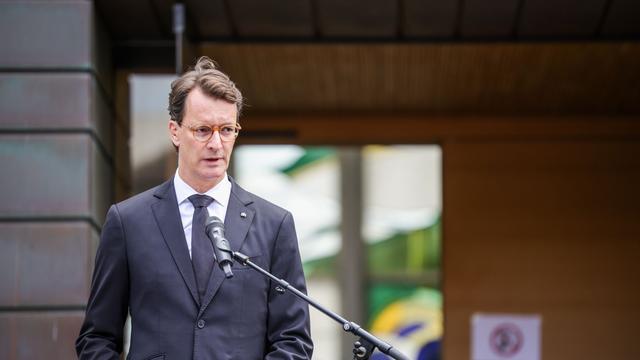
Solingen remembers terror attack victims: Governor says community cohesion stronger than hate
Translated from German, summarized and contextualized by DistantNews.
At a glance
News
From a news agency
Outcome reported
- Solingen commemorated the first anniversary of an Islamist terror attack that killed three people and injured many.
- State officials and the mayor attended a memorial event, emphasizing community cohesion over hatred and reaffirming security measures.
- The attack, carried out by an asylum seeker, led to the perpetrator's life sentence and subsequent secure confinement.
Solingen marked the first anniversary of a devastating Islamist terror attack that claimed three lives and left many injured. At a solemn memorial service held outside the city church, North Rhine-Westphalia's Minister-President Hendrik Wüst underscored the community's resilience, stating, "The cohesion in Solingen is stronger than hate." He reaffirmed the government's commitment to consistent action, referencing a package of measures in security, migration, and prevention implemented after the attack.
Mayor Daniel Flemm echoed this sentiment, highlighting Solingen's unity and its return to daily life after an initial period of shock. "We want to show that we do not forget, but also do not dwell in grief, but look resolutely into the future," he stated. Flemm acknowledged the ongoing burden carried by the direct victims and their families.
The cohesion in Solingen is stronger than hate.
The attack occurred on August 24, 2024, during a concert on the Fronhof square when Issa al-H., a rejected asylum seeker from Syria, attacked concertgoers with a knife. He was apprehended the following day. The Higher Regional Court in Düsseldorf sentenced the perpetrator to life imprisonment and subsequent secure confinement nearly a year ago. This attack was the first of its kind in Germany since the 2016 Berlin Christmas market bombing, which was claimed by the Islamic State.
We want to show that we do not forget, but also do not dwell in grief, but look resolutely into the future.
DistantNews Editorial
Originally published by Die Zeit in German. Translated, summarized, and contextualized by our editorial team with added local perspective. Read our editorial standards.
More Stories


From Our Blog

What Gets Lost (and Found) When News Is Translated

How the Same Story Looks Different in Different Countries

The Critical Role of Diaspora Media in Global News

What Travellers Should Know About Countries with Restricted Press

A Digital Nomad's Guide to Following Local News
