


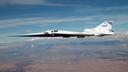
'Son of Concorde' Reaches Key Milestone: NASA Nears Return of Supersonic Passenger Flights
Translated from Croatian, summarized and contextualized by DistantNews.
At a glance
News
Official statement
New plan
- NASA's experimental X-59 aircraft, nicknamed "Son of Concorde," achieved a significant milestone by flying at Mach 1.4 (approx. 1,487 km/h) at nearly 17,000 meters.
- These flight conditions are crucial for the aircraft's mission to test quiet supersonic technology.
- The X-59 is designed to fly at supersonic speeds without producing a loud sonic boom, and future tests will involve flights over populated areas to gauge public perception of its quiet sonic thump.
NASA's experimental X-59 aircraft, dubbed the "Son of Concorde," has reached a key milestone, flying at Mach 1.4 (approximately 1,487 km/h) at an altitude of nearly 17,000 meters.
These flight conditions are essential for the aircraft's mission, which aims to pave the way for the return of supersonic passenger flights. The X-59 is designed to fly at supersonic speeds without generating the loud sonic boom associated with traditional supersonic aircraft.
NASA highlighted that this achievement comes just days after the X-59's first supersonic flight, which confirmed its expected performance at Mach 1.1. However, flying under mission-predicted conditions represents a more significant step for the agency.
This milestone comes just days after the first supersonic flight of the X-59. That flight confirmed the aircraft behaves as expected at Mach 1.1, but flying in conditions predicted for the mission represented an even more important step for NASA. The team working on the aircraft is gradually expanding the range of conditions in which the aircraft has been tested. This includes evaluating its performance at different speeds and altitudes and performing a series of maneuvers that test pilots carry out.
The team is gradually expanding the range of conditions under which the aircraft is tested, evaluating its performance at different speeds and altitudes, and conducting maneuvers guided by test pilots. While early supersonic flights are monitored by an F-15, which produces a conventional sonic boom, researchers will meticulously measure the X-59's acoustic signature during supersonic flight to ensure it performs as expected.
Each new flight brings NASA closer to its goal of flying the X-59 over populated areas. The agency plans to gather feedback from residents to help shape the future of commercial supersonic air travel over land.
Every new flight brings NASA closer to the goal of having the X-59 fly over populated areas and gather citizen feedback that could help shape the future of commercial supersonic air travel over land.
DistantNews Editorial
Originally published by Večernji List in Croatian. Translated, summarized, and contextualized by our editorial team with added local perspective. Read our editorial standards.
More Stories

From Our Blog

What Gets Lost (and Found) When News Is Translated

The Critical Role of Diaspora Media in Global News

What Travellers Should Know About Countries with Restricted Press

A Digital Nomad's Guide to Following Local News

How the Same Story Looks Different in Different Countries
