


South Korea Advances New Nuclear Plant Construction Amidst Grid and Energy Mix Concerns
Translated from Korean, summarized and contextualized by DistantNews.
At a glance
News
Named sources
New plan
- South Korea's plan to build new nuclear power plants in Yeongdeok and Gijang is moving forward, aligning with the Lee Jae-myung administration's energy policy.
- The government cites increased electricity demand from AI and data centers as a reason for nuclear expansion, despite concerns about grid capacity and renewable energy integration.
- Experts worry about potential conflicts between nuclear and renewable energy sources due to differing output flexibility and the concentration of existing plants in the Yeongnam region.
The Lee Jae-myung administration's plan to expand nuclear power is gaining momentum with the near-certainty of new nuclear power plants being built in Yeongdeok County, North Gyeongsang Province, and Gijang County, Busan. This move aligns with the government's stated need to meet rising electricity demands driven by the growth of artificial intelligence (AI) and data centers.
However, the expansion faces persistent concerns regarding the concentration of nuclear facilities, insufficient transmission infrastructure, and potential conflicts with renewable energy policies. Although President Lee initially expressed skepticism about building new nuclear plants, the government has since declared a commitment to an "energy mix" that includes both renewables and nuclear power, as outlined in the 11th National Electricity Supply and Demand Basic Plan.
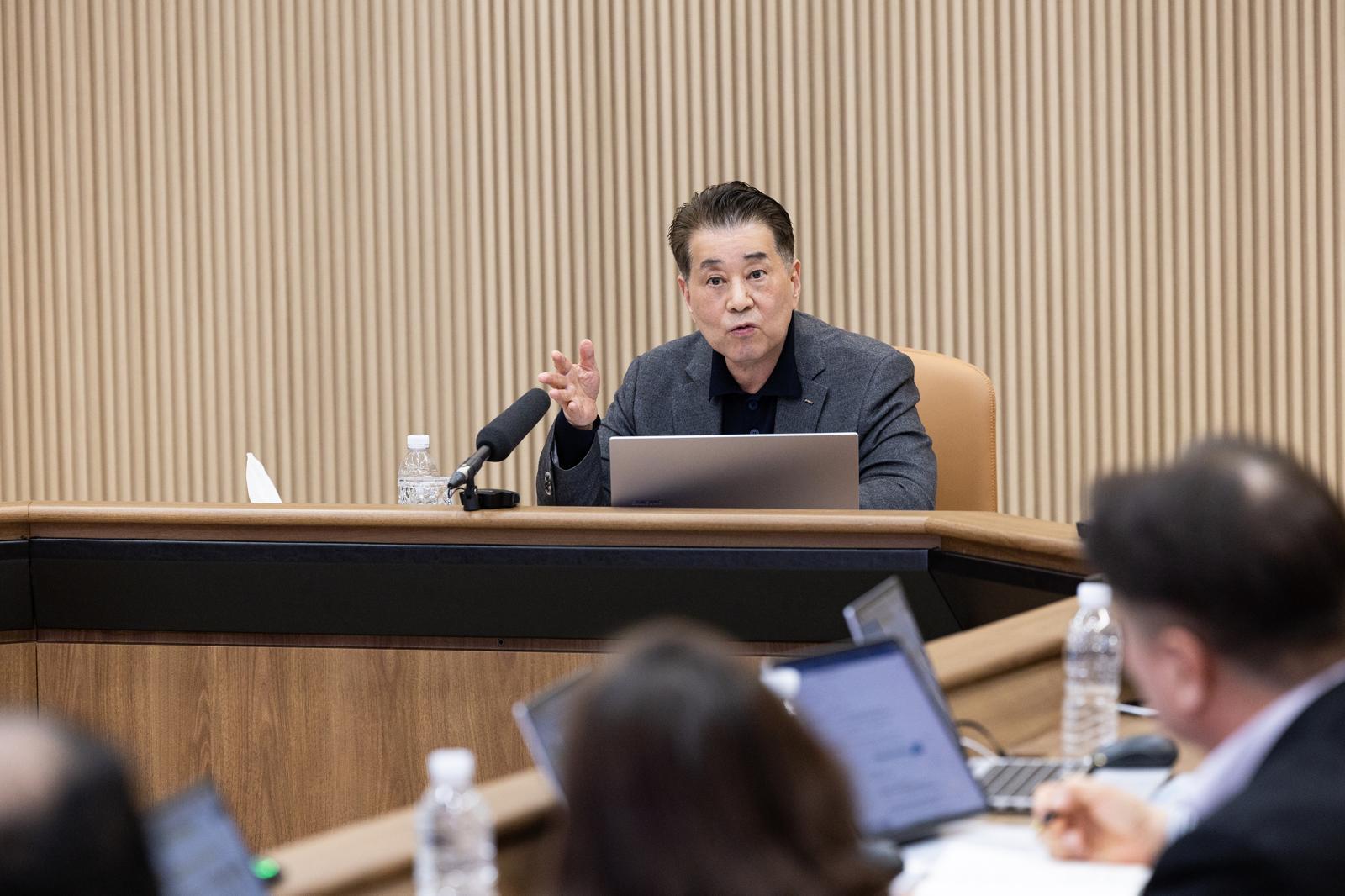
Minister of Climate, Environment, and Energy Kim Sung-hwan stated in January that South Korea, as an "energy island nation" with limited east-west scale, requires a nuclear-centric power generation strategy alongside renewables to combat climate change. Experts, however, caution that integrating nuclear power, which has inflexible output, with variable sources like solar and wind could lead to system instability and frequent curtailment of renewable energy generation.
It is difficult to expand renewable energy if we are forced to curtail solar power output in situations where we must stably use the generated electricity for economic feasibility.
The existing nuclear infrastructure is heavily concentrated in the eastern coastal region of Yeongnam, with 20 out of 26 operational reactors located there. The addition of new plants in Yeongdeok and Gijang will further intensify this concentration. Despite Yeongdeok having high electricity self-sufficiency, the power generated in the Yeongnam region is largely transmitted to the Seoul metropolitan area, straining the existing transmission grid. The construction of new transmission lines and substations is considered inevitable, but faces delays due to resident opposition.
Questions also surround the site selection process itself. The committee responsible for selecting sites operates under KHNP's internal regulations, comprising nine external members. While KHNP asserts the objectivity of these experts, anti-nuclear groups argue that a public corporation's internal rules should not dictate the selection of such critical national energy projects. Lee Heon-seok of Energy Justice Action called for transparency in information regarding related infrastructure, such as new transmission lines, which are expected to accompany new nuclear plant constructions.
It is inappropriate for a committee without legal grounds to effectively finalize the site selection. Information related to additional transmission lines, etc., that will be generated if new nuclear power plants are built, must be transparently disclosed.
DistantNews Editorial
Originally published by Hankyoreh in Korean. Translated, summarized, and contextualized by our editorial team with added local perspective. Read our editorial standards.
More Stories

From Our Blog

What Gets Lost (and Found) When News Is Translated

The Critical Role of Diaspora Media in Global News

What Travellers Should Know About Countries with Restricted Press

A Digital Nomad's Guide to Following Local News

How the Same Story Looks Different in Different Countries
