


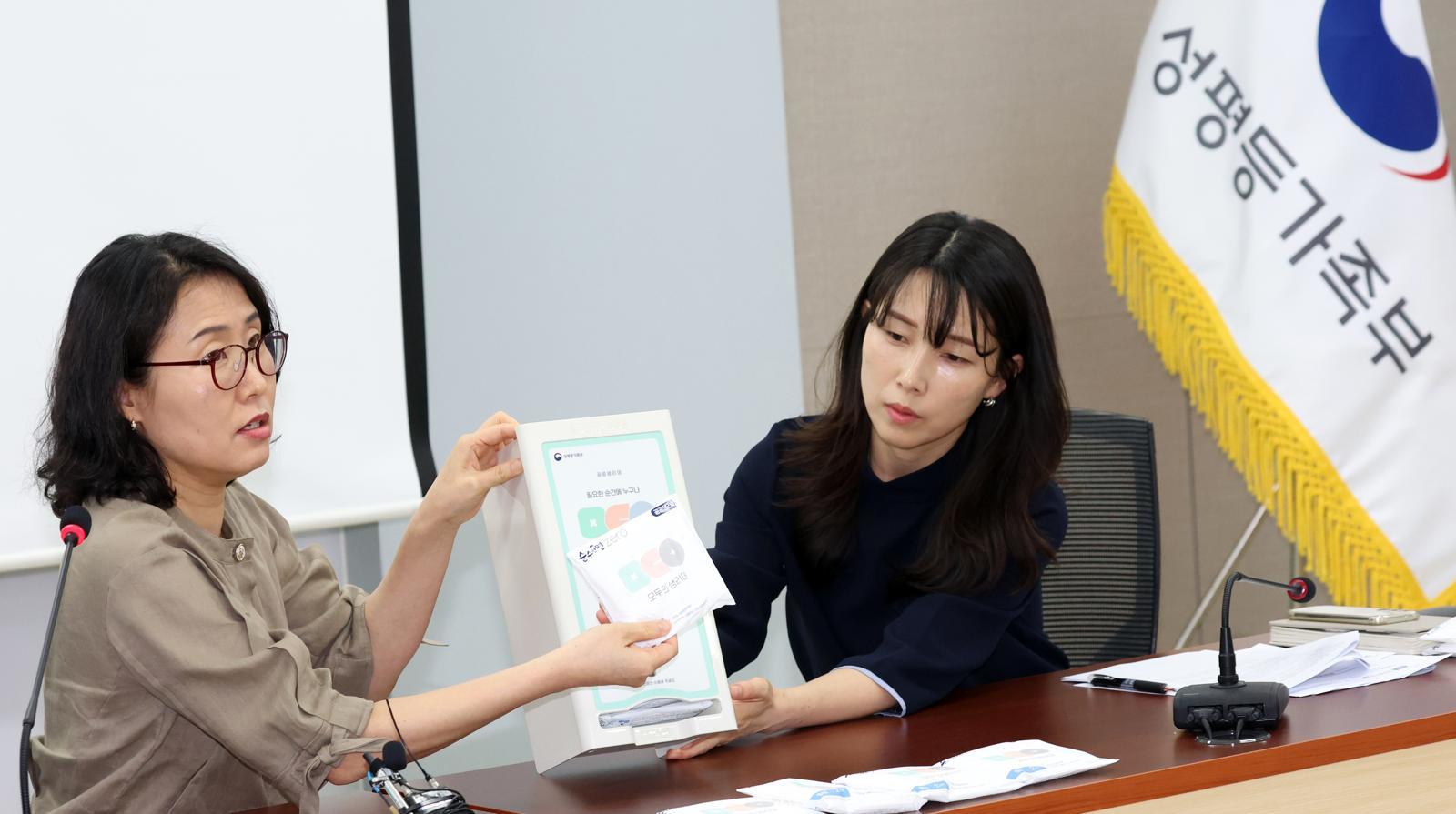
South Korea begins free sanitary pad distribution in public facilities
Translated from Korean, summarized and contextualized by DistantNews.
At a glance
News
Sources not specified
New plan
- South Korea began distributing free sanitary pads in public facilities across 12 regions on July 6.
- The initiative, initially a pilot program, aims to provide accessible menstrual products while exploring measures like QR code authentication to prevent overuse.
- The government also requested secondhand marketplaces to restrict the resale of these public sanitary pads.
South Korea launched a pilot program on July 6, distributing free sanitary pads in public facilities across 12 regions. The initiative, a response to President Yoon Suk-yeol's directive, aims to ensure anyone needing menstrual products can access them.
The Ministry of Gender Equality and Family will monitor usage throughout the year-end pilot period. They are considering implementing a QR code authentication system to prevent excessive use and have asked platforms like Danggeun Market to block the resale of these public pads. The project involved collaboration between the Ministry of Food and Drug Safety and the Public Procurement Service, with custom-designed dispensers from a local vending machine manufacturer.
Starting in Eunpyeong District, Seoul, the "All of Us Sanitary Pads" program will be available in approximately 500 accessible public facilities, including community centers, libraries, and youth centers. Both manual and automatic dispensers will be deployed, with the automatic units featuring IoT capabilities for real-time inventory management.
Just as toilet paper and hand sanitizer in public restrooms have become basic convenience services for public hygiene management, sanitary pads, as hygiene products, need to be expanded as a convenience service that can be naturally used in public facilities.
While the program expands access, concerns about overuse and inventory management persist, echoing challenges faced by a similar Seoul city initiative in 2018. The new automatic dispensers include a 20-second cooldown feature to deter excessive collection. Future plans involve exploring QR code integration for authentication and usage tracking, depending on pilot program results.
The selection process prioritized safety and quality, with the Ministry of Gender Equality and Family consulting the Ministry of Food and Drug Safety. The project, initiated six months ago, has a pilot budget of 3.2 billion won. The ministry hopes this initiative will diversify supply channels and indirectly contribute to stabilizing sanitary pad prices.
The automatic dispensers being introduced this time are equipped with a cool-time function that takes 20 seconds until the next use to prevent situations where people take them indiscriminately.
DistantNews Editorial
Originally published by Dong-A Ilbo in Korean. Translated, summarized, and contextualized by our editorial team with added local perspective. Read our editorial standards.
More Stories



From Our Blog

What Gets Lost (and Found) When News Is Translated

The Critical Role of Diaspora Media in Global News

What Travellers Should Know About Countries with Restricted Press

A Digital Nomad's Guide to Following Local News

How the Same Story Looks Different in Different Countries
